
Geopolitics of AI Regulation: EU vs US vs China (2026 Guide)
Three incompatible regulatory visions for AI are now clashing globally. The EU enforces rights-based rules, the US prioritizes innovation, and China demands state control. This geopolitical divide reshapes AI deployment, data residency, and vendor strategy for every organization.
The Three-Region Framework
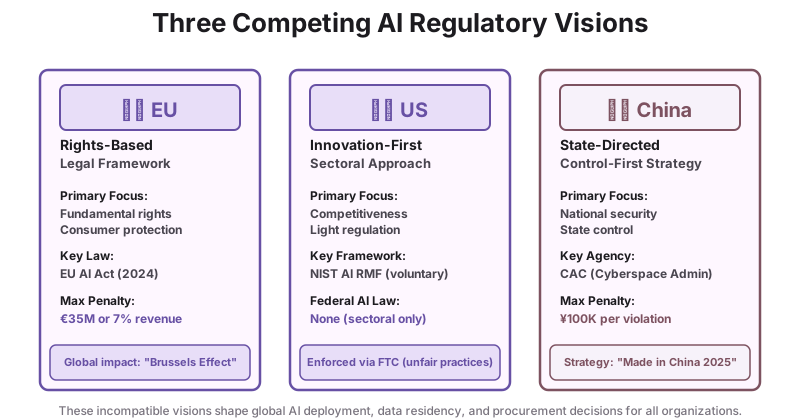
Global AI governance is fragmenting into three incompatible models. The European Union has enacted the AI Act—a prescriptive, rights-based legal framework with teeth. The United States is taking a sectoral, market-friendly approach with voluntary standards like the NIST AI Risk Management Framework. China is implementing state-directed control, requiring government approval for AI systems and prioritizing national security over innovation.
For any organization deploying AI globally, understanding these three visions is critical. Compliance costs, timelines, and risk profiles differ dramatically depending on which region you target first.
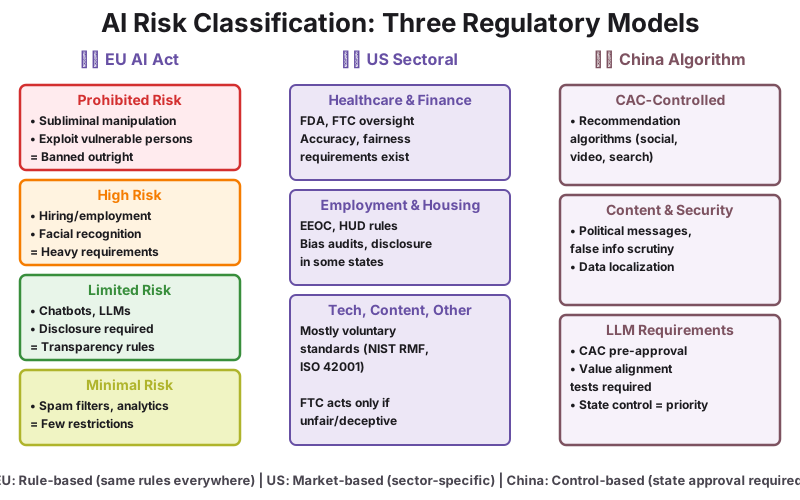
AI Risk Classification: How Each Region Categorizes Risk
The three regions do not agree on what "high-risk AI" even means. The EU defines four strict tiers: prohibited, high-risk, limited-risk, and minimal-risk. The US has no single risk taxonomy—instead, regulations are scattered across healthcare, finance, employment, and FTC enforcement. China treats all AI as subject to content and security oversight, with CAC approval required for LLMs and recommendation algorithms.
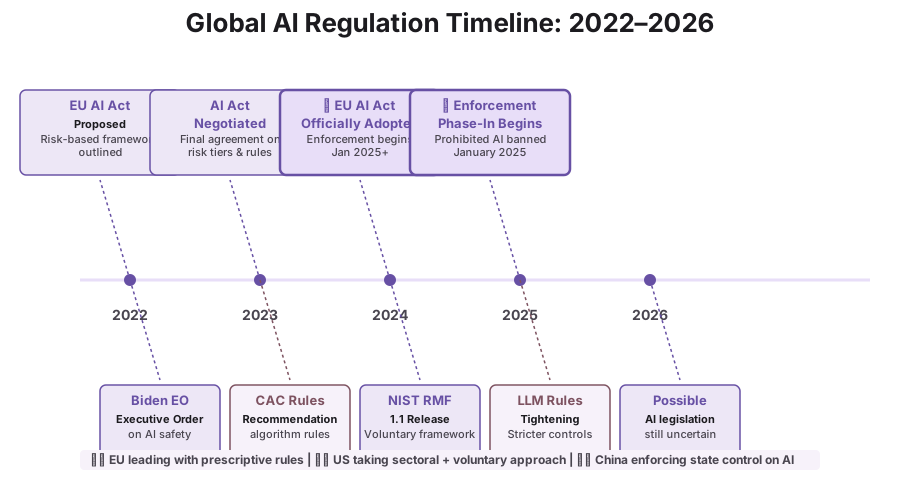
Regulatory Timeline: 2022–2026 and Beyond
The regulatory landscape is moving fast. In 2024, the EU AI Act was officially adopted. Enforcement began in January 2025, starting with prohibitions on high-risk applications. The US has no federal AI law—instead, it released the NIST AI RMF as voluntary guidance. China has been tightening LLM rules throughout 2024–2025, with CAC now requiring pre-approval for any model deployed publicly.
Organizations that started compliance work in 2024 are ahead of the curve. Those starting now face compressed timelines and higher costs.
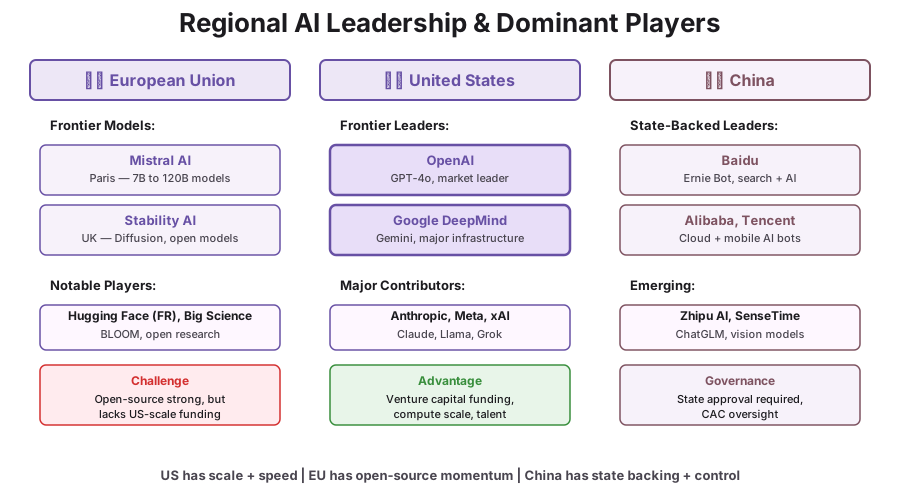
Regional AI Leadership & Market Dominance
The geopolitical divide has created three distinct AI ecosystems with different players, business models, and funding dynamics. In the US, venture capital and large tech firms (OpenAI, Google, Anthropic, Meta) drive development. In Europe, open-source projects like Mistral and Hugging Face are gaining momentum, but funding and compute scale lag far behind the US. In China, state-backed companies (Baidu, Alibaba, Tencent) lead development, with CAC oversight ensuring political alignment.
Compliance Costs & Complexity: The Real Impact
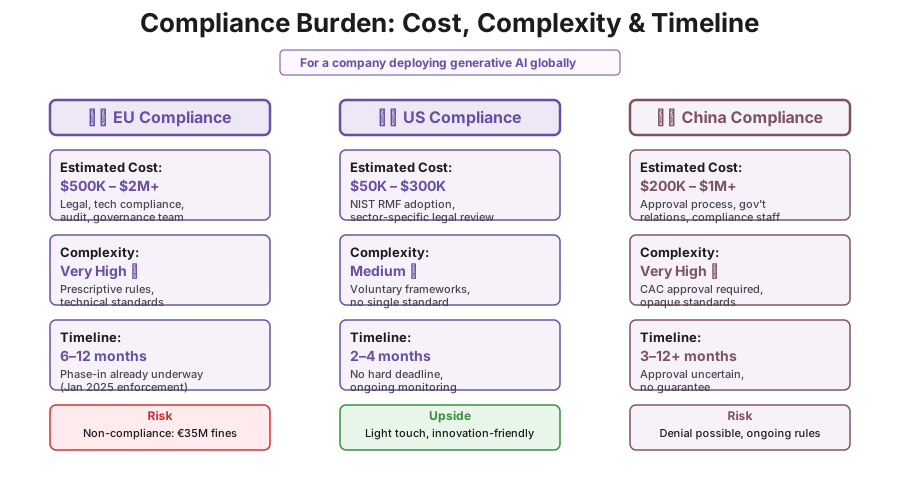
The true cost of geopolitical fragmentation is compliance burden. A company deploying AI globally must now maintain three separate compliance strategies, with different timelines, legal teams, and technology investments. EU compliance is the most expensive (€500K–€2M+) and complex, with prescriptive rules and ongoing audits. US compliance is lighter (€50K–€300K) and faster (2–4 months), but fragmented across sectors. China compliance is opaque and risky (€200K–€1M+), with approval timelines uncertain and no guarantee of success.
This fragmentation incentivizes regional strategies: US companies may launch in the US first, then adapt for EU. European companies must plan for EU compliance from day one. Chinese firms operate under state direction, making independent deployment impossible.
What This Means for Your Organization
If you are building AI products globally, the geopolitical divide forces difficult choices:
- •US-first strategy: Launch in the US market (largest, fastest to scale), then adapt for Europe (higher compliance cost). China remains difficult unless you have local partnerships and state support.
- •EU-first strategy: Plan for full AI Act compliance from day one—it costs more but results in a product that can scale globally (Brussels Effect). US compliance is easier once EU rules are met.
- •China strategy: Impossible without deep government relationships and alignment with state priorities. Most Western companies avoid this until they have clear Chinese partnerships or direct authorization.
- •Multi-region simultaneous: Only viable for large enterprises with separate product teams and legal resources. Cost is 2–3× higher than single-region development.
Frequently Asked Questions
Which region is moving fastest on AI regulation?+
The EU. The AI Act was adopted in 2024 and enforcement began in January 2025. The US still lacks federal law, and China's rules are reactive rather than systematic. EU organizations have the least flexibility.
Can I use the same AI model in all three regions?+
Not safely. A model that passes EU fairness audits may not meet China's content standards. A model approved in the US may violate EU bias rules. You'll need region-specific configurations, retraining, or separate models.
What happens if I ignore geopolitical compliance requirements?+
In the EU, penalties are €35M or 7% of global revenue—whichever is higher. In the US, FTC enforcement is sporadic but growing. In China, violations lead to service takedown or criminal liability for founders. Ignoring any region's rules is not a viable long-term strategy.
Is GDPR like the EU AI Act?+
No. GDPR focuses on data privacy. The EU AI Act focuses on the behavior and risks of AI systems themselves—transparency, fairness, accountability, and human oversight. Both apply if your AI system processes EU personal data, so compliance cost is additive.
What about the UK, Canada, Singapore, or other regions?+
Most countries are waiting to see how EU and US approaches unfold before writing their own laws. The UK is loosely following the EU but with less prescription. Canada and Singapore are developing lighter frameworks. The global pattern suggests the EU model (prescriptive rules) and US model (voluntary + sectoral) will influence most emerging regulations.