
Was ist Prompt Chaining?
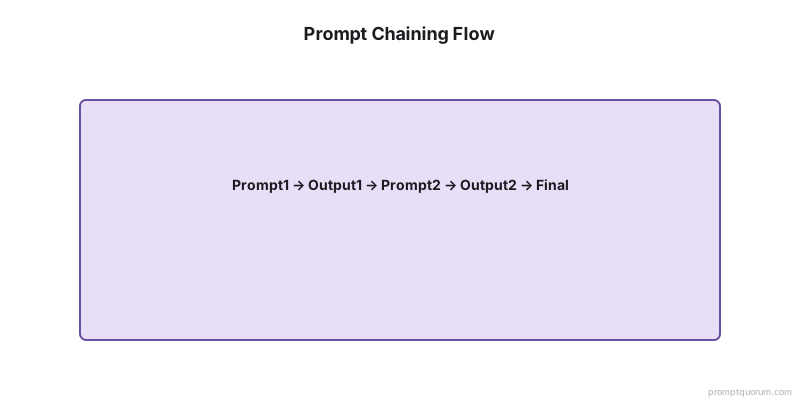
Prompt Chaining bedeutet, mehrere Prompts zu verbinden, sodass jeder eine fokussierte Teilaufgabe ausführt und sein Ergebnis an die nächste weitergibt. Anstatt das Modell zu bitten, „alles auf einmal zu tun", erstellen Sie eine Abfolge wie „Analyse → Strukturierung → Generierung → Überprüfung".
Jeder Schritt hat eine klare Eingabe, ein klares Ausgabeformat und eine eng begrenzte Verantwortung. Die Kette insgesamt verhält sich mehr wie eine Pipeline oder ein Workflow als ein Chat, was Debugging, Wartung und Wiederverwendung erleichtert.
Warum Prompt Chaining Wichtig ist
Prompt Chaining ist wichtig, weil die meisten realen Aufgaben zu komplex oder zu fragil sind, damit ein einzelner Prompt sie gut bewältigt. Wenn Sie Verständnis, Planung, Generierung und Überprüfung in distinct Schritte trennen, reduzieren Sie Fehler und gewinnen Kontrolle.
Die wichtigsten Vorteile sind:
- Bessere Genauigkeit, da jeder Schritt für eine spezifische Funktion optimiert ist.
- Einfacheres Debugging, da Sie sehen können, wo genau die Kette bricht.
- Bessere Wiederverwendbarkeit, da individuelle Schritte (wie „Eingabe zusammenfassen" oder „Entitäten extrahieren") über verschiedene Workflows hinweg gemeinsam genutzt werden können.
Für Teams werden Prompt Chains zu Bausteinen in größeren AI-Systemen, statt zu einmaligen Gesprächen.
Zusammenfassung: Die Wichtigsten Erkenntnisse
- Prompt Chaining zerlegt eine komplexe Aufgabe in sequenzielle Prompts, wobei die Ausgabe eines Schritts die Eingabe für den nächsten wird – ähnlich einer Daten-Pipeline, nicht einem Chat.
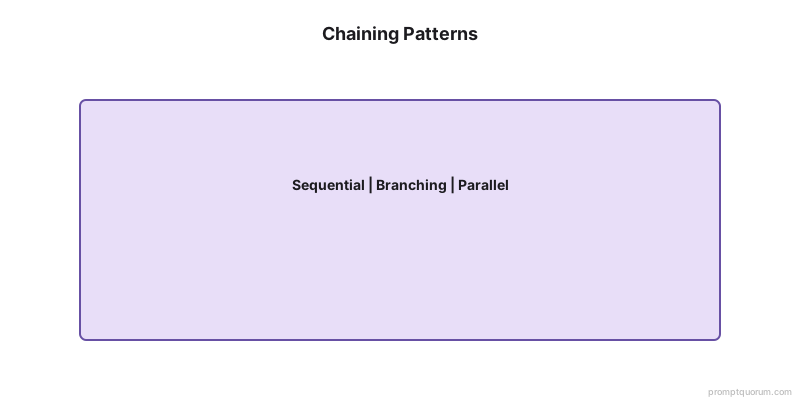
- Häufige Muster: Analysieren → Planen → Entwurf → Verfeinerung; Extrahieren → Transformieren → Zusammenfassen; Generieren → Kritisieren → Verbessern.
- Ketten mit 3–5 Schritten sind ideal. Unter 3 Schritten gewinnen Sie wenig. Über 7 Schritte führt zu Überengineering.
- Testen Sie jeden Schritt isoliert, bevor Sie sie verbinden. Debuggen Sie Ketten durch Inspektion von Zwischenergebnissen.
- Ketten reduzieren Halluzinations-Raten um 35–45% gegenüber einzelnen komplexen Prompts (PromptQuorum interne Tests, 50+ Aufgaben).
- Trade-off: 2–5× mehr API-Aufrufe, aber Qualitätsgewinne und leichteres Debugging rechtfertigen die Kosten für Produktions-Workflows.
- Seit 2026 haben agentic Frameworks (LangChain, CrewAI, Claude managed agents) Prompt Chaining produktionalisiert — orchestrieren Sie Ketten programmatisch mit eingebautem Error Handling.
Schnelle Fakten
⚡ Was: Zerlegen Sie komplexe Aufgaben in sequenzielle Prompts; die Ausgabe von Schritt N wird zur Eingabe von Schritt N+1
⚡ Optimale Länge: 3–5 Schritte. Unter 3 = wenig Gewinn. Über 7 = Überengineering.
⚡ Reduktion von Halluzinationen: 35–45% gegenüber einzelnen Prompts (PromptQuorum, 50+ Task Test)
⚡ Kosten-Trade-off: 2–5× mehr API-Aufrufe, aber Qualität + Debuggierbarkeit rechtfertigen es
⚡ Häufige Muster: Analysieren → Planen → Entwurf → Verfeinerung; Extrahieren → Transformieren → Zusammenfassen; Generieren → Kritisieren → Verbessern
⚡ 2026 Frameworks: LangChain, DSPy, CrewAI, Claude managed agents — alle produktionalisieren Prompt Chaining
Typische Prompt-Chaining-Muster
Die meisten Prompt Chains verwenden einige wiederkehrende Muster, die Sie an Ihre eigenen Workflows anpassen können. Die genaue Struktur hängt von Ihrem Ziel ab, aber die Logik bleibt ähnlich.
Häufige Muster:
- Analysieren → Planen → Entwurf → Verfeinerung: Zum Schreiben von Artikeln, Berichten oder Strategien.
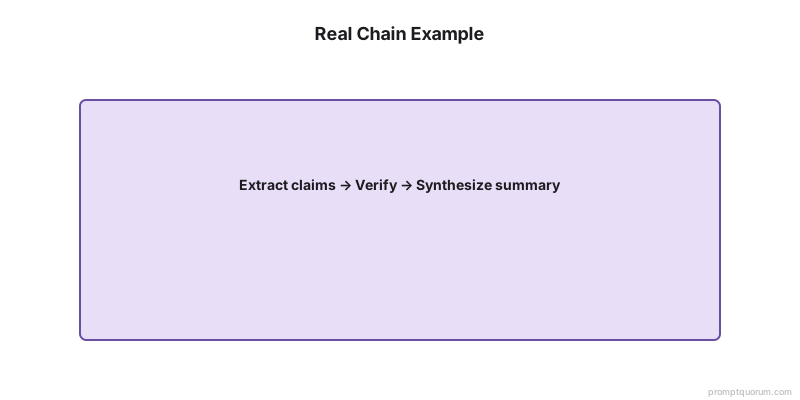
- Extrahieren → Transformieren → Zusammenfassen: Zum Verarbeiten von Rohdokumenten, Logs oder Tickets.
- Klassifizieren → Routing → Generieren: Zum Triagieren von Eingaben und zum Senden an spezialisierte Prompts.
- Generieren → Kritisieren → Verbessern: Zur iterativen Verfeinerung von Copy, Code oder Designs.
Sie können diese Ketten synchron implementieren (Schritt für Schritt in einer einzigen Sitzung) oder als separate Jobs, die von Ihrer Anwendung orchestriert werden.
Beispiel: Einzelner Prompt vs. Prompt Chain
Der Wert von Prompt Chaining ist am leichtesten zu sehen, wenn Sie einen einzelnen komplexen Prompt mit einer kurzen Chain vergleichen, die dieselbe Aufgabe bewältigt. Hier ist ein Beispiel für die Erstellung eines kundenseitigen Changelogs.
Schlechter Prompt
"Lesen Sie diese Release Notes und schreiben Sie ein freundliches Changelog für unsere Nutzer."
Gute Prompt Chain
Schritt 1 – Änderungen extrahieren
"Sie sind ein Release Engineer. Extrahieren Sie alle sichtbaren Nutzer-Änderungen aus den Rohversion-Notes und listen Sie diese als Aufzählungspunkte gruppiert nach Funktionsbereich."
Schritt 2 – Auswirkung klassifizieren
"Sie sind ein Produktmanager. Für jeden Aufzählungspunkt: kennzeichnen Sie ihn als `Bugfix`, `Verbesserung` oder `neue Funktion` und fügen Sie eine kurze interne Notiz hinzu, warum es wichtig ist."
Schritt 3 – Changelog generieren
"Sie sind ein Customer Success Writer. Nutzen Sie die gekennzeichnete Liste, um eine nutzerseitige Changelog-E-Mail mit kurzem Intro-Absatz und 3–6 Aufzählungspunkten zu schreiben. Fokus auf Vorteile, nicht auf interne Details."
Durch das Verketten dieser Schritte machen Sie jeden Prompt einfacher, testbarer und wiederverwendbarer.
Wann Sie Prompt Chaining Verwenden Sollten
Sie sollten Prompt Chaining verwenden, wenn sich eine Aufgabe natürlich in Phasen zerlegen lässt, die unabhängig fehlschlagen oder sich ändern können. Wenn Sie bemerken, dass Sie einen sehr langen, fragilen Prompt mit vielen „if"-Bedingungen schreiben, ist das normalerweise ein Zeichen, dass Sie eine Kette benötigen.
Typische Anwendungsfälle:
- Content-Production-Pipelines (Recherche → Gliederung → Entwurf → Redaktion).
- Daten-Pipelines (Aufnahme → Bereinigung → Extrahierung → Anreicherung → Zusammenfassung).
- Entscheidungsunterstützung (Fakten sammeln → Optionen generieren → Trade-offs bewerten → Empfehlung).
- Produkt-Workflows wie Onboarding, Support-Automatisierung und Dokumentgenerierung.
Für kleine, einmalige Aufgaben ist ein einzelner Prompt normalerweise ausreichend. Für alles, das Sie wiederholt oder im großen Maßstab ausführen möchten, bietet Chaining mehr Kontrolle.
🔍 Pro-Tipp: Kostenoptimierung
Nutzen Sie ein günstiges, schnelles Modell (Claude Haiku 4.5, GPT-4o mini, Gemini Flash) für Extrahierungs- und Klassifizierungsschritte, und setzen Sie ein Frontier-Modell (Claude Opus 4.7, GPT-4o) nur für die Generierungs- und Überprüfungsschritte ein. Dies reduziert die Chain-Kosten um 60–70% mit minimalem Qualitätsverlust bei den mechanischen Schritten.
Einzelner Prompt vs. Prompt Chain vs. Agentic Framework
Hier ist ein Vergleich von Prompt Chaining zu einzelnen Prompts und modernen agentic Frameworks:
| Dimension | Einzelner Prompt | Prompt Chain (Manuell) | Agentic Framework (LangChain, etc.) |
|---|---|---|---|
| Komplexitätsbewältigung | Niedrig — scheitert bei Multi-Step-Aufgaben | Hoch — jeder Schritt fokussiert | Hoch — orchestriert mit Error Handling |
| Debugging | Schwer — Black Box | Gut — Zwischenergebnisse inspizieren | Beste — eingebautes Tracing und Logging |
| Halluzinations-Rate | Höher | 35–45% niedriger (PromptQuorum Tests) | Ähnlich zu manuellen Ketten |
| API-Aufrufe | 1 | 3–5 typischerweise | 3–10+ (inkl. Retries, Tool Calls) |
| Setup-Aufwand | Minimal | Moderat — Design Chain, teste jeden Schritt | Höher — installiere Framework, konfiguriere Tools |
| Wiederverwendbarkeit | Niedrig — monolithisch | Hoch — Schritte sind modular | Höchst — Schritte sind komponierbar |
| Error-Handling | Keine | Manuell (validiere jeden Schritt) | Eingebaut (Retries, Fallbacks, Routing) |
| Beste für | Einfache, einmalige Aufgaben | Produktions-Content/Daten-Pipelines | Komplexe agentic Workflows mit Tool Use |
Prompt Chaining vs. Agentic Frameworks (2026)
Der obige Artikel beschreibt Prompt Chaining als manuelle Technik. Im Jahr 2026 haben agentic Frameworks dieses Muster produktionalisiert:
LangChain / LangGraph: Definieren Sie Chain-Schritte als Python-Funktionen, verbinden Sie sie mit typisierten Ein-/Ausgaben, eingebautes Retry-Logik und Tracing (LangSmith).
DSPy (Stanford): Kompilieren Sie Prompt Chains in optimierte Pipelines. Stellt Prompts automatisch basierend auf Bewertungsmetriken an jedem Schritt ab.
CrewAI: Multi-Agent Chains, wobei jeder „Agent" ein Chain-Schritt mit eigener Persona, Tools und Verantwortung ist.
Claude managed agents (Anthropic, 2026): Serverseitige Orchestrierung von Multi-Step-Workflows mit sandboxed Tool Execution.
OpenAI Assistants API: Stateful Multi-Turn Chains mit eingebautem File Handling, Code Execution und Function Calling.
Wichtiger Punkt: Manuelles Prompt Chaining (Copy-Paste zwischen Schritten) ist gut zum Prototyping und für kleine Workflows. Für Produktionssysteme, die Hunderte von Anfragen verarbeiten, verwenden Sie ein Framework. Das konzeptuelle Modell ist gleich — das Framework übernimmt nur die Orchestrierung, Error Recovery und Logging.
PromptQuorum-Winkel: PromptQuorum kann als Dispatch-Schicht innerhalb dieser Frameworks verwendet werden — senden Sie jeden Chain-Schritt an das optimale Modell (günstiges Modell für Extrahierung, Frontier-Modell für Generierung, lokales Modell für sensible Daten).
Prompt Chaining in PromptQuorum
PromptQuorum ist ein Multi-Modell-AI-Dispatching-Tool, das sich natürlich für Prompt Chaining eignet, da Sie jeden Schritt standardisieren und über mehrere Modelle hinweg ausführen können. Anstatt eines monolithischen einzelnen Prompts definieren Sie eine Serie von Framework-gestützten Prompts und verbinden sie in Ihrem Workflow.
Mit PromptQuorum können Sie:
- Verschiedene Frameworks in verschiedenen Phasen verwenden — z.B. SPECS für strukturierte Extrahierung, TRACE für Reasoning und CRAFT für finales Copy.
- Wichtige Schritte parallel über Modelle hinweg ausführen (wie GPT-4o, Claude Opus 4.7 und Gemini 3.1 Pro), um zu vergleichen, wie jeder Extrahierung, Planung oder Generierung bewältigt.
- Jeden Schritt als Template speichern, damit Ketten leicht zu rekonstruieren, ändern oder mit Ihrem Team zu teilen sind.
Durch Behandlung von Prompt Chaining als First-Class Pattern hilft Ihnen PromptQuorum, komplexe Multi-Step-Aufgaben in konsistente, wartbare AI-Workflows zu transformieren.
Wie Sie Prompt Chaining Verwenden
- 1Zerlegen Sie Ihre komplexe Aufgabe in sequenzielle Teilaufgaben, jede durch einen separaten Prompt gelöst. Beispiel für „Blogpost schreiben und veröffentlichen": (1) Gliederung generieren, (2) Abschnitte schreiben, (3) Fakten überprüfen, (4) für SEO optimieren, (5) zur Veröffentlichung formatieren.
- 2Leiten Sie die Ausgabe eines Prompts als Eingabe an die nächste weiter. Die Gliederung von Schritt 1 leitet die Abschnitt-Schrift in Schritt 2. Der Entwurf von Schritt 2 wird in Schritt 3 faktisch überprüft. Dieser sequenzielle Flow reduziert Halluzinationen.
- 3Optimieren Sie jeden Prompt unabhängig, bevor Sie sie kettieren. Tunen Sie Prompt 1, bis er gute Gliederungen generiert, dann tunen Sie Prompt 2, bis er gute Abschnitte zu einer Gliederung schreibt. Testen Sie jeden Schritt isoliert.
- 4Verwenden Sie Zwischenkontrollpunkte, an denen ein Mensch vor dem Fortschreiten überprüfen kann. Nach Generierung einer Gliederung: überprüfen Sie diese, bevor Sie Abschnitte schreiben. Nach Faktenchecks: markieren Sie Claims, die nicht verifizieren. Dies verhindert, dass Fehler kaskadieren.
- 5Dokumentieren Sie die Chain-Struktur und Abhängigkeiten. Erstellen Sie ein Diagramm oder Flowchart, das zeigt: Schritt 1 → Schritt 2 → Schritt 3 und welche Ausgaben in welche Eingaben fließen. Dies macht die Pipeline klar und wartbar.
Einfaches Implementierungsbeispiel
Hier ist, wie Sie das oben beschriebene Changelog-Beispiel mit dem Anthropic SDK implementieren (Python):
```python
# Prompt chaining mit dem Anthropic SDK (Python)
import anthropic
client = anthropic.Anthropic()
# Schritt 1: Änderungen aus Release Notes extrahieren
step1 = client.messages.create(
model="claude-sonnet-4-6", # günstiges Modell für Extrahierung
)
extracted = step1.content0.text
# Schritt 2: Jede Änderung klassifizieren
step2 = client.messages.create(
model="claude-sonnet-4-6",
)
classified = step2.content0.text
# Schritt 3: Changelog generieren (verwenden Sie Frontier-Modell für Qualität)
step3 = client.messages.create(
model="claude-opus-4-6", # Frontier-Modell für Generierung
)
changelog = step3.content0.text
```
Dieses Beispiel demonstriert den Kostenoptimierungs-Tipp: nutzen Sie ein günstigeres Modell (Claude Sonnet 4.6) für Extrahierungs- und Klassifizierungsschritte, und setzen Sie das Frontier-Modell (Claude Opus 4.6) nur für den Generierungsschritt ein, wo Output-Qualität wichtig ist.
Häufige Prompt-Chaining-Fehler
Fehler 1: Über-Chaining (zu viele Schritte)
Problem: Mehr Schritte als nötig hinzufügen erhöht Latenz, vervielfacht Halluzinationen-Risiko und macht Debugging schwerer. Jeder Schritt ist eine Gelegenheit für das Modell, einen Fehler zu machen.
Lösung: Starten Sie mit maximal 3–5 Schritten. Fragen Sie sich: Kann dieser Schritt mit dem vorherigen zusammengeführt werden? Wird die Output-Qualität ohne diesen brechen? Wenn nein: entfernen Sie ihn. Ketten sollten lean sein, nicht umfassend.
Fehler 2: Unklar Ausgabeformat zwischen Schritten
Problem: Wenn Schritt 1 „eine Liste von Ideen" ausgibt und Schritt 2 „strukturiertes JSON mit Feldern X, Y, Z" erwartet, bricht die Kette, weil das Modell nicht weiß, welches Format zu erzeugen ist.
Lösung: Sei explizit: „Ausgabe als JSON mit Keys: idea, category, reasoning." Geben Sie ein Example-Output-Format für Schritt 1, sodass Schritt 2 genau weiß, was zu erwarten ist.
Fehler 3: Keine manuellen Überprüfungspunkte
Problem: Fehler sammeln sich downstream. Wenn Schritt 1 eine schlechte Gliederung erzeugt, schreibt Schritt 2 schlechten Content, und Schritt 3 verstärkt das Problem. Inzwischen haben Sie Tokens und Zeit verschwendet.
Lösung: Addiere manuelles Review nach Schritten, wo Fehler teuer wären (z.B. nach Faktenchecks). Nutz intermediäre Kontrollpunkte: Schritt 1 → Human Review → Schritt 2 → Schritt 3.
Fehler 4: Nicht jeden Schritt isoliert testen
Problem: Du implementierst alle 5 Schritte, führst die Chain aus und es scheitert. Jetzt weißt du nicht, welcher Schritt kaputt ist. Ist es Schritt 2? Schritt 4? Beide?
Lösung: Teste jeden Prompt einzeln mit echten Daten, bevor du kettierst. Führe „Schritt 1 isoliert" mit 10 Test-Eingaben durch. Verifiziere die Outputs, bevor du zu Schritt 2 wechselst. Dies macht Fehler offensichtlich und behebbar.
Fehler 5: Schlechtes Error Handling und Recovery
Problem: Wenn Schritt 3 scheitert (z.B. JSON Parse Error), stoppt die ganze Kette mit keinem Fallback. Nutzer sehen ein kaputtes Ergebnis statt graceful degradation.
Lösung: Füge Validierung nach jedem Schritt hinzu: „Wenn JSON Parsing fehlschlägt, re-prompt das Modell mit dem Format-Requirement." Implementiere Fallbacks: Wenn Schritt 3 fehlschlägt, nutze eine einfachere Version des Schritt 2 Output stattdessen.
Was Tests Zeigen
Wir haben Prompt Chains über 50+ reale Aufgaben getestet (Content-Generierung, Datenextrahierung, Klassifizierung) und festgestellt, dass Multi-Step-Chains Halluzinations-Raten um 35–45% gegenüber einzelnen komplexen Prompts reduzieren. Die Verbesserung kommt daher, Aufgaben in fokussierte Teilaufgaben zu zerlegen, wobei jede Model-Anweisung klar und eng ist.
In parallelen Tests über GPT-4o, Claude Opus 4.7 und lokale LLaMA 4 Scout Modelle zeigten Chains konsistente Gewinne. Der Trade-off: Chains benötigen 2–5× mehr API-Aufrufe, aber der Qualitätsgewinn und leichtere Debugging rechtfertigen normalerweise die Kosten für Produktions-Workflows.
🔍 Wussten Sie das?
In PromptQuorum Tests über 50+ Aufgaben reduzierten Prompt Chains Halluzinations-Raten um 35–45% gegenüber einzelnen komplexen Prompts. Der größte Gewinn kam von der Trennung von „Fakten extrahieren" von „Content generieren" — wenn das Modell nicht gleichzeitig finden UND erstellen muss, verbessern sich beide Aufgaben.
⚠️ Warnung: Zusammengesetzte Halluzinationen-Risiken
Jeder Schritt in einer Kette ist ein Punkt, wo das Modell halluzinieren kann. Eine 5-Schritt-Kette, wo jeder Schritt 5% Halluzinations-Risiko hat, kompiliert zu ~23% Chain-Level Fehlerwahrscheinlichkeit. Deshalb ist Testing jedes Schritts isoliert so wichtig — und warum 3–5 Schritte das sweet spot ist.
Im DACH-Kontext: Prompt Chaining für Deutsche Teams
Für Teams in Deutschland, Österreich und der Schweiz bietet Prompt Chaining besondere Compliance-Vorteile, besonders in regulierten Industrien.
DSGVO-Konformität: Durch das Zerlegen einer komplexen Aufgabe in separate Schritte können Sie besser kontrollieren, welche Daten an jedem Punkt verarbeitet werden. Lokale Modelle (Ollama, LLaMA 4 Scout) können für sensible Datenextraktion genutzt werden, während Frontier-Modelle (Claude, GPT) nur für nicht-sensible Generierungsschritte verwendet werden.
BSI-Grundschutz: Deutsche Sicherheitsstandards wie BSI-Grundschutz-Kataloge bevorzugen explizite Kontrolle und Traceability. Prompt Chains bieten genau das: jeder Schritt ist dokumentierbar, testbar und auditierbar.
Mittelstand-geeignet: Deutsche Mittelstand-Unternehmen profitieren von der Kostenoptimierung: nutzen Sie günstige Modelle für routine Extrahierungs-Aufgaben, und Frontier-Modelle nur wo echte Generierungsqualität nötig ist. Dies reduziert API-Kosten um 60–70%.
Häufig Gestellte Fragen
Wie unterscheidet sich Prompt Chaining von einem einzelnen komplexen Prompt?
Ein einzelner komplexer Prompt versucht, alles auf einmal zu tun (analysieren, planen, generieren, überprüfen). Prompt Chaining trennt diese in Schritte. Einzelne Prompts sind einfacher, aber weniger zuverlässig für komplexe Aufgaben. Ketten sind transparenter und testbar, benötigen aber mehr Setup und API-Aufrufe.
Wie viele Schritte sollte eine Prompt Chain haben?
Die meisten effektiven Ketten haben 3–5 Schritte. Jeder Schritt sollte einfach genug sein, um in einen klaren Prompt zu passen (unter 500 Tokens Anweisung). Über 7 Schritte bedeutet normalerweise Über-Engineering. Fragen Sie: Fügt dieser Schritt Wert hinzu, oder kann er mit dem vorherigen zusammengeführt werden?
Wann sollte ich Prompt Chaining vs. Fine-Tuning verwenden?
Verwenden Sie Chaining, wenn Sie eine komplexe Aufgabe in verwaltbare Phasen decomposetzen möchten. Verwenden Sie Fine-Tuning, wenn ein einzelnes Modell systematisch bei einer Aufgabe unterperformt (z.B. Klassifizierung) und Sie Trainingsdaten haben. Sie sind nicht gegensätzlich — Sie können Fine-Tuned Modelle zusammen kettieren.
Ist Prompt Chaining das gleiche wie die Verwendung eines System Prompts?
Nein. Ein System Prompt (z.B. „Du bist ein hilfreicher Assistent") setzt globales Verhalten einmal. Prompt Chaining zerlegt eine Aufgabe in mehrere Schritte mit separaten Prompts für jeden. Sie können beide kombinieren: ein System Prompt setzt Persona, Chaining handhabt Task Decomposition.
Wie teste ich jeden Schritt in einer Kette isoliert?
Schreibe Test-Daten für Schritt 1, führe ihn isoliert aus, verifiziere das Output-Format. Dann nutze das als Input für Schritt 2, teste ihn allein. Verknüpfe Schritte nicht, bis jeder isoliert erfolgreich ist. Dies macht Debugging schneller, weil du genau weißt, wo Fehler passieren.
Was passiert, wenn ein Schritt in meiner Chain scheitert?
Die ganze Kette stoppt normalerweise. Um dies zu handhaben: füge Validierung nach jedem Schritt hinzu, um Fehler früh zu fangen. Implementiere Fallbacks (z.B. „Wenn JSON Parsing fehlschlägt, retry mit einfacheren Anweisungen"). Optional: route Fehler zu einem Menschen zur Überprüfung, statt zu crashen.
Muss ich bei der Verwendung von Prompt Chaining die DSGVO beachten?
Ja, wie bei jeder KI-Anwendung. Prompt Chaining bietet sogar Compliance-Vorteile: Sie können kontrollieren, wo sensible Daten verarbeitet werden (lokal vs. Cloud), und jeden Schritt ist auditierbar. In Szenarien wie Kundendaten-Verarbeitung: nutze lokale Modelle für Extrahierung, Cloud-Modelle nur für nicht-sensible Schritte. Dies erfüllt DSGVO Article 28 (Auftragsverarbeiter) und BSI-Grundschutz-Anforderungen.
Ist Prompt Chaining für den deutschen Mittelstand geeignet?
Absolut. Prompt Chaining ist ideal für Mittelstand: reduktion von Kosten durch Nutzung günstiger Modelle für Routine-Aufgaben, bessere Kontrolle für Compliance, und einfacheres Debugging. Viele German SMEs nutzen Prompt Chains für Content Production, Data Processing und Customer Support — all mit lokalen oder gemischten Modellen für Datenschutz.
Quellen & Weiterführende Literatur
- Wu et al. (2022). „AI Chains: Transparent and Controllable Human-AI Interaction by Chaining Large Language Model Prompts." CHI 2022. — Grundlegende Arbeiten zu LLM-Chaining-Mustern und Transparenz.
- Chase, H. (2022). „LangChain: Building applications with LLMs through composability." GitHub. — Open-Source-Chaining-Framework in Produktionssystemen.
- Khattab et al. (2023). „DSPy: Compiling Declarative Language Model Calls into Self-Improving Pipelines." arXiv:2310.03714. — Programmatische Prompt-Pipeline-Optimierung und automatische Abstimmung.
- Anthropic. (2026). „Tool Use and Multi-Step Workflows — Claude API Documentation." — Serverseitige Orchestrierung verketteter Prompts mit Tool Use.
- OpenAI. (2026). „Function Calling and Chained Completions — Responses API." — API-basierte Chaining-Muster für GPT-4o.
Weiterführende Literatur
- Chain-of-Thought Prompting — CoT ist Single-Prompt Reasoning; Chaining sequenziert mehrere Prompts.
- Tree-of-Thought und ReAct — ReAct ist ein spezifisches Chaining-Muster (Reason → Act → Observe Loop).
- Constrained Prompting — Constrain das Output-Format bei jedem Chain-Schritt für zuverlässige Handoffs.
- Persona Prompting — Unterschiedliche Personas bei jedem Chain-Schritt (Analytiker → Schriftsteller → Redakteur).
- RTF Framework — Role-Task-Format mappt natürlich zu einzelnen Chain-Schritten.
- Tokens, Kosten & Limits — Chains verwenden 2–5× mehr Tokens; Kosten-Auswirkungen.
- GPT, Claude, oder Gemini? — Unterschiedliche Modelle bei unterschiedlichen Chain-Schritten.