
Wichtigste Erkenntnisse
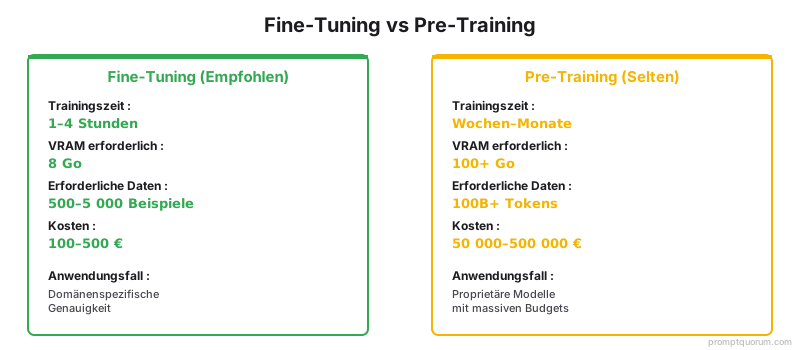
- Fine-Tuning (empfohlen): 8 GB VRAM, 500+ Trainingsbeispiele, 1–4 Stunden. Kosten: 100–500 €.
- Pre-Training: 8+ GPUs, 100B+ Tokens, Wochen Training. Kosten: 50.000–500.000 €.
- Die meisten Organisationen sollten Fine-Tunen, nicht Pre-Trainieren. Sinkende Erträge für Custom Pre-Training.
- Beste Methode: Beginnen Sie mit Fine-Tuning auf Ihren Domänendaten, evaluieren Sie dann, ob Pre-Training begründet ist.
- Ab April 2026 ist Pre-Training selten begründet, außer Sie benötigen proprietäres Modell.
Fine-Tuning vs. Pre-Training
| Aspekt | Fine-Tuning | Pre-Training |
|---|---|---|
| Trainingszeit | 1–4 Stunden | Wochen–Monate |
| VRAM erforderlich | 8 GB | 100+ GB (Multi-GPU) |
| Daten erforderlich | 500–5.000 Beispiele | 100B+ Tokens |
| Kosten | 100–500 € | 50.000–500.000 € |
| Anpassung | Fachwissen | Proprietäres Modell |
| Wann verwenden | 99% der Fälle | Seltene, spezialisierte Bedürfnisse |
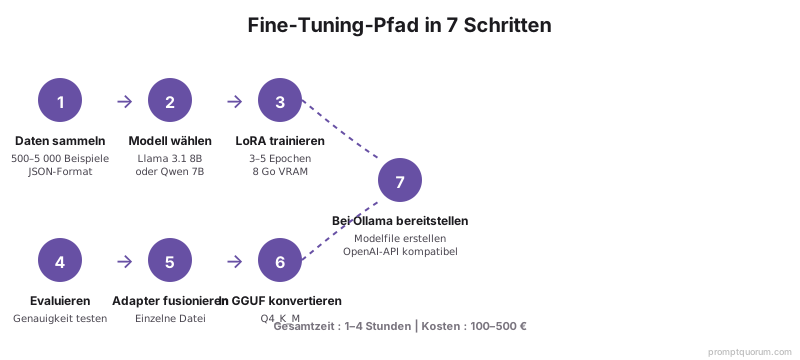
Fine-Tuning-Pfad (Empfohlen)
- 1Sammeln Sie 500–5.000 domänenspezifische Beispiele (Qualität ist wichtig).
- 2Wählen Sie Basismodell (Llama 3.1 8B, Qwen 7B, etc.).
- 3Verwenden Sie LoRA für effizientes Training (4× schneller, gleiche Qualität).
- 4Trainieren Sie 3–5 Epochen auf GPU.
- 5Evaluieren Sie auf Test-Set (Genauigkeit, Recall, benutzerdefinierte Metriken).
- 6Zusammenführen von LoRA-Adapter mit Basismodell.
- 7Bereitstellung als Produktionsmodell.
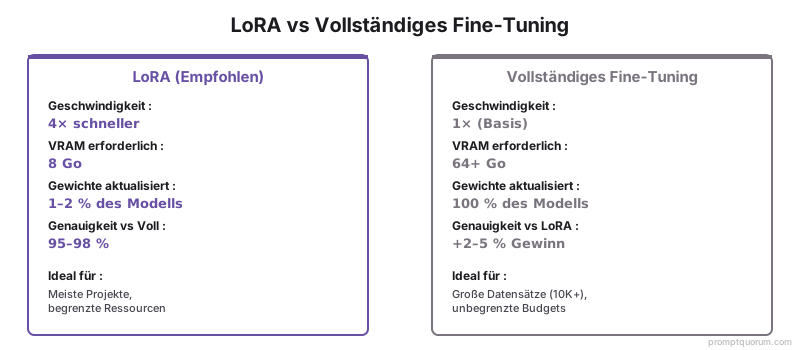
LoRA vs. vollständiges Fine-Tuning: Welches wählen?
LoRA (Low-Rank Adaptation) aktualisiert nur 1–2% der Modellgewichte, macht es 4× schneller und benötigt 80–90% weniger VRAM als vollständiges Fine-Tuning. Vollständiges Fine-Tuning aktualisiert alle Gewichte und liefert marginal bessere Ergebnisse (2–5% Genauigkeitsverbesserung), erfordert aber 64+ GB VRAM und erhebliche Rechenressourcen.
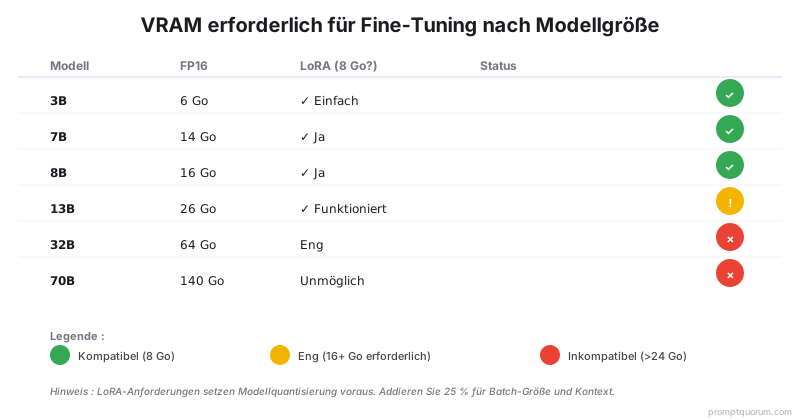
VRAM-Anforderungen nach Modellgröße
Nicht alle Modelle passen in 8 GB VRAM zum LoRA Fine-Tuning. Hier ist, was Sie ausführen können:
Bereitstellung Ihres benutzerdefinierten Modells auf Ollama
Nach Zusammenführung des LoRA-Adapters, Bereitstellung auf Ollama in 3 Schritten:
- 1Schritt 1 – In GGUF exportieren: Verwenden Sie llama.cpp-Konvertierungsskript, um Ihr zusammengeführtes Modell von PyTorch/Safetensors-Format in GGUF zu konvertieren. Dies ist wesentlich für Ollama- und llama.cpp-Kompatibilität. ```bash python convert_hf_to_gguf.py \ --model ./merged-model \ --outfile ./my-custom-model.gguf \ --outtype q4_k_m ```
- 2Schritt 2 – Ollama Modelfile erstellen: Definieren Sie System-Prompt, Parameter und Inferenz-Einstellungen Ihres Modells. ``` FROM ./my-custom-model.gguf SYSTEM "Sie sind ein [Ihre Domäne] Experte..." PARAMETER temperature 0,4 PARAMETER num_ctx 4096 ```
- 3Schritt 3 – Registrieren und ausführen: Laden Sie Ihr Modell in Ollama für lokale oder API-Zugriff. ```bash ollama create my-custom-model -f Modelfile ollama run my-custom-model ``` Ihr Fine-Tuned-Modell ist nun über Ollamas OpenAI-kompatible API unter localhost:11434 zugänglich – identisch mit jedem Standard-Ollama-Modell. Verwenden Sie es mit Continue.dev, Open WebUI oder Ihrer eigenen Anwendung über das Python/Node.js OpenAI SDK.
Pre-Training: Wann und warum
Pre-Training bedeutet Lernen aus Rohdaten (Bücher, Dokumente, Code). Nur begründet, wenn:
1. Sie >10 Milliarden Tokens eindeutiger, wertvoller Daten haben.
2. Vortrainierte Modelle konsistent bei Ihrer Domäne versagen.
3. Budget ist >50.000 € (realistisch).
4. Sie benötigen proprietäres Modell (Wettbewerbsvorteil).
Beispiel: Ein Genomics-Unternehmen mit 500 GB privater Forschungsdaten könnte custom Pre-Training begründen.
Entscheidungsmatrix: Welcher Ansatz?
Drei Hauptansätze für benutzerdefinierte Modelle. Wählen Sie basierend auf Ihren Daten, Budget und Zeitrahmen:

Domänenanpassungsstrategien
Verbessern Sie Modellleistung auf Ihrer Domäne, ohne vollständiges Pre-Training:
- Fortgesetztes Pre-Training: Basismodell, trainiert auf Ihren Domänendaten (10B+ Tokens). Günstiger als vollständiges Pre-Training.
- LoRA Fine-Tuning: Praktischste. Abstimmung auf 500+ Beispiele.
- Prompt-Engineering: Verfassen Sie gute Prompts. Kostenlos, aber begrenzt.
- RAG: Abrufen von Dokumenten, Bereitstellung von Kontext. Funktioniert ohne Umschulung.
- Ensemble: Kombination mehrerer Modelle.
Evaluierungsmetriken
Modellqualität messen:
- Aufgabenspezifische Metriken: Genauigkeit, F1-Score, BLEU (für Textgenerierung).
- Benchmark-Tests: Ausführen auf Standardbenchmarks (MMLU, HumanEval).
- Menschliche Evaluierung: Manuelle Bewertung (zeitaufwändig aber genau).
- Geschäftsmetriken: Verbessert Modell tatsächliche Geschäftsergebnisse?
Häufige Fehler
- Pre-Training ohne ausreichend Daten. <10B Tokens ist verschwendete Rechenleistung. Fine-Tune stattdessen.
- Keine ordentliche Evaluierung. Nur Trainingsverlust ist irreführend. Test auf unsichtbaren Daten.
- Erwartet, dass benutzerdefiniertes Modell GPT-4 passt. Lücke zwischen offenen und Frontier-Modellen ist groß.
- Inferenzkosten ignorieren. Größere benutzerdefinierte Modelle = höhere Inferenzkosten. Trade-off bedenken.
- GGUF-Konvertierungsschritt überspringen. Nach Fine-Tuning mit Unsloth oder HuggingFace ist Ihr Modell in PyTorch/Safetensors-Format. Ollama und llama.cpp benötigen GGUF. Verwenden Sie llama.cpp `convert_hf_to_gguf.py` zum Konvertieren. Ohne diesen Schritt kann Ihr Fine-Tuned-Modell nicht in Ollama, LM Studio oder einem GGUF-basierten Inference-Engine ausgeführt werden. Immer während Konvertierung quantisieren (Q4_K_M empfohlen), um Dateigröße 3–4× zu reduzieren.
Häufig gestellte Fragen
Kann Fine-Tuning die Qualität eines vortrainierten Modells erreichen?
Fine-Tuned-Modelle können die Leistung des Basismodells in Ihrer spezifischen Domäne übertreffen, entsprechen aber nicht der Breite des Wissensinhalts eines größeren vortrainierten Modells. Llama 3.1 8B, das auf juristische Dokumente fine-tuned ist, wird Llama 3.1 70B bei juristischen Aufgaben übertreffen, aber bei allgemeinem Wissen unterlegen sein. Fine-Tune, wenn domänenspezifische Genauigkeit wichtiger ist als Breite.
Wie viele Daten brauche ich für effektives Fine-Tuning?
Mindestens 500–1.000 Beispiele für ein nutzbares Modell; 5.000+ für Produktionsqualität. Datenqualität ist wichtiger als Menge – 1.000 hochwertige Beispiele schlagen 50.000 minderwertige. Verwenden Sie LoRA für kleine Datensätze (500–2.000 Beispiele) und vollständiges Fine-Tuning nur mit 10.000+ Beispielen.
Was ist der Unterschied zwischen LoRA und vollständigem Fine-Tuning?
LoRA (Low-Rank Adaptation) aktualisiert nur einen kleinen Bruchteil der Gewichte (~1–2% der Modellgröße), macht es 4× schneller und benötigt 80–90% weniger VRAM. Vollständiges Fine-Tuning aktualisiert alle Gewichte und liefert marginal bessere Ergebnisse (~2–5% Genauigkeitsverbesserung), erfordert aber erhebliche Rechenressourcen. Verwenden Sie LoRA für die meisten Projekte; vollständiges Fine-Tuning nur, wenn Sie das Budget haben.
Wann sollte ich Pre-Training statt Fine-Tuning in Betracht ziehen?
Nur wenn: (1) Sie >10 Milliarden Tokens eindeutiger Daten haben, (2) Fine-Tuning konsistent Ihr Genauigkeitsziel nicht erreicht, (3) Budget >50.000 € ist und (4) Sie ein proprietäres Modell für Wettbewerbsvorteil benötigen. Für 99% der Organisationen ist Fine-Tuning die richtige Wahl.
Wie beurteile ich, ob mein benutzerdefiniertes Modell produktionsreif ist?
Testen Sie in 3 Dimensionen: (1) aufgabenspezifische Metriken (Genauigkeit, F1, BLEU), (2) Benchmark-Vergleich (auf MMLU oder HumanEval laufen, um mit Basismodell zu vergleichen), (3) Geschäftsmetriken (verbessert es tatsächliche Ergebnisse?). Wenn Ihr Fine-Tuned-Modell das Basismodell bei Ihrer Aufgabe um 5–10% übertrifft, ist es produktionsreif.
Kann ich Fine-Tuning mit Prompt-Engineering kombinieren?
Ja – das ist Best Practice. Fine-Tuning behandelt strukturelle Änderungen (Domänensprache, Format); Prompt-Engineering behandelt spezifische Anwendungsfälle. Ein Fine-Tuned Legal-Modell + gutes Prompt-Engineering wird beide zusammen übertreffen. Starten Sie mit Prompt-Optimierung (kostenlos), dann Fine-Tune, falls nötig.
Welches Framework sollte ich zum Fine-Tuning verwenden?
Unsloth (schnellste), Axolotl (flexibel) und Hugging Face Transformers (offiziell, umfassend dokumentiert) sind die Hauptoptionen. Unsloth empfohlen für Geschwindigkeit; Axolotl für Multi-GPU-Setups. Alle unterstützen LoRA und funktionieren mit Ollama zur Bereitstellung.
Wie weiß ich, ob Pre-Training die Kosten wert ist?
Machen Sie diese Berechnung: (1) Schätzen Sie die Fine-Tuning-Qualitätslücke bei Ihrer Aufgabe (z.B. Fine-Tuning erreicht 85%, Pre-Training könnte 92% erreichen). (2) Quantifizieren Sie Geschäftswert pro Genauigkeitspunkt (z.B. +1% Genauigkeit = €10k Umsatz). (3) Wenn (€50k Pre-Training-Kosten) < (Wert von 7% Verbesserung), dann Pre-Train. Falls nicht, Fine-Tune.
Muss ich bei der Verwendung von Unsloth die DSGVO beachten?
Ja. DSGVO Artikel 28 erfordert Verarbeitungsverträge, wenn Unsloth als Dienstleister handelt. Lokales Fine-Tuning auf Ihrer Infrastruktur erfüllt Datenschutz-Anforderungen besser. Bei Fine-Tuning mit personenbezogenen Daten: anonymisieren Sie wo möglich, dokumentieren Sie Verarbeitungszwecke, und führen Sie Datenschutz-Folgeabschätzungen durch. BSI-Grundschutz fordert Audits für ML-Systeme in Kritischen Infrastrukturen.
Ist Fine-Tuning für den deutschen Mittelstand geeignet?
Ja, sehr. Fine-Tuning kostet 100–500 € und 1–4 Stunden – ideal für KMUs. Viele Mittelständler haben fachspezifische Daten (Verträge, Kundeninteraktionen, Qualitätskontrolle), die Fine-Tuning rentabel machen. IT-Sicherheitsstandards (BSI-Grundschutz) werden durch lokales Fine-Tuning erfüllt. Deutsche Unternehmen in Finanz-, Rechts- und Ingenieurwesen profitieren besonders.
Rechtliche und regulatorische Erwägungen
Benutzerdefinierte Modelle präsentieren Datenschutz- und regulatorische Auswirkungen, die nach Region variieren. Verstehen Sie vor Bereitstellung eines Fine-Tuned oder vortrainierten Modells Ihre regionalen Compliance-Anforderungen:
- DSGVO & Datenschutz (Europa): DSGVO Artikel 28 fordert Verarbeitungsverträge bei Verwendung von Diensten wie Unsloth in der Cloud. Lokales Fine-Tuning auf Ihrer Infrastruktur erfüllt Datenschutz-Anforderungen besser. Artikel 5 (Dateminimierung) rät zum Fine-Tuning auf anonymisierten oder synthetischen Daten, wenn möglich. Führen Sie Datenschutz-Folgeabschätzungen durch. Dokumentieren Sie Verarbeitungszwecke und Aufbewahrungsrichtlinien.
- BSI-Grundschutz & Kritische Infrastrukturen (Deutschland/DACH): BSI-Grundschutz fordert für IT-Systeme in Kritischen Infrastrukturen (Energie, Wasser, Gesundheit, Finanz) Sicherheitscertifizierungen. Custom LLMs, die für diese Sektoren entwickelt werden, erfordern: (1) Audits des Fine-Tuning-Prozesses, (2) Versionskontrolle und Modellverzeichnis, (3) sichere Speicherung von Trainingsdaten, (4) regelmäßige Audits. Lokales Fine-Tuning ist bevorzugt.
- Mittelstand & KMU-Besonderheiten: Kleine Unternehmen haben oft weniger Ressourcen für Compliance. Empfehlungen: Fine-Tune auf anonymisierten Kundendaten (wenn möglich), halten Sie Audit-Logs, verwenden Sie lokale Infra für Datensensitive Modelle, und dokumentieren Sie Modellversionen.
Quellen
- Chinchilla Scaling Laws -- Optimale Compute-Zuteilung für Training und Inferenz.
- Instruction Tuning Übersicht -- Umfassende Überprüfung von Fine-Tuning-Ansätzen.
- LoRA: Low-Rank Adaptation -- Effiziente Fine-Tuning-Methode.
- Hugging Face Fine-Tuning-Leitfaden -- Offizielle Fine-Tuning-Dokumentation.