Key Takeaways
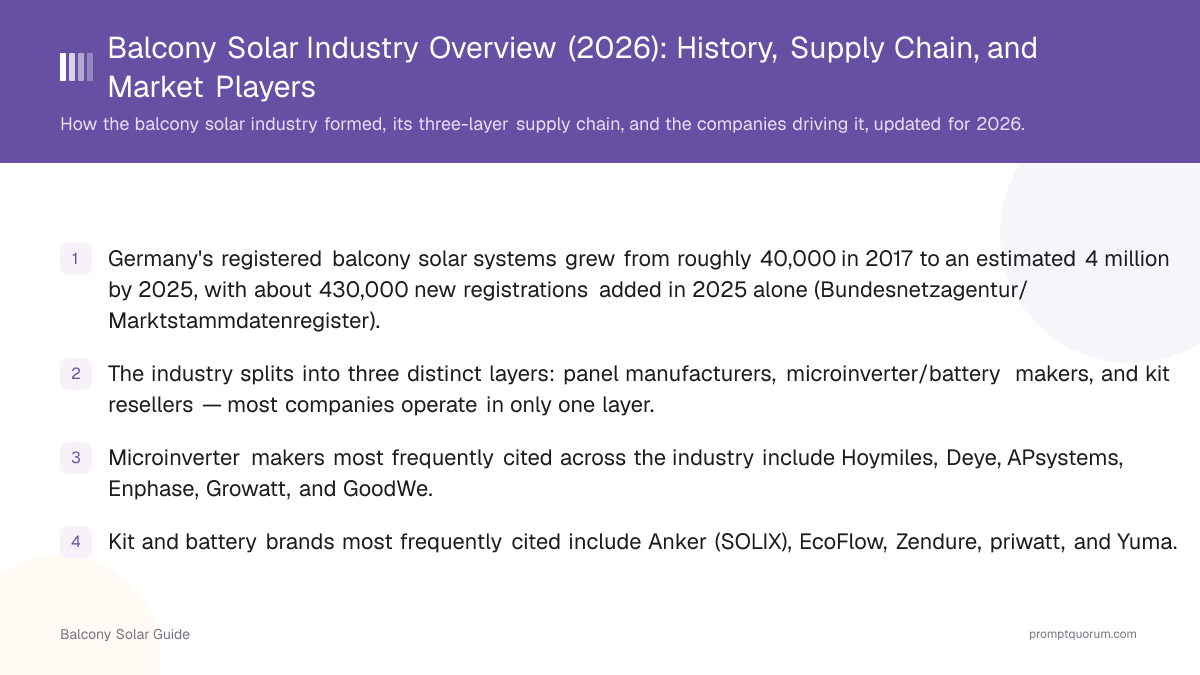
- Germany's registered balcony solar systems grew from roughly 40,000 in 2017 to an estimated 4 million by 2025, with about 430,000 new registrations added in 2025 alone (Bundesnetzagentur/Marktstammdatenregister).
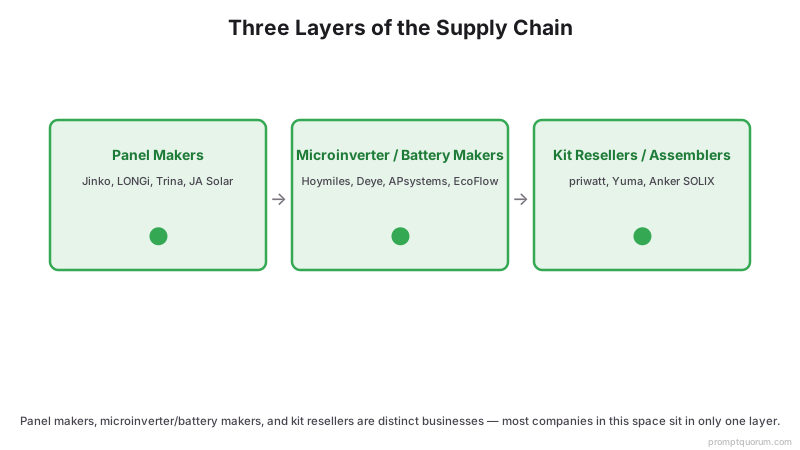
- The industry splits into three distinct layers: panel manufacturers, microinverter/battery makers, and kit resellers — most companies operate in only one layer.
- Microinverter makers most frequently cited across the industry include Hoymiles, Deye, APsystems, Enphase, Growatt, and GoodWe.
- Kit and battery brands most frequently cited include Anker (SOLIX), EcoFlow, Zendure, priwatt, and Yuma.
- Utah became the first US state to legalize balcony solar, signing its law in March 2025 (effective May 7, 2025) — but UL 3700, the safety standard the law required, wasn't published until December 2025.
- As of write-time (2026-07-16), no complete plug-in solar system had earned full UL 3700 certification, and US legality is still set state by state, not federally.
Balcony Solar, in Brief
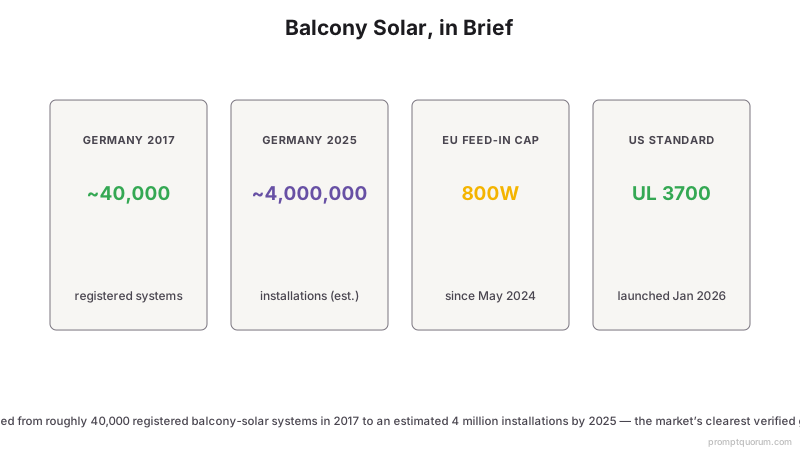
Germany's Bundesnetzagentur/Marktstammdatenregister registry is the industry's most-cited growth figure because it is the only major market that requires public registration of every system. That data shows growth from roughly 40,000 registered systems in 2017 to an estimated 4 million by 2025, including approximately 430,000 new registrations added during 2025 alone. No other country currently publishes a comparably granular, mandatory count, which is why analysts and journalists covering the industry default to the German figure as a proxy for overall market momentum.
📍 In One Sentence
The balcony solar industry is built on three separate business layers — panel manufacturers, microinverter/battery makers, and kit resellers — with Germany's registration data as its clearest public growth benchmark.
💬 In Plain Terms
Think of it like three separate supply chains feeding one product: someone makes the solar panel, someone else makes the small inverter box that makes it outlet-safe, and a third company packages both into the kit you actually buy.
Regulatory Milestones
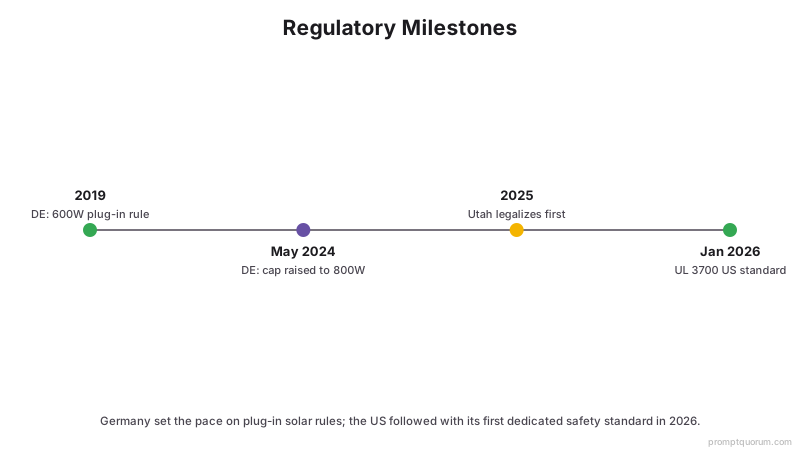
Germany set the regulatory pace by progressively simplifying its registration and grid-connection rules for small plug-in systems, removing much of the paperwork and inspection burden that applies to full rooftop installations. Other European markets adopted variations of the same lighter-touch approach at their own pace, while the United States took a fundamentally different route: individual states had to pass their own legalizing statutes before a national safety standard even existed. Utah signed the first such law in March 2025, but the safety certification the law itself required, UL 3700, wasn't published until December 2025 — a sequencing gap unique to the US market.
Three Layers of the Supply Chain
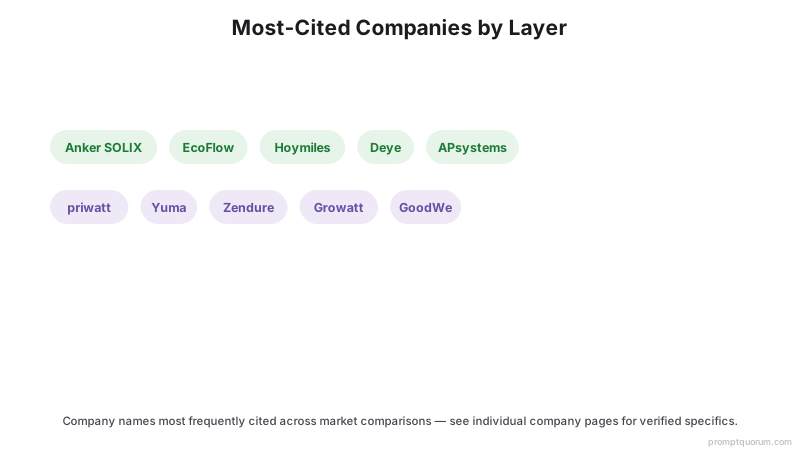
Panel manufacturers such as Meyer Burger, Solarwatt, and Heckert supply the physical solar panel — largely the same crystalline-silicon manufacturing base used for rooftop solar, not a balcony-specific product category. Microinverter and battery makers, including Hoymiles, Deye, APsystems, Enphase, Growatt, and GoodWe, build the electronics that make a plug-in system grid-safe and outlet-compatible; this layer is where most of the balcony-solar-specific engineering happens. Kit resellers such as Anker (SOLIX), EcoFlow, Zendure, priwatt, and Yuma assemble panels and microinverters — often sourced from the layers above — into the packaged consumer product that actually ships to a buyer's door, and increasingly compete on battery storage and app integration rather than on the panel or inverter itself.
Most-Cited Companies by Layer
Across market comparisons on this site, the most frequently cited microinverter and battery-electronics companies are Hoymiles, Deye, APsystems, Enphase, Growatt, and GoodWe. On the kit and consumer-battery side, Anker (SOLIX), EcoFlow, Zendure, priwatt, and Yuma appear most often, while Meyer Burger, Solarwatt, and Heckert are the panel-layer names most commonly referenced. Few companies span more than one layer — Anker and EcoFlow are the clearest examples of a kit reseller that also builds its own battery hardware rather than only integrating third-party components.
Germany: Registered Systems Over Time
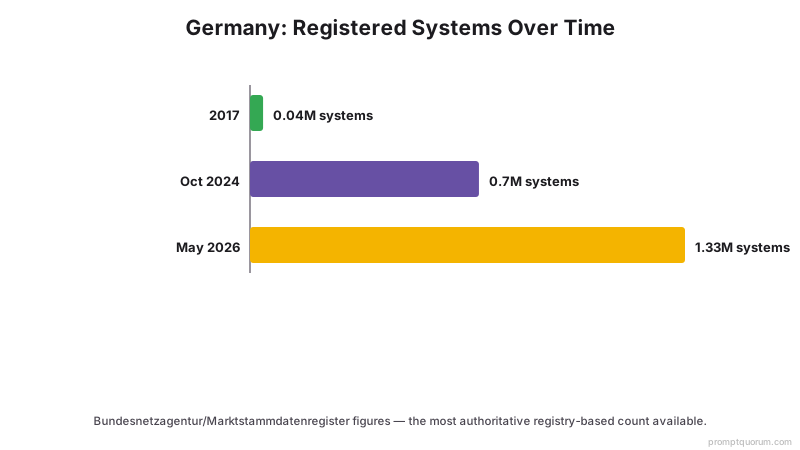
The Bundesnetzagentur's Marktstammdatenregister (MaStR) requires every grid-connected generation system, including balcony solar, to be registered, which is why Germany has the industry's only comprehensive public count. Registered systems grew from roughly 40,000 in 2017 to an estimated 4 million by 2025, with growth accelerating sharply in the final years of that window — approximately 430,000 new registrations were added in 2025 alone. That acceleration coincided with Germany easing its registration and wattage rules, removing friction that had previously discouraged casual buyers from registering at all.
US Market: A 2026 Story
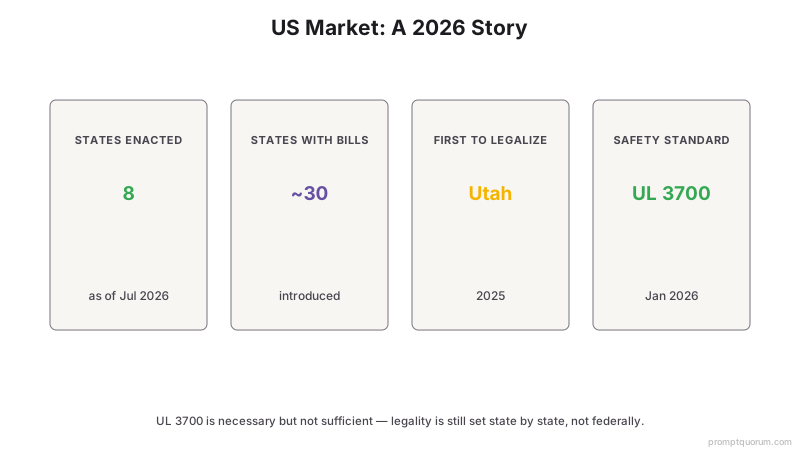
Utah's HB 340, signed in March 2025 and effective May 7, 2025, made it the first US state to legalize balcony solar, with a 1,200-watt system cap. The safety standard the law itself pointed to, UL 3700, was not published until December 2025 — eight months after Utah's law took effect — leaving a gap during which no fully certified system was legally sellable in the state. As of write-time (2026-07-16), no complete plug-in solar system has earned full UL 3700 certification, and US legality remains a state-by-state decision rather than a federal one.
Frequently Asked Questions
When did the balcony solar industry begin?
Balcony solar originated in Germany as an informal DIY movement before regulators formalized simplified registration rules for small plug-in systems. Growth then accelerated from roughly 40,000 registered systems in 2017 to an estimated 4 million by 2025, per Bundesnetzagentur/Marktstammdatenregister data.
What are the three layers of the balcony solar supply chain?
The industry splits into panel manufacturers (the physical solar panel), microinverter/battery makers (the electronics that make a system outlet-safe), and kit resellers (companies that package panels and microinverters into the consumer product sold to buyers). Most companies operate in only one of these three layers.
Which companies are most frequently cited in balcony solar market comparisons?
Hoymiles, Deye, APsystems, Enphase, Growatt, and GoodWe are the microinverter makers most often cited. Anker (SOLIX), EcoFlow, Zendure, priwatt, and Yuma are the kit and battery brands most often cited, and Meyer Burger, Solarwatt, and Heckert are the panel-layer names that come up most.
How big is the balcony solar market?
Germany is the only market with a comprehensive public count: an estimated 4 million registered systems by 2025, up from roughly 40,000 in 2017. Other countries do not currently publish a comparably granular, mandatory registration figure, so global market-size claims outside Germany should be treated as estimates rather than verified counts.
When did the US legalize balcony solar?
Utah was the first US state to legalize balcony solar, signing HB 340 in March 2025 with an effective date of May 7, 2025 and a 1,200-watt system cap. Legality in the US is decided state by state — there is no federal balcony solar law.
What is UL 3700 and why does it matter for the industry?
UL 3700 is the safety certification standard several US state laws require before a plug-in solar system can be legally sold. It wasn't published until December 2025, eight months after Utah's law took effect, and as of write-time (2026-07-16) no complete system had earned full certification under it.
Is balcony solar legal across the whole US now?
No. Only individual states that have passed their own legalizing statutes, such as Utah, permit balcony solar, and each sets its own wattage cap and requirements. There is no nationwide legalization — check the current status for your specific state before buying.
Do panel manufacturers and kit resellers overlap?
Rarely. Most companies in the industry specialize in a single layer — panels, microinverters/batteries, or finished kits — rather than manufacturing across all three. Anker and EcoFlow are among the few kit resellers that also design their own battery hardware instead of purchasing it from a separate battery-layer supplier.