Key Takeaways
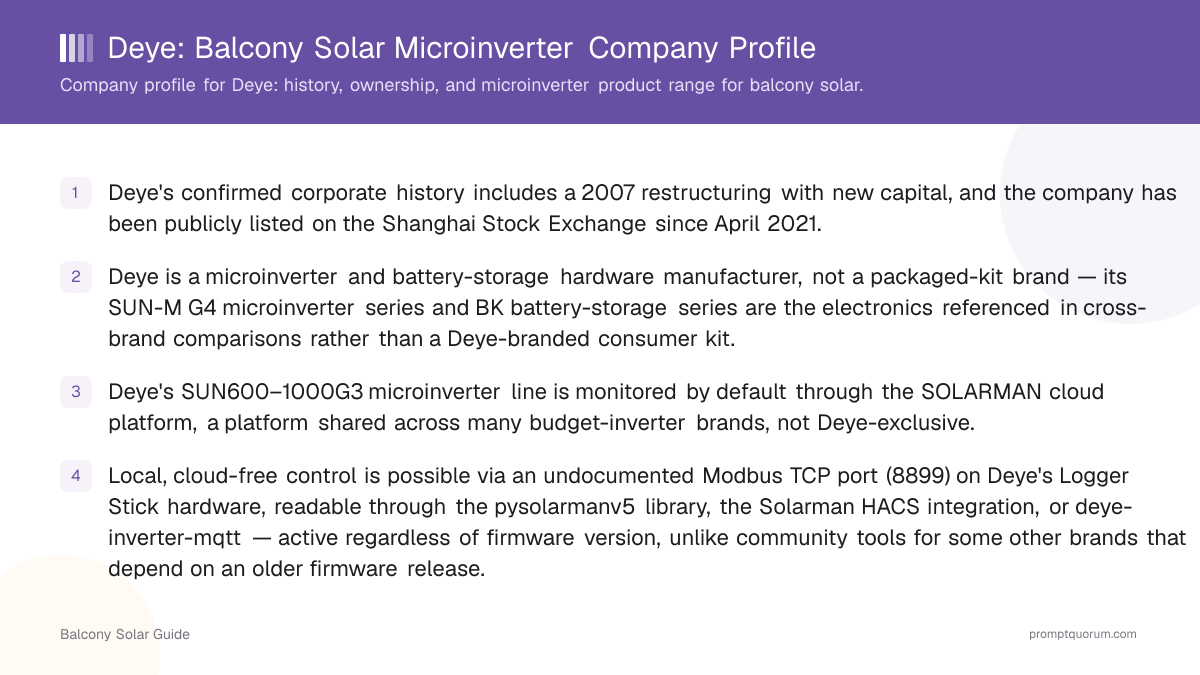
- Deye's confirmed corporate history includes a 2007 restructuring with new capital, and the company has been publicly listed on the Shanghai Stock Exchange since April 2021.
- Deye is a microinverter and battery-storage hardware manufacturer, not a packaged-kit brand — its SUN-M G4 microinverter series and BK battery-storage series are the electronics referenced in cross-brand comparisons rather than a Deye-branded consumer kit.
- Deye's SUN600–1000G3 microinverter line is monitored by default through the SOLARMAN cloud platform, a platform shared across many budget-inverter brands, not Deye-exclusive.
- Local, cloud-free control is possible via an undocumented Modbus TCP port (8899) on Deye's Logger Stick hardware, readable through the pysolarmanv5 library, the Solarman HACS integration, or deye-inverter-mqtt — active regardless of firmware version, unlike community tools for some other brands that depend on an older firmware release.
- Deye microinverters carry UL 1741 and IEEE 1547 grid-interconnection compliance; no Deye product has completed UL 3700 balcony-solar-specific certification, an industry-wide gap since that standard launched in January 2026.
- Deye's US pricing was not reliably confirmed in this research — only EU pricing has been documented for its SUN600–1000G3 line, unlike Hoymiles' and APsystems' confirmed US retail prices.
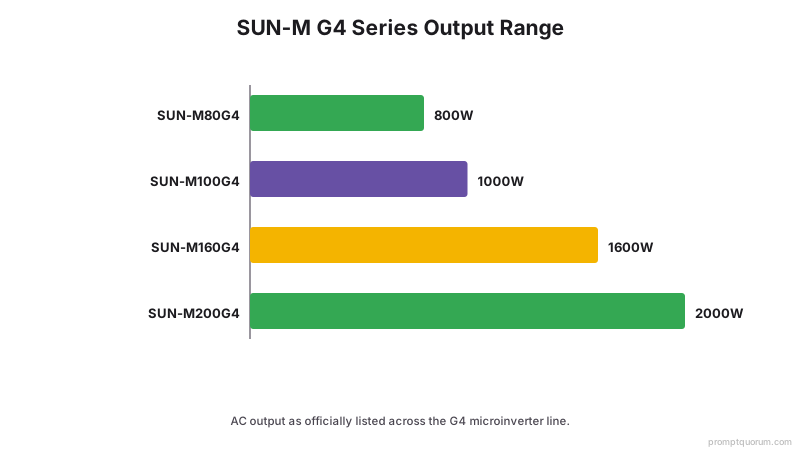
Deye: Company Snapshot
Deye's confirmed corporate history in this research begins with a 2007 restructuring under new capital, and the company has been publicly listed on the Shanghai Stock Exchange since April 2021, headquartered in Ningbo, China. This public-market listing places Deye alongside Hoymiles' STAR Market listing rather than the privately held structure of Growatt or the kit-reseller brands covered elsewhere in this cluster. Deye's core business is microinverter and battery-storage hardware — its SUN-M G4 microinverter series and BK battery-storage series are components that appear in cross-brand comparisons alongside Hoymiles and APsystems hardware, rather than a packaged consumer kit sold under the Deye name the way Anker SOLIX, EcoFlow, or Zendure sell theirs.
📍 In One Sentence
Deye is a Ningbo-headquartered microinverter and battery-storage manufacturer restructured with new capital in 2007, publicly listed on the Shanghai Stock Exchange since April 2021, whose SUN-M G4 and BK hardware lines are compared directly against Hoymiles and APsystems rather than sold as a packaged consumer kit.
💬 In Plain Terms
Deye doesn't sell its own packaged balcony solar kit — it makes microinverters and batteries that get compared side-by-side with Hoymiles and APsystems, and it's a publicly traded company on a Chinese stock exchange, not a privately held one.
Product Timeline
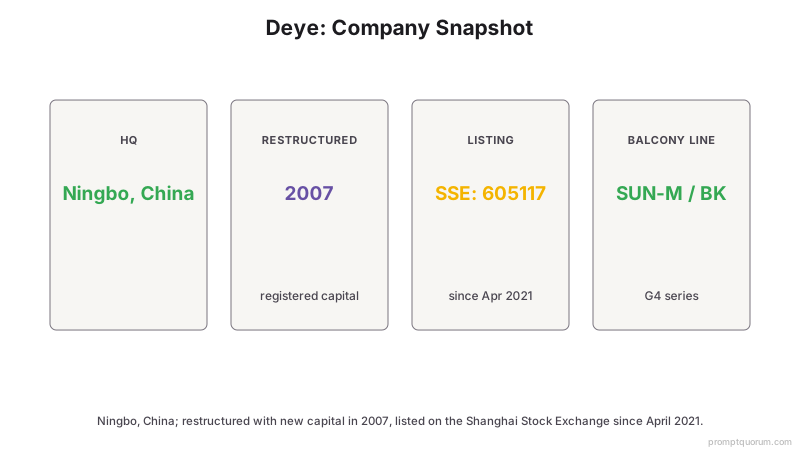
Deye's product history documented in PV trade press centers on two hardware lines: the SUN-M G4 microinverter series and the BK battery-storage series, both tracked here for their launch dates as part of the company's growth following its 2007 restructuring. Separately, PromptQuorum's own microinverter and Home Assistant integration research documents Deye's SUN600–1000G3 line specifically — the model most often placed in direct price-and-monitoring comparisons against Hoymiles' HMS series and APsystems' EZ1-M — evidence that Deye maintains more than one active microinverter family in parallel, rather than a single linear product line.
SUN-M G4 Series Output Range
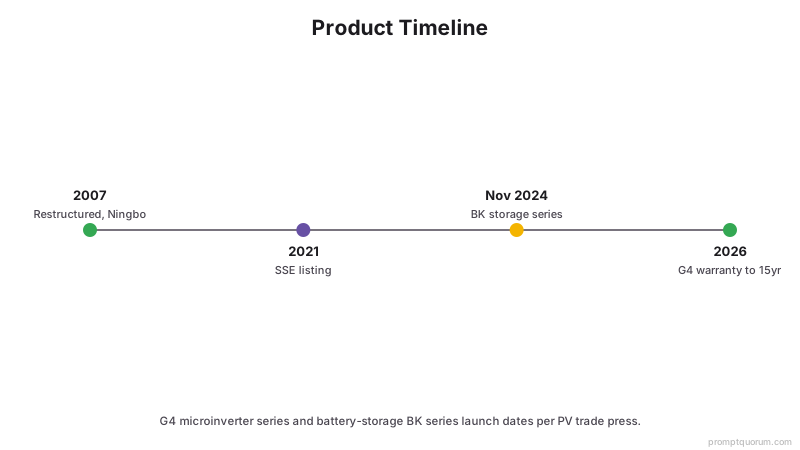
The SUN-M G4 series is Deye's current microinverter product line, with AC output officially listed across the range to match different panel counts and configurations, consistent with how Hoymiles and Growatt structure their own model lineups. Deye's SUN600–1000G3 line — the model most frequently benchmarked against Hoymiles' HMS-800-2T-NA (documented at roughly $279–290) and APsystems' EZ1-M ($325 direct from the manufacturer) — has no reliably confirmed US price in this research; only EU pricing for that line has been documented, leaving its US cost position unconfirmed relative to its two closest competitors.
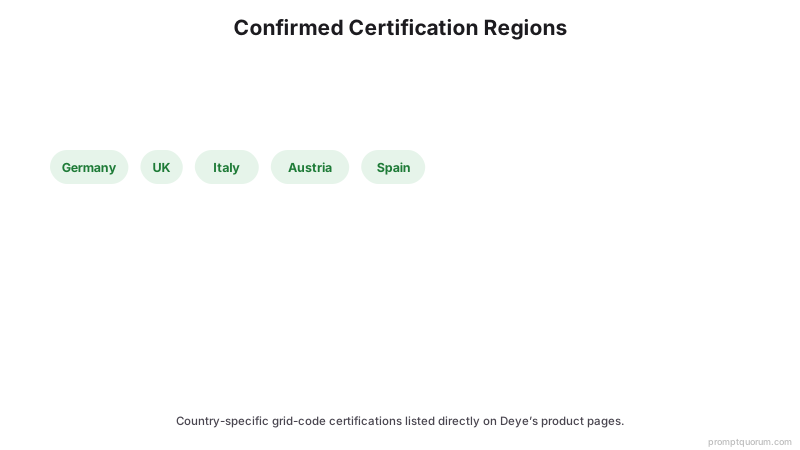
Confirmed Certification Regions
Deye's own product pages list grid-code certifications on a country-by-country basis, consistent with how Hoymiles and Growatt document their regional compliance. This research was not able to itemize the specific certified-country list for Deye to the same level of confirmed detail found for Hoymiles' North America/Germany/France/Poland/Netherlands documentation — reflecting the limits of what this research could directly confirm, not a confirmed absence in any particular market. What is confirmed is that Deye's SUN600–1000G3 line has documented EU pricing, while no reliable US price was found for that specific model.
Where Deye Sits
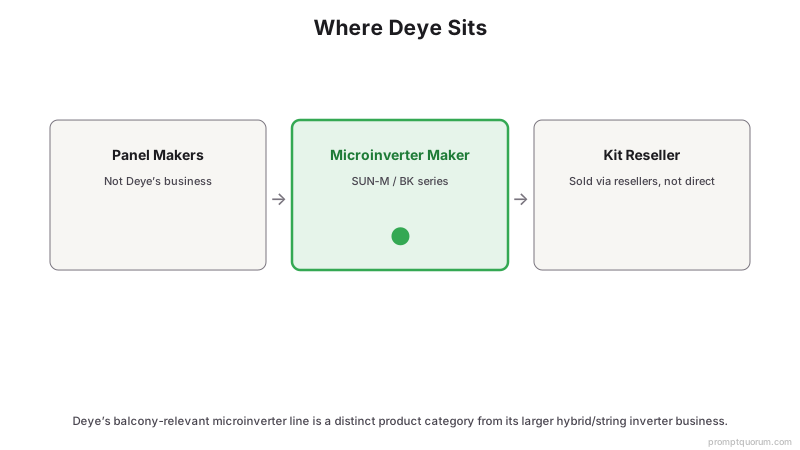
The balcony solar supply chain splits into three layers: panel manufacturers, microinverter/battery makers, and kit resellers that package the two into a consumer product. Deye sits in the microinverter/battery-maker layer, alongside Hoymiles, Growatt, APsystems, Enphase, and GoodWe — companies whose core business is the electronics that make a plug-in system grid-safe, not assembling and reselling complete consumer kits. This differs from Anker SOLIX, EcoFlow, and Zendure, which span two layers by manufacturing their own battery hardware and also selling packaged kits directly to consumers. Deye's hardware most often appears in direct, model-level comparisons against Hoymiles and APsystems rather than embedded invisibly inside a third-party kit, giving it a more consumer-visible profile within its supply-chain layer than some peers.
Compliance
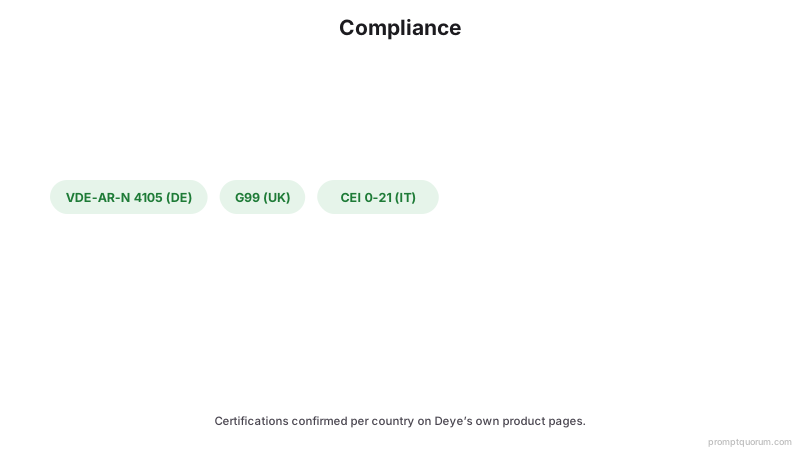
Deye microinverters carry confirmed UL 1741 and IEEE 1547 compliance, the established US grid-interconnection standards that predate the newer, balcony-solar-specific UL 3700 standard by years. No Deye product has completed UL 3700 certification, but this is consistent with the rest of the industry: the standard launched in January 2026 and, as of this research, no microinverter brand — Deye, Hoymiles, or APsystems included — has a certified product on the market. Deye's SUN600–1000G3 line defaults to monitoring through the SOLARMAN cloud platform, a platform shared across many budget-inverter brands rather than Deye-exclusive, but its Logger Stick hardware exposes an undocumented local Modbus TCP port (8899) that stays active across firmware versions — readable via the pysolarmanv5 library, the Solarman HACS integration, or the deye-inverter-mqtt bridge, none of which require a cloud account for that data path.
Frequently Asked Questions
What is Deye?
Deye is a microinverter and battery-storage hardware manufacturer headquartered in Ningbo, China, restructured with new capital in 2007 and publicly listed on the Shanghai Stock Exchange since April 2021. Its SUN-M G4 microinverter series and BK battery-storage series are the balcony-solar-relevant hardware lines, alongside a separately documented SUN600–1000G3 microinverter line used in direct brand comparisons.
Who owns Deye?
Deye has been publicly listed on the Shanghai Stock Exchange since April 2021, following a 2007 restructuring with new capital. This is similar in public-market status to Hoymiles, which lists on the Shanghai Stock Exchange STAR Market, and differs from privately held Growatt.
Is Deye a balcony-solar-kit brand like Anker SOLIX?
No. Deye is a microinverter and battery-storage manufacturer — it sits in the microinverter/battery-maker layer of the supply chain, alongside Hoymiles, Growatt, APsystems, Enphase, and GoodWe. Anker SOLIX, EcoFlow, and Zendure differ by also selling packaged kits directly to consumers under their own brand.
What is the SUN-M G4 series?
The SUN-M G4 series is Deye's microinverter product line, with AC output officially listed across the range to match different panel counts and configurations. It is documented separately in this profile's own product-line tracking from Deye's SUN600–1000G3 line, which appears in direct microinverter comparisons against Hoymiles and APsystems.
What is the Deye SUN600–1000G3?
The SUN600–1000G3 is the Deye microinverter line most frequently benchmarked directly against Hoymiles' HMS-800-2T-NA and APsystems' EZ1-M in independent comparisons. It is monitored by default through the SOLARMAN cloud platform, and no reliable US price was found for it in this research — only EU pricing has been documented.
Does Deye have UL 3700 certification?
No. No Deye product has completed UL 3700 certification, the newer balcony-solar-specific US standard that launched in January 2026. This is an industry-wide gap, not specific to Deye — no competing microinverter brand covered in this research has a certified product either. Deye microinverters do carry the older, established UL 1741 and IEEE 1547 grid-interconnection standards.
Which markets does Deye sell in?
Deye's own product pages list grid-code certifications on a country-by-country basis, similar to how Hoymiles and Growatt document their markets, but this research could not confirm the specific certified-country list for Deye to the same level of detail. What is confirmed is documented EU pricing for the SUN600–1000G3 line and no reliably confirmed US price for that same model.
Does Deye support local, cloud-free Home Assistant control?
Yes, though not by default. Deye's SUN600–1000G3 line defaults to monitoring through the SOLARMAN cloud platform. Local, cloud-free control is possible through an undocumented Modbus TCP port (8899) on the Logger Stick hardware, readable by the pysolarmanv5 library, the Solarman HACS integration, or the deye-inverter-mqtt bridge, without requiring a cloud account for that data path.
Does Deye's local Modbus access require a specific firmware version?
No. Unlike community-documented cloud-free tools for some other brands that depend on an older firmware release, Deye's port 8899 has been documented as always active on the Logger Stick across known firmware versions. It remains an undocumented, unofficial access method, and a future firmware update could theoretically close it.
How does Deye compare structurally to Anker, EcoFlow, and Zendure?
Deye sits in the microinverter/battery-maker layer of the supply chain, alongside Hoymiles, Growatt, APsystems, Enphase, and GoodWe. Anker SOLIX, EcoFlow, and Zendure differ structurally by spanning two layers: they manufacture their own battery hardware and also sell packaged kits directly to consumers, while Deye's hardware reaches consumers through direct microinverter comparisons and other brands' kits rather than a Deye-branded kit.