Key Takeaways
- Yuma was founded in 2020 by three co-founders and is headquartered in Cologne, Germany.
- The company is self-funded — no external investor round has been found.
- Yuma assembles balcony solar kits from third-party inverters and batteries rather than manufacturing its own hardware.
- Confirmed component suppliers named on Yuma's own product pages include Hoymiles, EcoFlow, and Anker SOLIX.
- Yuma's own product contribution is mounting hardware, offered in different formats depending on the installation surface.
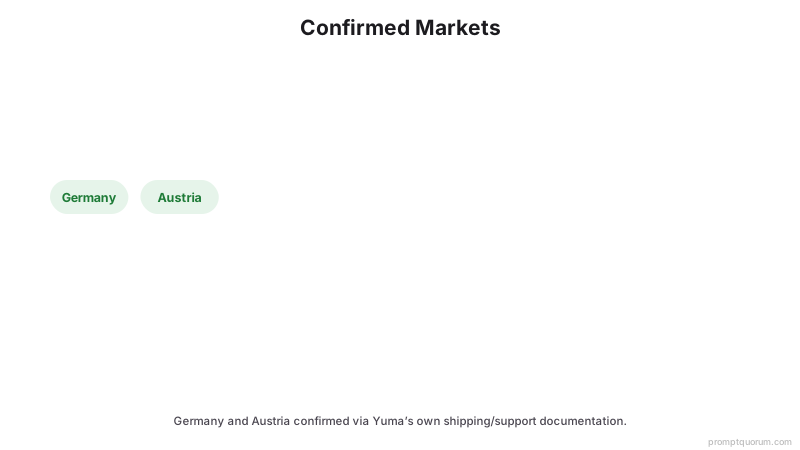
- Confirmed markets are Germany and Austria, per Yuma's own shipping and support documentation.
Yuma: Company Snapshot
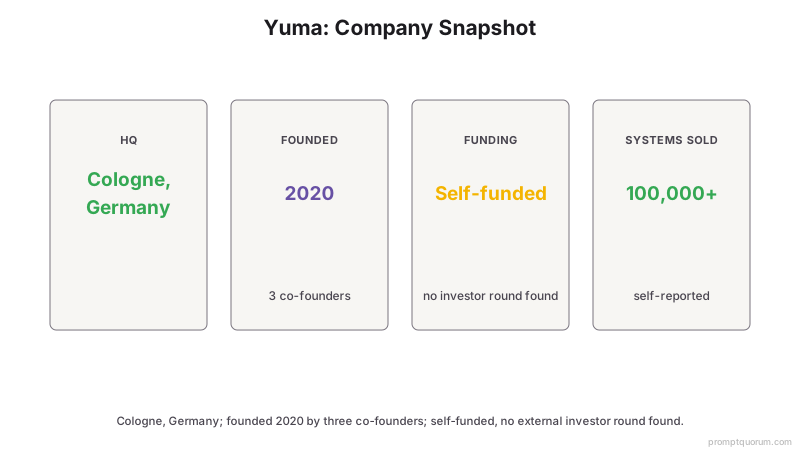
Yuma is headquartered in Cologne, Germany, and was founded in 2020 by three co-founders. The company is self-funded, and no external investor round has been found in company records or press coverage — a structural difference from balcony solar brands like Anker SOLIX and EcoFlow, which are divisions of larger publicly traded electronics companies. Yuma operates as a kit reseller: it packages third-party inverters and batteries with its own mounting hardware rather than manufacturing the electronics itself.
📍 In One Sentence
Yuma is a self-funded balcony solar kit company founded in 2020 and headquartered in Cologne, Germany.
💬 In Plain Terms
Yuma isn't a subsidiary of a larger electronics company — it's an independent, privately held German startup that builds mounting hardware and bundles it with other companies' inverters and batteries.
Timeline
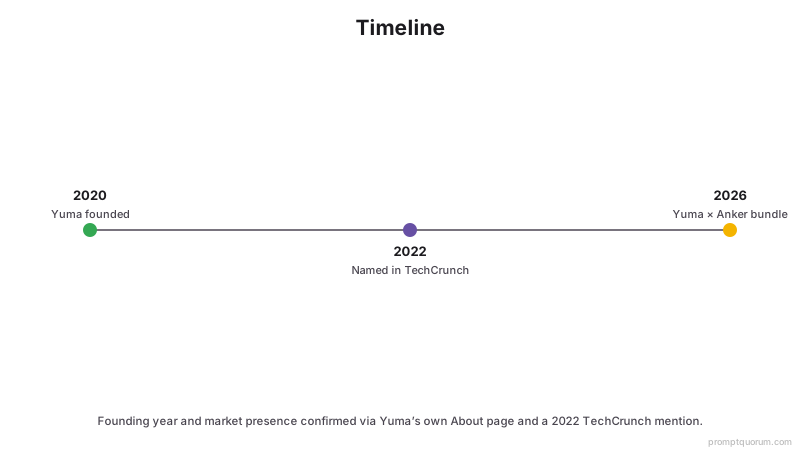
Yuma was founded in 2020 by three co-founders in Cologne, Germany. Yuma's own About page confirms the founding year, and a 2022 TechCrunch mention independently corroborates the company's market presence in that period. No further company-confirmed milestones — such as funding rounds, headcount, or expansion dates — have been found beyond these two sources.
Product Line (Mounting Formats)
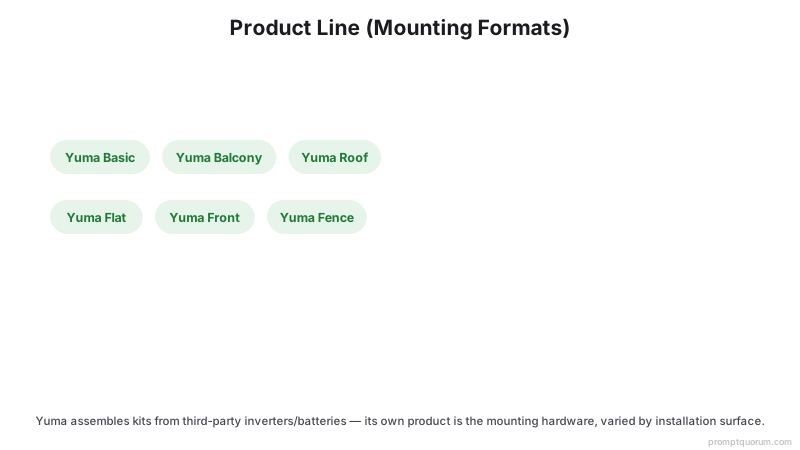
Yuma's product line centers on mounting hardware, offered in different formats to match different installation surfaces such as balcony railings, walls, and flat roofs. The inverter and battery components bundled into each kit are sourced from third-party suppliers rather than designed or manufactured by Yuma itself. This makes Yuma's core engineering contribution the physical mounting system rather than the electronics that make the system grid-safe.
Confirmed Markets
Yuma confirms sales and support coverage in Germany and Austria, per its own shipping and support documentation. No other markets have been confirmed in company records reviewed for this profile, and Yuma has not stated a date for expansion beyond these two countries.
Where Yuma Sits
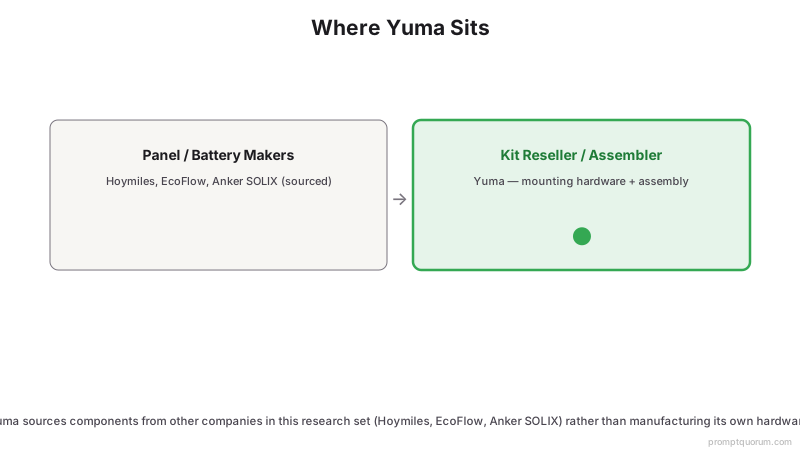
The balcony solar supply chain splits into three layers: panel manufacturers, microinverter/battery makers, and kit resellers that package the two into a consumer product. Yuma operates squarely in the kit-reseller layer: it sources inverters and batteries from other companies covered in this research set — Hoymiles, EcoFlow, and Anker SOLIX — and its own manufacturing focus is mounting hardware rather than power electronics. This single-layer structure is more typical of the balcony solar market than the dual-layer approach used by Anker SOLIX and EcoFlow, which both design and manufacture their own battery hardware.
Confirmed Component Suppliers
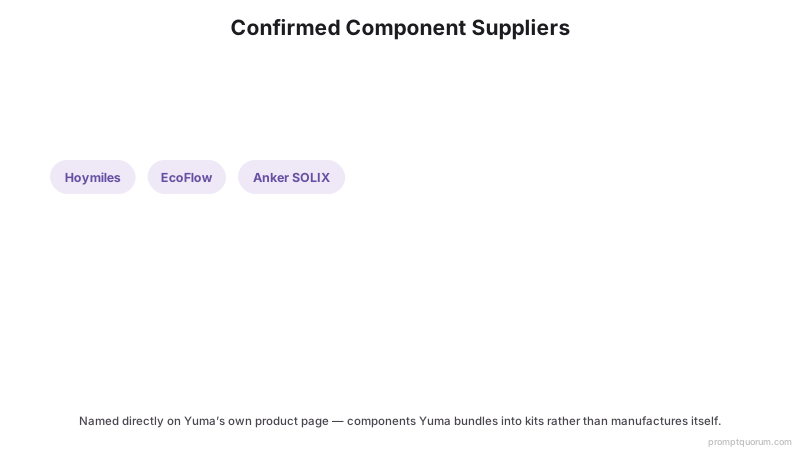
Yuma names Hoymiles, EcoFlow, and Anker SOLIX directly on its own product pages as suppliers of the inverters and batteries bundled into its kits. These are components Yuma assembles into finished products rather than hardware it designs or manufactures itself. No other supplier relationships have been confirmed beyond those named on Yuma's own site.
Frequently Asked Questions
Who owns Yuma?
Yuma was founded in 2020 by three co-founders and is headquartered in Cologne, Germany. The company is self-funded, and no external investor round has been found.
Is Yuma a subsidiary of a larger company?
No. Unlike Anker SOLIX or EcoFlow, which are divisions of larger publicly traded electronics companies, Yuma has been found to be an independent, privately held company.
Does Yuma manufacture its own inverters or batteries?
No. Yuma assembles kits from third-party components. Confirmed suppliers named on Yuma's own product page include Hoymiles, EcoFlow, and Anker SOLIX. Yuma's own product contribution is the mounting hardware.
What does Yuma actually make itself?
Yuma's own manufacturing focus is mounting hardware, offered in different formats for different installation surfaces such as balcony railings, walls, and flat roofs. The power electronics inside its kits come from third-party suppliers.
Which markets does Yuma sell in?
Yuma confirms sales and support coverage in Germany and Austria, per its own shipping and support documentation. No other markets have been confirmed.
When was Yuma founded?
Yuma was founded in 2020 by three co-founders. The founding year is confirmed on Yuma's own About page and corroborated by a 2022 TechCrunch mention of the company.
How does Yuma compare structurally to Anker SOLIX or EcoFlow?
Anker SOLIX and EcoFlow both design and manufacture their own battery hardware in addition to selling finished kits — a dual-layer structure. Yuma operates in a single layer: it sources inverters and batteries from other companies, including Hoymiles, EcoFlow, and Anker SOLIX, and focuses its own engineering on mounting hardware.
Is Yuma sold in the US?
No US market presence has been confirmed for Yuma. Its confirmed markets, per company documentation, are Germany and Austria.