見えない限界:知識カットオフとは実際何か
<strong>知識カットオフ日とは、AIモデルがそれ以上学習データを受け取らなくなった日付のことです。</strong> モデルはその日付まで膨大な量のテキスト — ウェブページ、書籍、コード、研究論文 — を読んでおり、それ以降は何もありません。カットオフ後に発生したイベント、製品発売、新しい研究、価格変更、企業のリブランディング、その他いかなる発展もモデルには見えません。
これは、ユーザーが見落としがちな体系的な失敗パターンを生み出します:AIは何も知らないトピックについて、自信に満ちた構造的な回答を返します。なぜなら、モデルは自分が何を知らないかを知らないからです。2023年のカットオフを持つモデルに2025年の製品について尋ねると、モデルは(もっともらしい偽情報を)作り上げるか、正直に無知を認めるか、あるいは最も危険な形として、今では大幅に時代遅れになった旧バージョンの製品に基づいた回答を返すかのいずれかです。
多くのクラウド製品が今やベースモデルの上にライブ検索を重ねており、一般ユーザーにはカットオフが見えなくなっているため、混乱はさらに深まります。ChatGPTが今日のニュースについての質問に答えるとき、それはBingを使っています — 学習データではありません。その検索レイヤーを取り除くと、モデルは数ヶ月または数年前の知識で動作することになります。
🔍 クイックリファレンス
カットオフ日付の表だけが必要ですか?<a href="/ja/prompt-bites/ai-model-knowledge-cutoff-dates" class="text-primary hover:underline">AI知識カットオフ日付チートシート</a>をご覧ください — 全主要モデルをひと目で確認できる参照表です。
カットオフ vs ライブ検索:すべてを変える決定的な違い
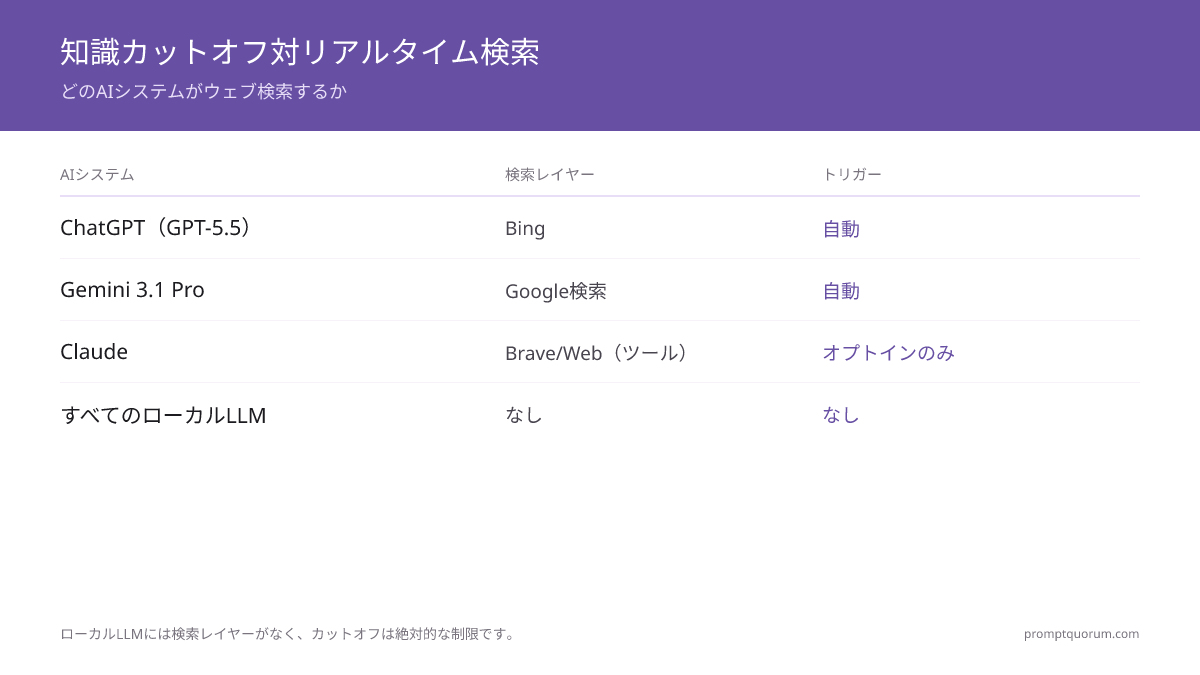
<strong>AIの知識限界を理解する上で最も重要な区別は、トレーニングカットオフ(モデルの属性)とライブ検索(製品の機能)の違いです。</strong> クラウドAI製品が両者をシームレスに融合させているため、よく混同されます。
<strong>トレーニングカットオフ</strong>はモデルの重みに組み込まれています。モデルの再トレーニングまたはファインチューニングなしには変更できません。ChatGPT経由、API経由、あるいは任意のサードパーティツール経由で実行されるGPT-4oのコピーはすべて、同じ2023年10月のカットオフを持ちます。
<strong>ライブ検索レイヤー</strong>は製品レベルで統合された外部ツールです。ChatGPTが現在の情報を必要とするとき、BingのAPIにクエリを送り、現在の結果を取得し、推論能力と合わせて統合します。これは推論時に行われ、製品チームがオン・オフを切り替えられます。
モデル / 製品 | 検索レイヤー | 検索トリガー | 備考 |
|---|---|---|---|
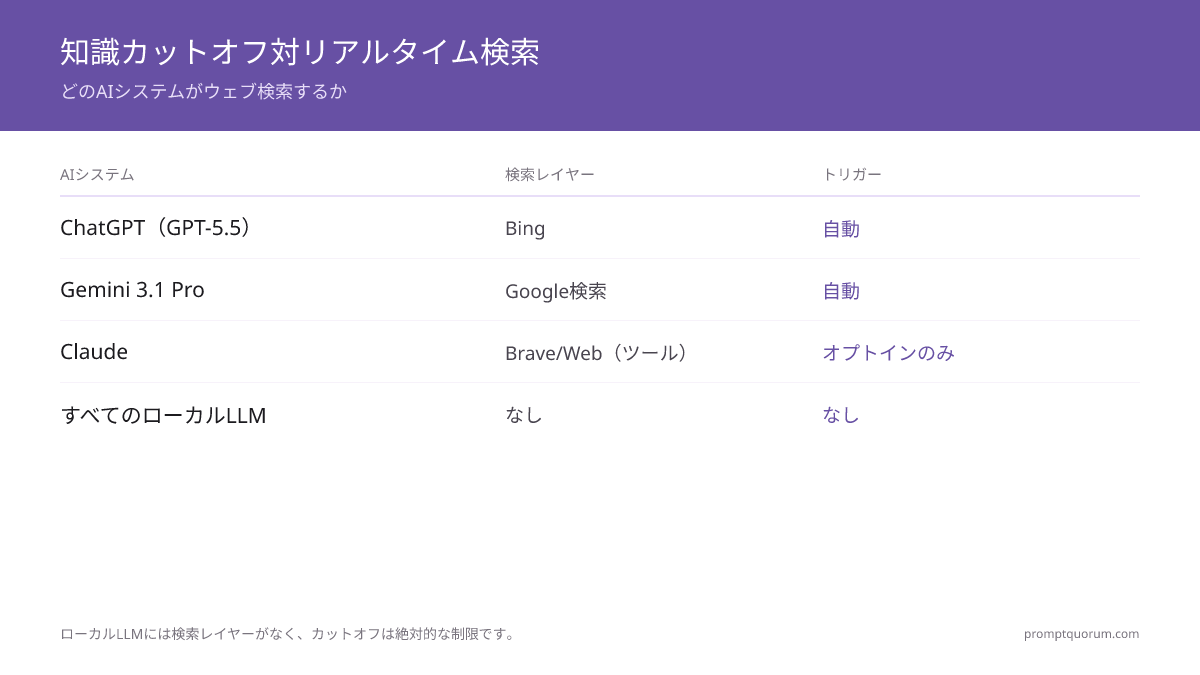
| GPT-5.6 (ChatGPT) | Bing | 自動 — モデルが判断 | ChatGPT Plus/Proではデフォルトオン;生のAPI呼び出しではオフ |
| Gemini 3.1 Pro | Google検索 | 自動 — モデルが判断 | Vertex AI開発者向けのGoogle Grounding APIが利用可能 |
| Grok 4.6 (X.com) | X (Twitter) | 自動 — モデルが判断 | APIではWeb Search/X Searchの明示的な有効化が必要;コンシューマー向けアプリはデフォルトで検索 |
| Perplexity | マルチソースウェブ | 常時 — すべてのクエリ | 設計上、検索ファースト;ソースを引用 |
| Claude (Anthropic) | Brave / ウェブ(ツール) | 開発者オプトインのみ | デフォルトはオフ;APIツール設定が必要 |
| DeepSeek(クラウド) | なし | N/A | 検索レイヤーなし;カットオフがハード制限 |
| Mistral(クラウド) | なし | N/A | 検索レイヤーなし;カットオフがハード制限 |
| すべてのローカルLLM | なし | N/A | デフォルトではインターネットアクセスなし;最新情報にはRAGが必要 |
全検証済みカットオフデータ:全主要モデル
📍 In One Sentence
クラウドモデルの中で、Claudeだけがウェブ検索に開発者による明示的な設定を必要とします — 他のモデルはすべてエンドユーザーに対してライブ検索がデフォルトでオンになっています。
💬 In Plain Terms
クラウドAIモデルは、質問に答える合間に調べ物ができる研究者のようなものです。ローカルAIモデルは、固定された日付以降完全にオフラインになっている研究者のようなものです。
以下の表は、モデルカード、公式ドキュメント、査読済み技術レポートなど一次情報源のデータのみを使用しています。一次情報源が存在しない場合、カットオフは推定ではなく「公開されていません」と記載されています。
<strong>クラウドモデル:</strong>
モデル | ベンダー | カットオフ日付 | 検証済み | デフォルト検索 | 検索レイヤー |
|---|---|---|---|---|---|
| Claude Opus 5 | Anthropic | 2026-05 | ✓ | ツール使用のみ | Tool-use only |
| GPT-5.6 (ChatGPT) | OpenAI | 2026-02 | ✓ | あり | Bing |
| GPT-4o (legacy) | OpenAI | 2023-10 | ✓ | あり | Bing |
| Gemini 3.1 Pro | 2025-01 | ✓ | あり | ||
| Grok 4.6 | xAI | 2026-02 | ✓ | あり | X (Twitter) |
| Mistral Large 3 | Mistral AI | Not publicly disclosed | — | なし | None |
| DeepSeek-V3 / R1 | DeepSeek | 2024-07 | ✓ | なし | None |
ローカル / オープンウェイトモデル:検証済みカットオフ日付
<strong>ローカルオープンウェイトモデル — すべて検索レイヤー「なし」:</strong>
モデル | ベンダー | カットオフ日付 | 検証済み | デプロイメント | ライセンス |
|---|---|---|---|---|---|
| Llama 4 Scout / Llama 4 Maverick | Meta | Not publicly disclosed | — 非公開 | Both | Open weights |
| Qwen3 14B / Qwen2.5 72B | Alibaba | 2023-12 | ✓ 一次情報源 | Both | Open weights |
| Mistral Small 3 / Mistral 7B | Mistral AI | Not publicly disclosed | — 非公開 | Both | Open weights |
| DeepSeek-V3 (open weights) | DeepSeek | 2024-07 | ✓ 一次情報源 | Both | Open weights |
| Gemma 3 27B | 2024-08 | ✓ 一次情報源 | Both | Open weights | |
| Phi-4 | Microsoft | 2024-06 | ✓ 一次情報源 | Both | Open weights |
⚠️ 重要な洞察
この表のすべてのローカルモデルの検索レイヤーは「なし」です。これは特定モデルの制限ではありません — ローカルにデプロイされたLLMの構造的な特性です。明示的にプログラムされない限り、ネットワークアクセスはありません。
ローカルLLMの問題:凍結した知識で動かす
<strong>Ollama、LM Studio、llama.cpp、その他のランナーを通じてローカルLLMを実行するとき、あなたは知識が完全に凍結したモデルを実行しています。</strong>「少し時代遅れ」ではありません。「ほぼ最新」でもありません。固定された日付で完全に凍結されています。
これは単なる不便ではありません。根本的なアーキテクチャの特性です。自動更新もなく、バックグラウンドアップデートもなく、知識を静かに更新するモデルもありません。ディスク上の重みがそのまま重みです — モデルが知っているすべてを符号化しており、実行間に変化しません。
これにより、特定の予測可能な失敗パターンが生じます。カットオフ後にリブランディングした企業について尋ねるローカルで実行されたモデルは古い名称を使います。カットオフ後に発売された製品について尋ねるモデルは知らないと言うか、より問題なことに、そのような製品がどのようなものかのもっともらしい説明をでっち上げるかのどちらかです。
<strong>ローカルLLM上に構築された数千ものアプリケーション — 社内チャットボット、コードアシスタント、ドキュメント分析ツール — はすべてこの凍結知識問題を共有しています。</strong> Llama、Qwen、Gemma、またはPhiを社内にデプロイしているあらゆる組織は、RAGシステムを構築しない限り、モデルのトレーニングカットオフ以降に起きたことを文字通り何も知ることができないソフトウェアを実行しています。
シナリオ | 検索あり クラウドLLM | RAGなし ローカルLLM |
|---|---|---|
| 今日のニュースについて尋ねる | Bing/Googleから取得;最新の回答 | 無知を認めるか幻覚を起こす |
| 2025年の製品発売について尋ねる | ウェブ検索;最新の仕様 | カットオフ後なら知識なし |
| (カットオフ後の)自社について尋ねる | 検索経由でウェブサイトを取得できる | 見つからない;学習データにない |
| 競合他社のリブランディングについて尋ねる | 検索から現在の名称を見つける | トレーニング時の古い名称を使用 |
| 新しい規制について尋ねる | 現在の法的テキストを取得 | 規制前の知識のみ |
| AIモデルのランキングについて尋ねる | ベンチマークを検索;ほぼ最新 | カットオフ時点で凍結;時代遅れのランキング |
🔍 ローカルLLMの制限
カットオフだけでなく、ローカルLLMができないことの完全な解説は<a href="/ja/local-llms/local-llm-limitations" class="text-primary hover:underline">ローカルLLMの限界:できないこと</a>をご覧ください。
ユーザーへの示唆:AI回答をいつ信頼するか
<strong>最も重要なルール:回答がモデルのカットオフ日以降に変わっている可能性があるかを常に自問してください。</strong> もしそうなら、独立して確認してください — 特に医療、法律、金融、テクノロジーのトピックについては。
異なるAIシステムはカットオフ後のギャップをそれぞれ異なる方法で処理します。各システムの動作を理解することで、回答をどれほど信頼するかの調整に役立ちます。
AIシステム | カットオフ後の動作 | 現在情報の信頼性 | 改善方法 |
|---|---|---|---|
| ChatGPT(有料) | 自動でBingを検索 | 事実は高い;ニュアンスは低い | ソースの引用を求める;重要な主張をクロスチェック |
| Gemini(有料) | 自動でGoogle検索 | 事実は高い;ニュアンスは低い | グラウンディングを有効にする;引用URLを確認 |
| Grok (X.com) | 自動でXの投稿を検索 | ソーシャルトレンドには良い;事実はムラがある | より深いウェブカバレッジにはDeepSearchを使用 |
| Claude(無料/プロ) | デフォルトでは学習データのみ使用 | 中程度 — 2026年5月の信頼性の高いカットオフ | 現在のテキストをコンテキストに貼り付ける;APIユーザーは検索ツールを有効化可能 |
| Perplexity | 常にまずウェブを検索 | 高い — 検索ネイティブ製品 | すでに設計上ソースを引用している |
| すべてのローカルLLM | 学習データのみ使用 — 上書き不可 | カットオフ後のトピックでは非常に低い | RAGパイプラインを構築;手動でコンテキストを貼り付ける |
⚠️ 幻覚リスク
最も高い幻覚リスクは、カットオフ後の事柄についてモデルが尋ねられたとき、それがモデルが知っていることともっともらしく似ている場合に生じます。モデルは無知を認めるのではなく、時代遅れの学習データに基づいた自信に満ちた回答を返します。
企業への示唆:AIシステム別GEO戦略
<strong>GEO(生成エンジン最適化)とは、ブランド、製品、またはコンテンツをAI生成回答に露出させる取り組みです。</strong> ほとんどのAIシステムでは、GEOはSEOと同様に機能します — AIが検索エンジンからコンテンツを取得するため、BingやGoogleで良い順位を得ることがAI回答に直結します。
しかしローカルLLMはこのモデルを完全に崩します。ローカルにデプロイされたLlamaやQwenはウェブを検索しません。検索経由で回答に最適化することはできません — カットオフ前に学習データに含まれていたか、デプロイ組織がRAG経由でコンテンツを注入する場合にのみ、モデルはあなたについて言及します。
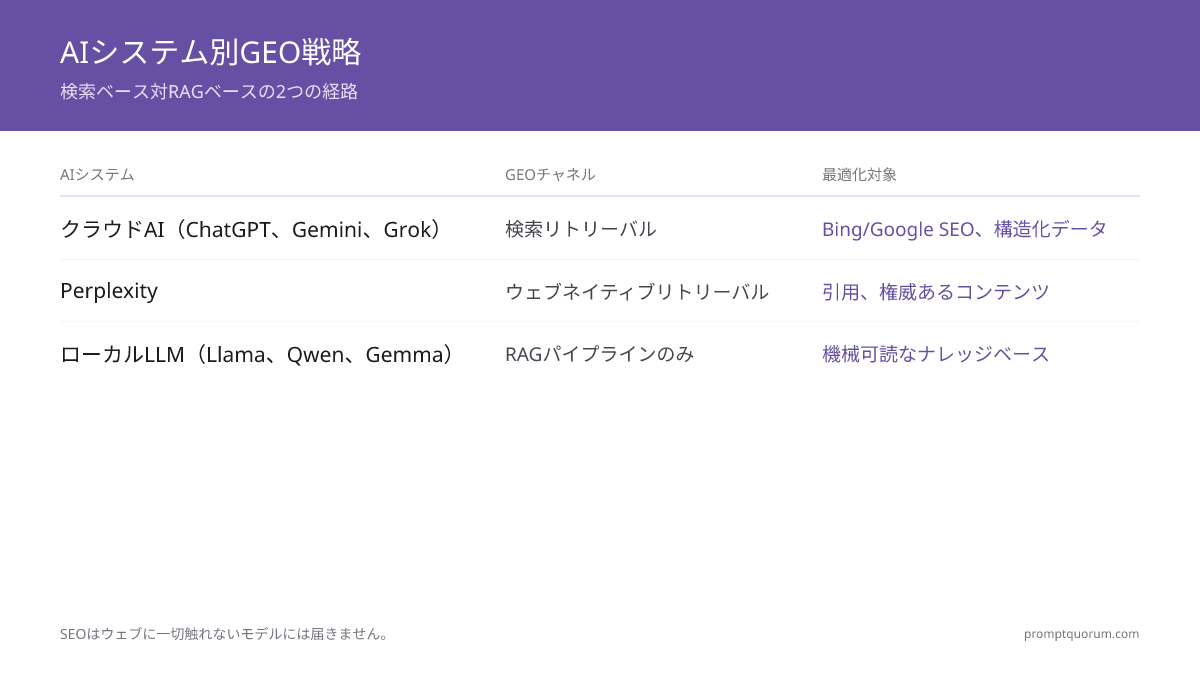
この表は各AIシステムのGEOチャネルをまとめています:
AIシステム | GEOチャネル | 最適化対象 | ローカルデプロイでの変化 |
|---|---|---|---|
| GPT-5.6 (ChatGPT) | Bing検索による取得 | Bing SEO:テクニカルSEO、Bingウェブマスターツール、構造化データ | あり — ローカルOpenAI API呼び出しにはBingなし;カットオフがハード |
| Gemini 3.1 Pro | Google検索グラウンディング | Google SEO + 構造化データ(FAQ、HowTo、Articleスキーマ) | まだなし — 2026年6月時点でGeminiはクラウド専用 |
| Grok 4.6 | X(Twitter)コンテンツ | Xプレゼンス:認証済みアカウント、高エンゲージメント投稿、Xコミュニティ | まだなし — 2026年8月時点でGrokはクラウド専用 |
| Perplexity | ウェブネイティブ取得 | すべての検索エンジン + 権威ある情報源の引用、明確な構造化コンテンツ | なし — Perplexityは設計上ウェブネイティブ |
| Claude(API) | ツール使用検索(Brave/ウェブ)— オプトイン | 一般的なウェブプレゼンス;スニペット適格性のための構造化コンテンツ | あり — 多くのClaudeデプロイでは検索が無効 |
| Llama(ローカル) | RAGパイプラインのみ | RAG:構造化データ形式、ナレッジベース、ドキュメントAPI | これ自体がローカルデプロイ — SEOは無関係 |
| Qwen / Gemma / Phi(ローカル) | RAGパイプラインのみ | RAG:デプロイ組織でのドキュメント取り込みパイプライン | これ自体がローカルデプロイ — SEOは無関係 |
⚠️ ローカルLLMのGEOの盲点
ほとんどのGEOガイドはクラウドAIのみに焦点を当てています — BingやGoogle検索向けに最適化するよう指示します。そのアドバイスは、Llama、Qwen、Gemma、またはPhiの社内デプロイにリーチするには役立ちません。これらのモデルは検索しません。機能する唯一のGEOチャネルは、モデルをデプロイしている組織を説得して、あなたのコンテンツをRAGパイプラインに含めてもらうことです。
GEO解決策:両AI型への参入戦略
<strong>2026年の完全なGEO戦略には2つの並行トラックが必要です:クラウドAI向けの検索最適化と、ローカルAI向けのRAG準備性です。</strong> ほとんどの組織は最初のトラックしか実施していません。
<strong>トラック1 — クラウドAI(検索ベースGEO):</strong> 従来のSEOテクニックにAI固有の追加事項を加えて適用します。コンテンツはスニペット適格性のために構造化されている必要があり(FAQ、HowToのJSON-LDスキーマ)、事実に正確であり(AIモデルは修正履歴のあるページの引用を避けます)、権威ある必要があります(BingとGoogleの品質シグナルがAI引用の可能性に直結します)。Grokについては特に、Xプレゼンス(認証済みアカウント、エンゲージメント率、フォロワー数)がブランドがGrok回答に現れるかどうかを決定します。
<strong>トラック2 — ローカルAI(RAGベースGEO):</strong> 検索経由でローカルLLMに最適化することはできません。アプローチはまったく異なります:(1) RAGパイプラインが消費する形式(Markdown、JSON-LD、OpenAPI仕様、構造化FAQ)で機械可読なナレッジベースを作成する;(2) オープンデータイニシアチブに参加して、RAGシステムを構築する組織が情報を利用できるようにする;(3) ローカルLLMをデプロイしているエンタープライズ顧客と直接関係を構築し、データパートナーシップ協定を提案する;(4) RAGパイプラインへのコンテンツ組み込みを簡単にするSDKやAPIを提供する。
ほとんどの企業にとって、トラック1はすでにSEOの一環として進行中です。トラック2には新しい作業が必要です — 具体的には、人間が読むためではなく機械による取り込みに最適化された形式でコンテンツを制作することです。
- 1AIの可視性を監査する:どのAIシステムがブランドに言及していますか?ChatGPT、Gemini、Grok、Perplexity、そしてローカルのLlama/Qwenデプロイを個別にテストしてください
- 2クラウドAIのギャップについては:構造化データマークアップを適用し(FAQPage、HowTo、TechArticle、Product)、Bingウェブマスタープレゼンスを改善し、E-E-A-Tシグナルを強化する
- 3ローカルAIのギャップについては:RAGシステムが取り込める機械可読なナレッジベース(構造化JSON、Markdownドキュメント、OpenAPI仕様)を制作する
- 4ブランドの事実を正規の変更されない形式でドキュメント化する — モデル名、説明、機能、価格 — 各バージョン変更時に更新
- 5llms.txtファイル(AIクローラー向けのプレーンテキストサイト説明)とすべての主要ページに構造化データを公開する
- 6AIシステム全体のメンション率を四半期ごとに追跡する — 従来の検索よりも速く変化する環境です
🔍 ローカルRAGリソース
独自のLLMデプロイに最新知識を与えるためのローカルRAGの技術的な実装については、<a href="/ja/local-llms/local-rag-2026" class="text-primary hover:underline">ローカルRAG 2026:ベストツールとフレームワーク</a>および<a href="/ja/local-llms/corporate-rag-local-llms" class="text-primary hover:underline">ローカルLLMを使った企業向けRAG</a>をご覧ください。
よくある質問
AI知識カットオフ日とは何ですか?
知識カットオフ日とは、モデルの学習データが終わる日付のことです。モデルはその日付以降に発生したイベント、製品、研究、またはコンテンツに関する情報をまったく持っていません。クラウドモデルはウェブ検索で部分的に補うことができますが、ローカルLLMはできません。
ChatGPTのカットオフが2023年10月なのに最近の出来事を知っているのはなぜですか?
ChatGPT(製品)は有料プランではデフォルトでBingを検索し、現在の検索結果を学習データの推論と合わせて統合します。基盤のGPT-4oモデルは依然として2023年10月のトレーニングカットオフを持っています — あなたが見ているのは検索レイヤーであり、更新された学習データではありません。
LlamaやQwenのようなローカルLLMは知識のアップデートを受け取りますか?
いいえ — 自動的にはありません。ローカルLLMの知識はトレーニングカットオフ時点で永久に凍結されます。新しいモデルリリース(Llama 4 Scout、Qwen3 14B)はそれぞれ異なるカットオフを持ちますが、マシン上で実行中のコピーは固定された知識を持ちます。現在の情報を得るにはRAGパイプラインを構築してください。
GEOとは何ですか?知識カットオフとどう関係しますか?
GEO(生成エンジン最適化)とは、コンテンツをAI生成回答に露出させる分野です。クラウドAIでは、GEOは検索最適化を通じて機能します — Bing/Googleで順位を得ることで引用されます。ローカルLLMでは、モデルが検索しないため、これは構造的に不可能です。ローカルLLMのGEOはデプロイ組織のRAGパイプラインが必要です。
検証済みの中で最も新しい知識カットオフ日を持つAIモデルはどれですか?
一次情報源で検証済みのカットオフの中では:Claude Opus 5が2026年5月という最も新しい信頼性の高いカットオフを持ち、GPT-5.6とGrok 4.6が2026年2月で近接しています。Gemini 3.1 Proは2025年1月。DeepSeek-V3とGemma 3 27Bは2024年7~8月ごろ。Phi-4は2024年6月。GPT-4o(レガシー)は2023年10月。Llama 4、Qwen3、Mistral Largeを含む複数の現行モデルは正確な日付を公式に開示していません。
SEOを使ってLlamaやQwenの回答に露出できますか?
いいえ。モデルがウェブを検索しないため、SEOはローカルにデプロイされたLLMに影響を与えることができません。唯一の経路は:(1) カットオフ前に学習データに含まれていたか、(2) モデルをデプロイしている組織のRAGパイプラインに含まれることです。
カットオフの影響を受ける可能性があるAI回答をどうやってファクトチェックすればよいですか?
カットオフリスクを示す3つのシグナル:(1) トピックが特定のバージョン、価格、人物、またはイベントを含む;(2) 変化の速い業界について尋ねている;(3) AI回答に引用がない。これらのいずれかが当てはまる場合、一次情報源で確認してください — モデルの自信に満ちたトーンは信頼性の指標ではありません。
AI回答がライブ検索を使ったかどうかわかりますか?
多くの場合はわかります:Perplexityは常にソース引用を表示します。GeminiはグラウンディングとGoogle検索アイコンを表示します。GrokはXの検索結果を示します。ChatGPTは地球儀アイコンを表示し、ソースを表示するよう求めることができます。Claudeはデフォルトで検索しないため、インジケーターは不要です。ローカルLLMは決して検索しないため、インジケーターは存在しません — 回答は常に学習データから来ています。
ベースモデルにトレーニングカットオフがあるのに、ChatGPTが最近の出来事を知っているのはなぜですか?
ChatGPT(製品)は有料プランではデフォルトでBingを検索し、現在の検索結果で回答を補強します。これにより、基盤モデルの学習データに固定されたカットオフ日(GPT-5.6は2026年2月、レガシーGPT-4oは2023年10月)があっても、最近のイベントについての質問に答えられます。ただし、カットオフ以降のトピックに関する文脈的理解は依然として制限されます。
デフォルトでライブウェブを検索するクラウドAIモデルはどれですか?
ChatGPTはデフォルトでBingを検索します(有料プラン)。Gemini 3.1 ProはデフォルトでGoogle検索を使用します。Grok 4.6はコンシューマー向けアプリではデフォルトでX(Twitter)を検索します。Perplexityはすべてのクエリでウェブ検索ネイティブです。Claudeは明示的な開発者ツールの有効化が必要で、デフォルトでは検索しません。DeepSeekとMistral Largeにはデフォルト検索がありません。すべてのローカルLLM(Llama、Qwen、Gemma、Phi、Mistralオープンウェイト)には検索機能がありません。
ローカルLLMで現在の情報が必要な場合はどうすればよいですか?
RAG(検索拡張生成)パイプラインを構築してください。RAGシステムは、クエリ時にウェブ検索、内部データベース、またはドキュメントストアから関連する最新ドキュメントを取得し、回答生成の前にLLMのコンテキストウィンドウに注入します。人気のローカルRAGツールにはLlamaIndex、LangChain、検索レイヤーを備えたOllamaなどがあります。LLMは凍結された学習データだけに依存するのではなく、注入されたドキュメントを基に推論を行います。
関連記事
- RAG解説:検索拡張生成 — RAGはローカルLLMの知識カットオフ制限に対する主要な解決策です
- AIの幻覚:AIはなぜ嘘をつくのか — 知識カットオフによる情報の陳腐化は幻覚の主要な原因です
- AIの限界:LLMができないこと — 凍結知識やライブ検索の欠如を含む構造的制約
- AIモデル知識カットオフ日付 2026:チートシート — 全主要クラウド・ローカルモデルのひと目でわかる参照表
- ローカルLLMモデルアップデート 2026 — 主要なオープンウェイトリリースすべてとカットオフ状況の変化を追跡