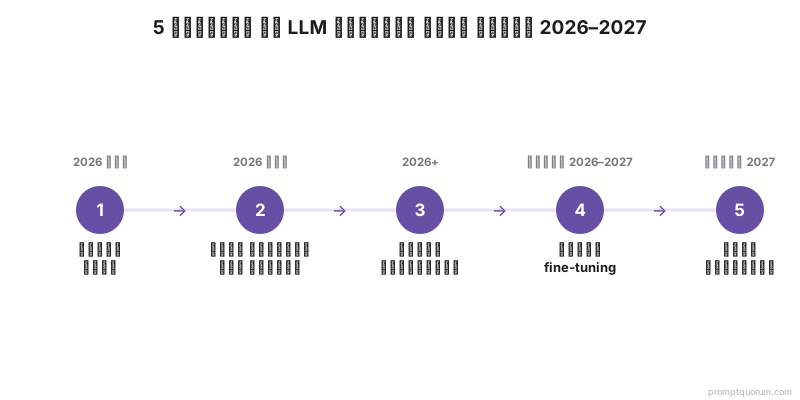
اتجاهات LLM المحلية الخمسة في لمحة
الاتجاه | ما الذي يتغير | الجدول الزمني | الأثر |
|---|---|---|---|
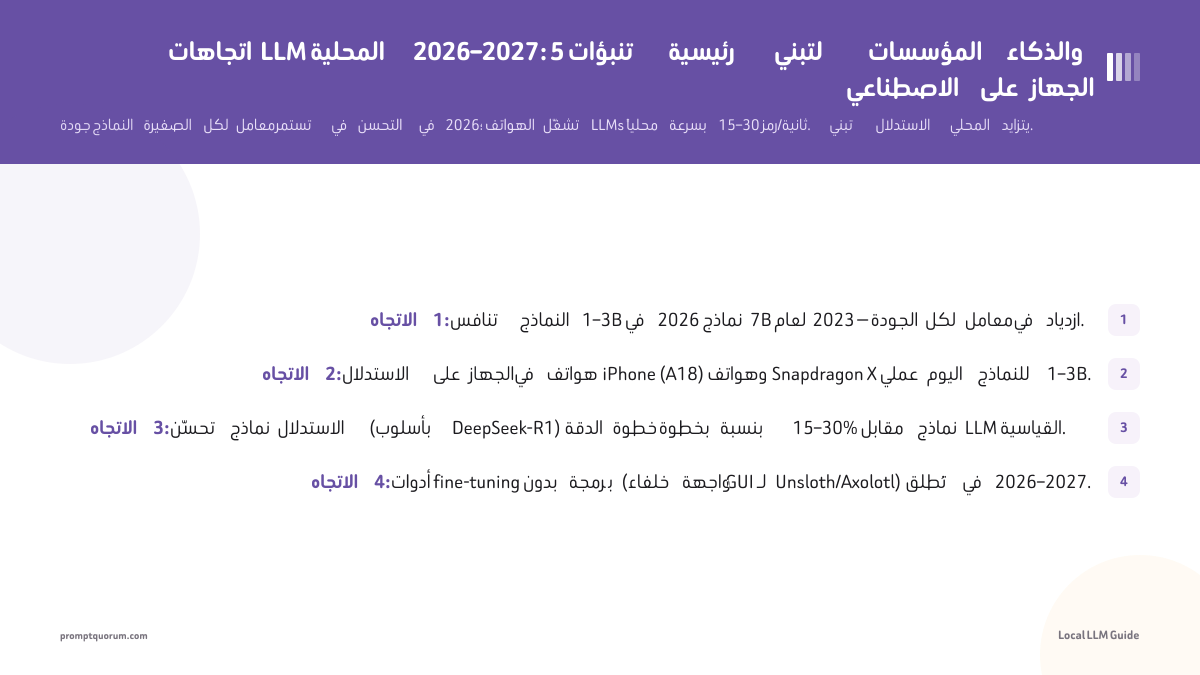
| 1. نماذج أصغر | الجودة لكل معامل تستمر في التحسن؛ الفجوة مع النماذج الكبيرة الأقدم تتقلص | 2026 نشط | استدلال عملي على 4 GB من RAM |
| 2. ذكاء اصطناعي على الجهاز | iPhone A18 و Snapdragon X يشغّلان 1–3B | 2026 نشط | زمن استجابة صفري وخصوصية كاملة على الهواتف |
| 3. نماذج الاستدلال | يحسّن الـ chain-of-thought الدقة بنسبة 15–30% | 2026+ | رياضيات ومنطق ومهام متعددة الخطوات أفضل |
| 4. أدوات fine-tuning | وصول fine-tuning بدون برمجة بواجهة GUI؛ زمن التدريب يتجه للانخفاض | أواخر 2026–2027 | يتجاوز المطورون سطر الأوامر |
| 5. تبني المؤسسات | البنية الهجينة المحلية/السحابية وقوانين إقامة البيانات تدفع التبني المحلي | بحلول 2027 | القطاع المصرفي والصحي والقانوني روّاد |
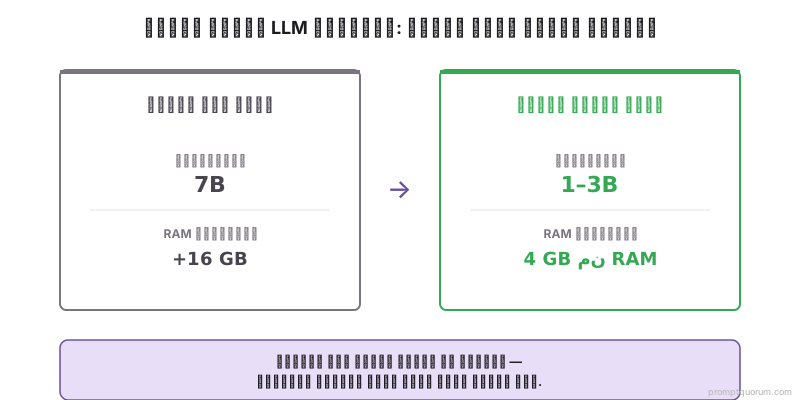
هل تبلغ النماذج 1–3B جودة 7B في 2026؟
من حيث الاتجاه، نعم. يشير المحللون ومعايير النماذج المفتوحة إلى أن جودة النماذج الصغيرة لكل معامل تستمر في التحسن عاماً بعد عام، ما يقلّص الفجوة مع النماذج الأكبر الأقدم. العوامل المحركة: آليات انتباه أفضل وبيانات تدريب اصطناعية ومشاركة المعاملات وضغط بأسلوب LoRA.
الأثر: أصبحت النماذج 1–3B عملية بشكل متزايد للتلخيص والأسئلة والأجوبة وإكمال الكود على أجهزة بسعة 4 GB من RAM.
لمعرفة زاوية أنماط النشر — أي حالات الاستخدام تستفيد فعلاً من نموذج أصغر مقابل الحالات التي لا يزال فيها عدد المعاملات مهماً — راجع هل النماذج اللغوية الصغيرة هي الخيار الصحيح لحالة استخدامك؟.
هل تستطيع الهواتف الذكية تشغيل نماذج LLM محلية اليوم؟
نعم — تشغّل هواتف iPhone بشرائح A18 وهواتف Android بـ Snapdragon X Elite النماذج 1–3B بسرعة 15–30 tok/sec. عملي للأسئلة والأجوبة النصية والتلخيص وتوليد النصوص القصيرة.
الميزة: زمن استجابة صفري وخصوصية كاملة دون حاجة إلى إنترنت — يمتثل بحكم التصميم للمادة 5 من GDPR و HIPAA.
القيد: تتطلب نماذج 7B على الهواتف أجهزة من 2027+ (Apple A19, Snapdragon X3). استهلاك البطارية كبير.
كيف يجري تبسيط أدوات الـ fine-tuning؟
منصات fine-tuning بدون برمجة قائمة على GUI في طريقها للوصول. يتطلب Unsloth و Axolotl حاليًا مهارات سطر الأوامر؛ وتضيف أدوات الجيل الجديد تحميل مجموعات البيانات بالسحب والإفلات وتدريب LoRA بنقرة واحدة. كما يصبح التدريب متعدد الـ GPU أبسط، مع التقسيم التلقائي والتدريب الموزّع ضمن خارطة طريق أطر العمل الرئيسية.
يُتوقع أن يستمر زمن التدريب في الانخفاض مع نضج هذه الأدوات، وإن كانت الأرقام الدقيقة تختلف حسب الأجهزة وحجم مجموعة البيانات.
لمعرفة سير عمل fine-tuning بدون برمجة كاملاً — بما في ذلك المهام الجاهزة اليوم لغير المهندسين — راجع Fine-Tuning بدون برمجة: إلى أي مدى اقتربنا؟.
ما هي نماذج الاستدلال ولماذا تهم للذكاء الاصطناعي المحلي؟
تولّد نماذج الاستدلال خطوات chain-of-thought صريحة قبل الإجابة. أثبت DeepSeek-R1 و OpenAI o1 أن ذلك يحسّن الدقة في الرياضيات والمنطق والمهام متعددة الخطوات بنسبة 15–30% مقارنة بنماذج LLM القياسية.
التحدي: تولّد نماذج الاستدلال 3–5× أكثر من الـ tokens لكل إجابة — مخرجات أبطأ واستخدام أكبر لـ VRAM.
الفرصة: تتيح نماذج الاستدلال المحلية (DeepSeek-R1 7B, QwQ-32B) تحليلات معقدة دون تكاليف سحابية — قابلة للتنفيذ على RTX 4090 أو Mac Studio M5 Max.
متى ستتبنى الشركات نماذج LLM المحلية على نطاق واسع؟
2026 (الحاضر): تشغّل الشركات الكبرى في القطاع المصرفي والصحي والدفاعي بالفعل نماذج LLM محلية لمعالجة المستندات الحساسة.
2027: تتبنى الشركات المتوسطة (500–5000 موظف) الاستدلال المحلي مع انخفاض تكاليف الأجهزة وظهور حلول مُدارة.
2028: تحصل الشركات الصغيرة والمتوسطة على ذكاء اصطناعي محلي ميسور التكلفة — أرخص من اشتراكات API السحابية على نطاق واسع.
المعيار طويل الأمد: يتوقع كثير من المحللين أن تصبح البنية الهجينة شائعة — محلية للأحمال الروتينية وسحابية للسعة القصوى ونماذج الحدود. للاطلاع على تحليل أعمق حول كيفية عمل التوجيه بين النماذج المحلية والسحابية عملياً، راجع التوجيه الهجين المحلي-السحابي: ماذا يتغير في 2027؟.
ما التحديات التي تستمر في نماذج LLM المحلية؟
- فجوة الجودة: تتأخر النماذج المفتوحة بنسبة 20–30% عن النماذج السحابية الاحتكارية في المعايير. Llama 3.3 70B: 80% MMLU مقابل GPT-5.5: 89%. تتقلص الفجوة لكنها لن تُغلق قبل 2027–2028.
- زمن الاستجابة الفوري: الاستدلال المحلي غير مناسب لمسارات العمل الفورية بأقل من 500ms. تولّد RTX 4090 نحو 150 tok/sec على 7B — جيدة للمحادثة وليست لـ APIs أقل من 500ms.
- تكاليف البنية التحتية: يتطلب الحل المحلي رأس مال: GPU بـ 600–2000 € + تبريد + صيانة. "المحلي مجاني" خطأ — تتحول تكاليف API ولا تختفي.
- نقص المواهب: قلة من المهندسين يعرفون كيفية نقل vLLM إلى الإنتاج أو إدارة تحديثات النماذج أو تحسين الإنتاجية على دفعات. سيتحسن ذلك بحلول 2027.
- عدم اليقين التنظيمي: قوانين إقامة البيانات (GDPR, HIPAA, قانون DSL في الصين، PDPL السعودي، قانون حماية البيانات الإماراتي) في تطور، ولا يزال نهج التطبيق يختلف من ولاية قضائية لأخرى. هذا الغموض دافع متزايد لتبني الذكاء الاصطناعي المحلي في المؤسسات — لمزيد من التفصيل حول جانب الامتثال، راجع السيادة على البيانات والامتثال: توقعات 2027.
أخطاء شائعة عند التخطيط لتبني نماذج LLM المحلية
- المبالغة في تقدير الجداول الزمنية لجودة النموذج. لا تضاهي النماذج 3B نموذج GPT-5.5 اليوم. الفجوة 20–30%. توقع التكافؤ قبل 2027 يؤدي إلى عمليات نشر إنتاجية فاشلة.
- افتراض أن "المحلي مجاني". يحوّل الذكاء الاصطناعي المحلي التكاليف من رسوم API إلى أجهزة (600–2000 €+) وكهرباء (~200 €/سنة/GPU) ووقت DevOps. العائد على الاستثمار حقيقي لكنه ليس فوريًا.
- الخلط بين النموذج الصغير والنموذج الجيد بما يكفي. تتفوق النماذج 1–3B في التلخيص والأسئلة والأجوبة. أما للاستدلال المعقد أو توليد النصوص الطويلة فإن أداءها أقل بنسبة 20–40% من نماذج 7B+.
- تجاهل مشكلة البدء البارد. تُعاد تشغيل خوادم النماذج المحلية عند الانهيار أو التحديث. دون إعداد OLLAMA_KEEP_ALIVE أو فحوص السلامة، تعاني الأنظمة الإنتاجية من فترات توقف من 10–30 ثانية.
الأسئلة الشائعة
ما هو أكبر اتجاه لنماذج LLM المحلية في 2026؟
تحقق النماذج الأصغر جودة أعلى لكل معامل، عاماً بعد عام. التحسينات المعمارية — انتباه أفضل وبيانات تدريب اصطناعية ومشاركة معاملات — تدفع الجودة دون زيادة حجم النموذج. راجع هل النماذج اللغوية الصغيرة هي الخيار الصحيح لحالة استخدامك؟ لتفصيل أنماط النشر.
هل تستطيع الهواتف الذكية تشغيل نماذج LLM محلية في 2026؟
نعم — تشغّل هواتف iPhone بشرائح A18 وهواتف Android بـ Snapdragon X Elite النماذج 1–3B بسرعة 15–30 tok/sec. عملي للتلخيص والأسئلة والأجوبة والـ prompts القصيرة. تتطلب نماذج 7B على الهواتف الذكية أجهزة من 2027+ (Apple A19, Snapdragon X3). لا يعمل LM Studio و Ollama على iOS/Android — تلزم أطر عمل محمولة مخصصة (llama.cpp iOS, MLC LLM).
ما هي نماذج الاستدلال وكيف تختلف عن نماذج LLM القياسية؟
تولّد نماذج الاستدلال (DeepSeek-R1, OpenAI o1) خطوات chain-of-thought صريحة قبل الإجابة النهائية. يحسّن ذلك الدقة في الرياضيات والمنطق والمهام متعددة الخطوات بنسبة 15–30%. المقايضة: 3–5× أكثر من الـ tokens المولّدة لكل إجابة — أبطأ وأكثر استهلاكًا لـ VRAM. الخيارات المحلية: DeepSeek-R1 7B (RTX 4070 Ti+), QwQ-32B (RTX 4090 أو Mac Studio M5 Max).
متى سيصبح fine-tuning نماذج LLM المحلية سهلاً؟
من أواخر 2026 إلى 2027. يتطلب Unsloth و Axolotl حاليًا مهارات سطر الأوامر؛ ومنصات fine-tuning بدون برمجة بواجهة GUI قيد التطوير النشط، ويتجه زمن التدريب للانخفاض مع نضج الأدوات. راجع Fine-Tuning بدون برمجة: إلى أي مدى اقتربنا؟ للتحليل الكامل لسير العمل.
كم عدد الشركات التي ستشغّل نماذج LLM محلية بحلول 2027؟
الصناعات المنظمة (المصارف، الصحة، القانون) هي أول من يتبنى الاستدلال المحلي، مدفوعة جزئياً بمتطلبات إقامة البيانات، ويُتوقع أن يلحق بها تبني الشركات المتوسطة والصغيرة مع انخفاض تكاليف الأجهزة. لمعرفة دوافع الامتثال وراء هذا التحول، راجع السيادة على البيانات والامتثال: توقعات 2027.
ما فجوة الجودة بين نماذج LLM المحلية والسحابية في 2026؟
تتأخر النماذج المفتوحة المحلية بنسبة 20–30% عن النماذج السحابية الاحتكارية في المعايير. Llama 3.3 70B: 80% MMLU مقابل GPT-5.5: 89% MMLU. تتقلص الفجوة — شهدت 2024–2025 تحسينات بنحو 10–15% سنويًا. لا يُتوقع التكافؤ الكامل لنماذج 70B مقابل فئة GPT-5.5 قبل 2027–2028.
هل استدلال نماذج LLM المحلية سريع بما يكفي للتطبيقات الفورية؟
لا لمتطلبات زمن الاستجابة الأقل من 500ms. تولّد RTX 4090 نحو 150 tok/sec على نماذج 7B — مناسبة للمحادثة (ردود 1–2 ثانية) لكنها ليست لمسارات أقل من 500ms. للحالات الفورية، تبقى APIs السحابية (OpenAI, Anthropic) متفوقة. الاستدلال المحلي مثالي للأحمال على دفعات والتحليلات الحساسة للخصوصية والإنتاج الحساس للتكلفة.
ما الأجهزة التي ستشغّل نماذج LLM محلية في 2027؟
بحلول 2027: نماذج 7B على الهواتف الذكية (Apple A19, Snapdragon X3)، ونماذج 70B على أجهزة سطح المكتب الاستهلاكية بسعة 32 GB من VRAM (خلف RTX 5090 المتوقع بنحو 2500 €). تحقق جزء من هذا التوقع بالفعل: يوفر Mac Studio M5 Ultra من Apple، الذي جرى تحديثه في أغسطس 2026، حتى 512 GB من الذاكرة الموحدة — وهو ما يكفي لتشغيل نماذج تفوق 200B معلمة محليًا على جهاز واحد. أضاف التحديث نفسه إعدادات جديدة من Mac mini وMac Studio أقل من فئة Ultra. تنخفض التكلفة الأساسية للأجهزة بنحو 30% سنويًا في التكلفة لكل أداء.
هل يتسارع تبني نماذج LLM المحلية في 2026؟
نعم. في الربعين الأول والثاني من 2026، قفز اهتمام المؤسسات بالاستدلال المحلي بنسبة 40–60% وفق استطلاعات Gartner/IDC. العوامل المحركة: (1) قوانين إقامة البيانات (GDPR, DSL الصيني) جاهزة للتطبيق، (2) أسعار GPU تنخفض بنسبة 20–30%، (3) فجوة جودة النماذج المفتوحة تتقلص. بحلول أواخر 2026، ستكون جميع شركات التقنية الكبرى (Microsoft, Google, Meta) قد أطلقت عروض LLM مؤسسية محلية. يستمر تأخر التبني لدى الشركات الصغيرة والمتوسطة (التكلفة والتعقيد)، لكن 2027 هو نقطة التحول.