حقائق سريعة
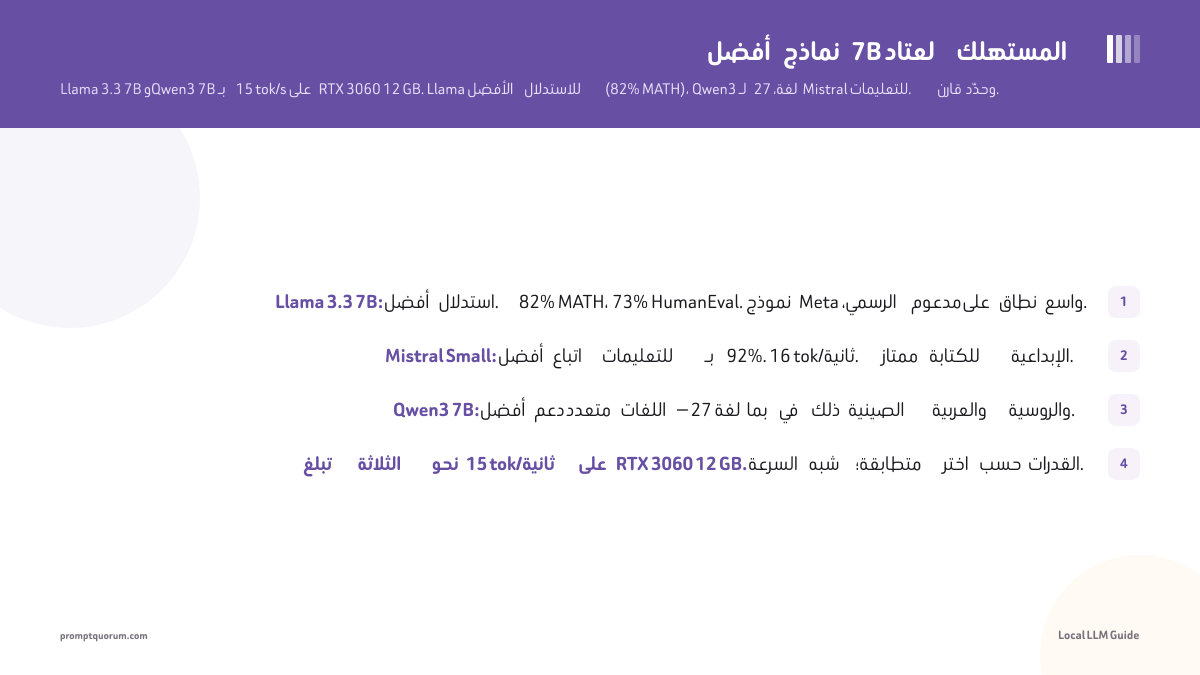
- أفضل استدلال: Llama 3.1 8B — 82% اختبار MATH، 73% HumanEval
- أفضل اتباع للتعليمات: Mistral Small — 92% في اختبارات التعليمات
- أفضل متعدد اللغات: Qwen3 8B — 27 لغة بما في ذلك الصينية واليابانية والعربية
- VRAM المطلوبة: 8 GB للنماذج الرئيسية الثلاثة (تكميم Q4)
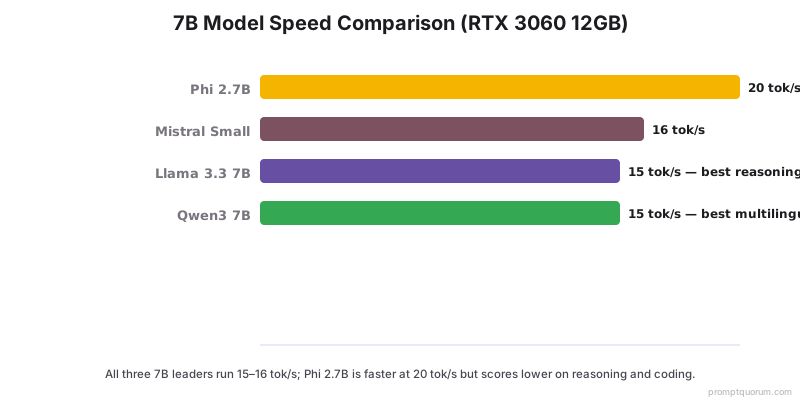
- السرعة: نحو 15 tok/ثانية على RTX 3060 12 GB للثلاثة
- الخيار الاقتصادي: Phi 2.7B — 4 GB من VRAM، 20 tok/ثانية، الإنجليزية فقط
أي نموذج 7B يملك أفضل مواصفات أداء؟
Métrica | Llama 3.1 8B | Mistral Small | Qwen3 8B | Phi 2.7B |
|---|---|---|---|---|
| VRAM المطلوبة | 8 GB | 8 GB | ~6 GB | 4 GB |
| Tokens/ثانية (RTX 3060) | 15 | 16 | 15 | 20 |
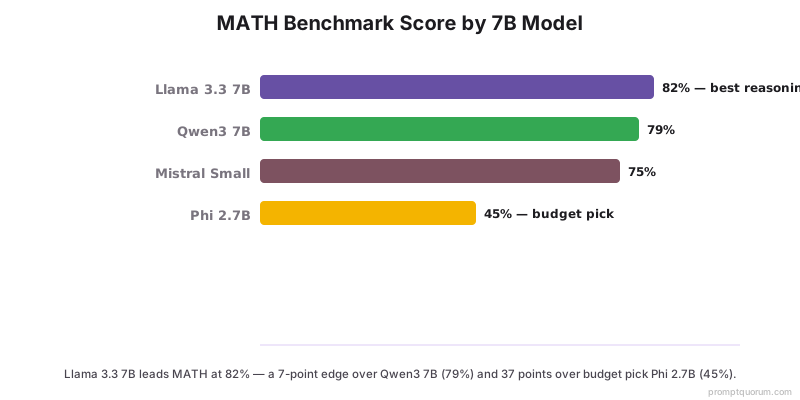
| الاستدلال (MATH) | 82% | 75% | 79% | 45% |
| الكود (HumanEval) | 73% | 60% | 64% | 48% |
| اتباع التعليمات | 85% | 92% | 84% | 55% |
| متعدد اللغات | جيد | محدود | ممتاز | الإنجليزية فقط |
| الترخيص | مفتوح (Meta) | Apache 2.0 | مفتوح (Alibaba) | MIT |
كيف تُقارن Llama 3.1 8B وMistral وQwen3 وجهًا لوجه؟
يتصدّر Llama 3.1 8B الاستدلال المُهيكَل، وMistral Small السرد الإبداعي، وQwen3 8B الإجابات المتعددة اللغات الموجزة.
مثال: مسألة رياضيات "إذا قطع قطار 100 كم في ساعتين، فما سرعته؟"
- Llama 3.1 8B: "السرعة = المسافة / الزمن = 100 كم / ساعتين = 50 كم/ساعة." يعرض الإجراء — أفضل للتصحيح.
- Mistral: "100 كم في ساعتين يساوي 50 كم/ساعة." موجز وصحيح.
- Qwen3: "يقطع القطار 100 كم في ساعتين، إذن السرعة = 50 كم/ساعة." مُهيكَل وصحيح.
تنتج الثلاثة إجابات صحيحة؛ ويعرض Llama 3.1 8B خطوات الاستدلال — مفيد لـ مهام البرمجة والتحليل.
مثال: مُدخل إبداعي "اكتب قصة قصيرة من الخيال العلمي عن الذكاء الاصطناعي."
- Mistral: سرد غني وجذّاب، أكثر من 300 كلمة. الأقوى للعمل الإبداعي.
- Llama 3.1 8B: قصة جيدة، بنبرة أكثر رسمية قليلًا. أفضل للمستندات المُهيكَلة.
- Qwen3: قصة جيدة، أقصر قليلًا. جودة متسقة عبر اللغات.
أي نموذج 7B أفضل للاستدلال والبرمجة؟
يتصدّر Llama 3.1 8B استدلال فئة 7B بـ 82% MATH؛ ويحقق Qwen3 8B نسبة 79%، وMistral Small نسبة 75%. فارق الـ 9 نقاط بين Llama 3.1 8B وMistral مهم لمهام البرمجة والرياضيات.
تواجه النماذج الثلاثة من فئة 7B صعوبة في الاستدلال متعدد الخطوات مقارنةً بنماذج 13B فأكثر — راجع دليل أفضل نماذج LLM المحلية للبرمجة لمقارنات النماذج الأكبر.
Mistral Small أضعف في الرياضيات (75%) لكنه ممتاز في اتباع التعليمات المعقّدة متعددة الأجزاء.
Qwen3 8B يوازن بين الاثنين (نحو 79% رياضيات، 84% اتباع تعليمات) — نموذج متعدد الاستخدامات للأحمال المختلطة.
لمقابلات الكود وتوليد الكود: Llama 3.1 8B > Qwen3 > Mistral.
لروبوتات الدردشة وتطبيقات المساعد: Mistral > Llama 3.1 8B > Qwen3.
أي نموذج 7B يدعم أكثر اللغات؟
يدعم Qwen3 8B 27 لغة — المتصدّر متعدد اللغات بلا منازع في فئة 7B. يملك Llama 3.1 8B قدرة قوية متعددة اللغات؛ بينما Mistral Small محسَّن أساسًا للإنجليزية.
- Qwen3 8B (Alibaba): 27 لغة بما في ذلك الصينية (الماندرين/الكانتونية)، اليابانية، الكورية، العربية، والروسية. مُدرَّب على 7 تريليونات token بتركيز متعدد اللغات.
- Llama 3.1 8B (Meta): جيد للغات أوروبا الغربية. أضعف في CJK (الصينية/اليابانية/الكورية) مقارنةً بـ Qwen3.
- Mistral Small: الإنجليزية أساسًا. الفرنسية/الألمانية/الإسبانية مقبولة، لكن تجنّبه لمهام اللغات الآسيوية أو العربية.
- الإنجليزية فقط (تجنّبه لتعدد اللغات): Phi 2.7B، Stablelm 3B.
- متغير خاص بالكود: Qwen2.5-Coder 7B يتفوق على نماذج 7B العامة في إكمال الكود. انظر أفضل نماذج LLM المحلية للبرمجة.
- ضبط دقيق للمجال: طب؟ استخدم BioLlama. قانون؟ استخدم متغيرات مضبوطة بـ Legalbench.
ما أفضل البدائل الاقتصادية بأقل من 4 GB من VRAM؟
إن كان لديك 8 GB من VRAM، استخدم نموذج 7B — لا تنزل إلى Phi 2.7B أو TinyLlama إلا إن كان 4 GB حدك المطلق.
Phi 2.7B (Microsoft): 4 GB من VRAM، 20 tok/ثانية. قادر بشكل مفاجئ لفئة 2.7B — 45% MATH، 55% اتباع تعليمات. القيود: الإنجليزية فقط، استدلال ضعيف. لمفاضلات التكميم، انظر مقارنة Q4 مقابل Q8. قد تتفاوت الأسعار حسب بلدك.
Stablelm 3B: تجنّبه. استدلال واتباع تعليمات ضعيفان (نحو 50%). دون أي ميزة على Phi 2.7B.
TinyLlama 1.1B: صغير فائق وسريع. مقبول فقط للتصنيف البسيط أو استخراج الكلمات المفتاحية.
الحكم: اختر دائمًا نموذج 7B (Llama 3.1 8B أو Mistral أو Qwen3) على نموذج 2.7B عند توفر 8 GB من VRAM. الفارق في الجودة جوهري.
اعتبارات إقليمية
المستخدمون الأوروبيون (GDPR): تشغيل Llama 3.1 8B أو Mistral Small محليًا يعني صفر خروج للبيانات — يبقى الاستدلال على جهازك. هذا يلبّي المادة 5(1)(f) من GDPR بشأن سلامة البيانات دون اتفاقات معالجة مع مزوّدين.
مستخدمو اللغات الآسيوية: Qwen3 8B هو الخيار الواضح. درّبته Alibaba على 7 تريليونات token في 27 لغة بأداء قوي في الصينية واليابانية والكورية.
ترخيص المؤسسات: يستخدم Mistral Small ترخيص Apache 2.0 — استخدام تجاري دون قيود. ويستخدم Llama 3.1 8B ترخيص Meta التجاري، الذي يتطلب اتفاقًا للتطبيقات التي تتجاوز 700 مليون مستخدم نشط شهريًا.
الأخطاء الشائعة عند اختيار نموذج 7B
- 1افتراض أن كل نماذج 7B متطابقة — يحقق Llama 3.1 8B نسبة 82% في MATH مقابل Mistral بـ 75%. فارق 9 نقاط مهم لمهام البرمجة والاستدلال.
- 2معاملة Phi 2.7B كمكافئ لـ 7B — يحقق Phi 2.7B نحو 60% من دقة 7B في معظم الاختبارات. يتسع في 4 GB من VRAM، لكن خسارة الجودة حقيقية.
- 3استخدام تكميم Q2 لتشغيل عدة نماذج 7B في آن واحد — يخفض Q2 الجودة بنحو 30%. الأفضل تشغيل نموذج 7B واحد بـ Q4 من تشغيل اثنين بـ Q2.
الأسئلة الشائعة
أي نموذج 7B ينبغي أن أختار؟
استخدم Llama 3.1 8B للبرمجة والرياضيات والمهام التحليلية — يحقق 82% في MATH و73% في HumanEval. استخدم Mistral Small للكتابة الإبداعية والدردشة واتباع التعليمات — يحقق 92% في اختبارات التعليمات. استخدم Qwen3 8B إن احتجت دعمًا متعدد اللغات بالصينية أو اليابانية أو الألمانية أو العربية.
هل يمكنني تشغيل نموذجي 7B بـ 16 GB من VRAM؟
نعم. يدعم Ollama التحميل المتتابع لعدة نماذج. بـ 16 GB من VRAM يمكنك تشغيل نموذجي 7B بتكميم Q4، إذ يتطلب كل منهما نحو 4.5 GB. يعمل كل نموذج بسرعة نحو 15 tok/ثانية بشكل مستقل — لا يعملان بالتوازي.
هل ينبغي أن أستخدم Llama 3.1 8B أم أرتقي إلى نموذج 13B؟
للبرمجة والاستدلال، الارتقاء إلى Qwen3 14B (أو Qwen2.5-Coder 14B) يحسّن الدقة بنسبة 10–15% ويتطلب 16 GB من VRAM. أما للدردشة والكتابة الإبداعية، فإن Llama 3.1 8B أو Mistral Small بـ 8 GB كافٍ — الفارق في الجودة لا يُذكر للمهام الحوارية.
أي نموذج 7B يملك أطول نافذة سياق؟
اعتبارًا من أبريل 2026، يدعم Llama 3.1 8B وMistral Small وQwen3 8B نوافذ سياق بـ 8K token في إصدارات Q4 القياسية. للسياقات الأطول (32K فأكثر) تلزم نماذج أكبر — يدعم Qwen3 72B سياق 128K token لكنه يتطلب 40 GB فأكثر من VRAM.
هل يوجد نموذج 7B أفضل من Llama 3.1 8B وMistral وQwen3؟
اعتبارًا من أبريل 2026، هذه الثلاثة هي حدود فئة 7B. يتصدّر كل منها فئة مختلفة: Llama 3.1 8B في الاستدلال (82% MATH)، وMistral في اتباع التعليمات (92%)، وQwen3 في تعدد اللغات (27 لغة). تتفوق المتغيرات المتخصصة مثل Qwen2.5-Coder 7B على النماذج العامة في اختبارات الكود.
المصادر
- Llama 3.1 8B Model Card — اختبارات MATH وHumanEval وMTBench المرجعية (Meta AI، 2024)
- Mistral Small Technical Report — تقييم اتباع التعليمات والاستدلال (Mistral AI، 2023)
- توثيق Qwen3 — الدعم متعدد اللغات ونتائج الاختبارات المرجعية (Alibaba Cloud، 2024)
- Open LLM Leaderboard — ترتيبات حية لنماذج 7B في MATH وHumanEval ومهام التعليمات (HuggingFace)