الجديد في Ollama — تحديث يوليو 2026
إصدار Ollama الحالي: v0.40.5 (صدر في 14 أكتوبر 2026). هذا هو أحدث إصدار مستقر ويتوفر عبر ollama.com/download. ظهر إصدار تجريبي v0.40.6 في 16 أكتوبر لكنه لم يُصنَّف مستقرًا بعد. حدّث باستخدام `curl https://ollama.ai/install.sh | sh` (على macOS: `brew upgrade ollama`) ثم تحقق عبر `ollama --version`.
ما الذي تغيّر في سلسلة v0.33–v0.40 (أغسطس–أكتوبر 2026): فعّل v0.33.0 (21 أغسطس) استخدام Claude Desktop كبوابة طرف ثالث وجعل نقاط استعادة التعبئة المسبقة لذاكرة KV أكثر موثوقية. وسمح v0.34.0 (5 سبتمبر) باستخدام نماذج Ollama في ChatGPT Desktop وسرّع المخرجات المنظَّمة على Apple Silicon؛ وأزال v0.34.1 (14 سبتمبر) صفة التجريبي عن `ollama create` مع MLX safetensors. ويشغّل v0.40.0 (25 سبتمبر) البنى المدعومة مثل qwen3.8 وgemma4 وqwen3.6 افتراضيًا عبر MLX على Apple Silicon. وأضاف v0.35.0 (28 سبتمبر) نماذج القرار عبر `/v1/systemone` — نماذج تعيد خيارات واحتمالات ودرجات بدل النص، بدءًا بـ Nimble وTev1 — وأضاف v0.35.1 (29 سبتمبر) نماذج Clef متعددة الوسائط. ويحتفظ v0.40.2 (8 أكتوبر) بنسخ احتياطية عند ترقية النماذج القديمة في الخلفية، وأضاف v0.40.4 (12 أكتوبر) الأمر `ollama run <نموذج-قرار> --ask`، وأضاف v0.40.5 (14 أكتوبر) دعم NVIDIA Nemotron 3.5 Super والوصول السحابي إلى نماذج القرار Clef. الملاحظات الكاملة: github.com/ollama/ollama/releases.
أحدث النماذج المضافة منذ آخر تحديث (أواخر يونيو–يوليو 2026):
- Nemotron 3.5 Lightning وSuper وBolt (NVIDIA، أغسطس–أكتوبر 2026) — Lightning (11 أغسطس) نموذج MoE بحجم 30B وبنشاط 3B للوكلاء العاملين دائمًا على وحدة GPU واحدة؛ وSuper نموذج MoE للرؤية واللغة بحجم 120B (نشاط 12B، سياق حتى مليون رمز، أدوات ووضع تفكير)؛ وBolt يختزل Super إلى 74B (نشاط 9B) ليناسب وحدة NVIDIA بسعة 24 جيجابايت. التنزيل: `ollama pull nemotron-3.5-lightning` و`ollama run nemotron-3.5-super` و`ollama run nemotron-3.5-bolt`
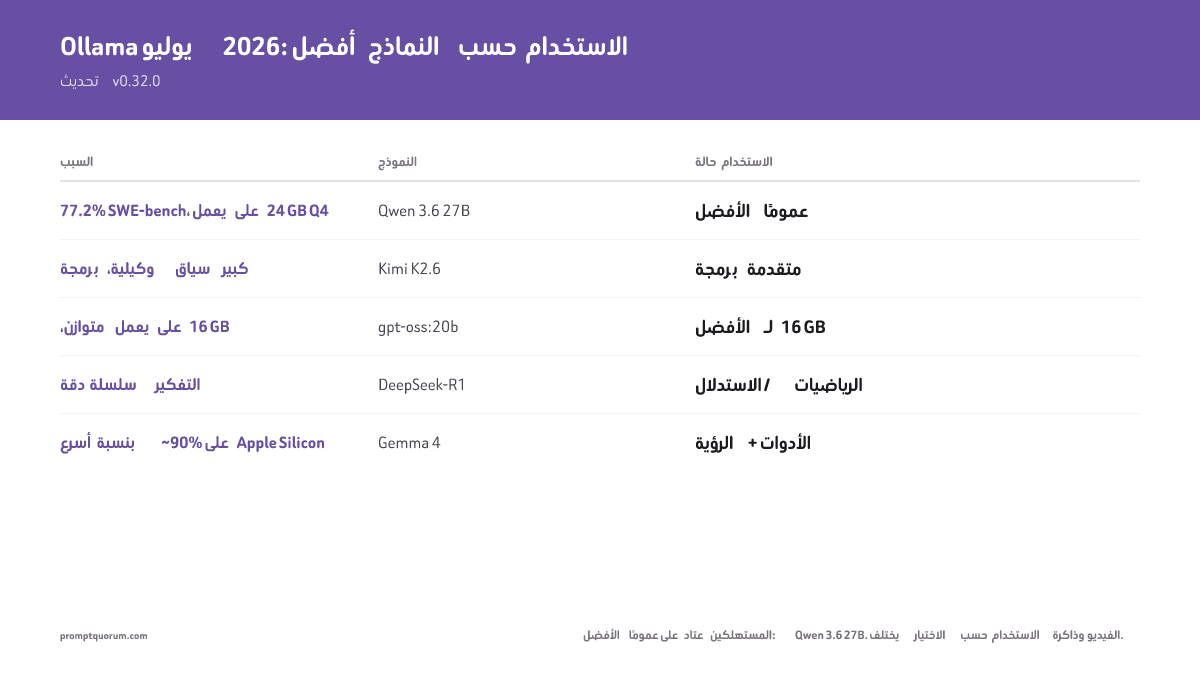
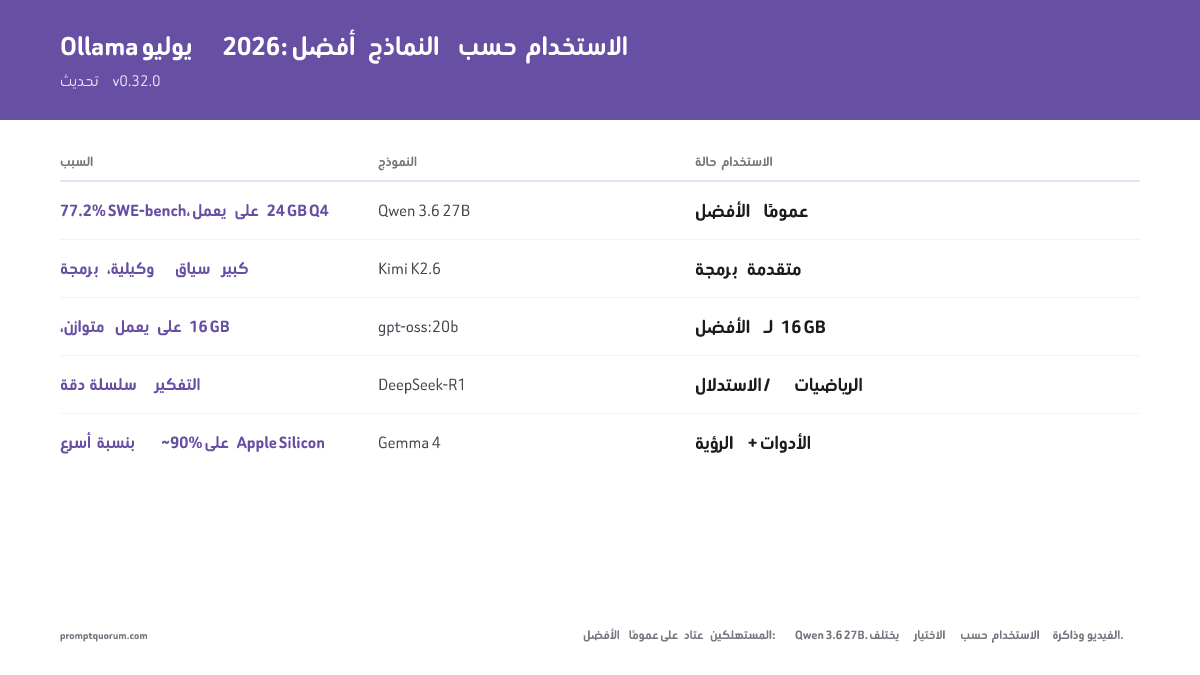
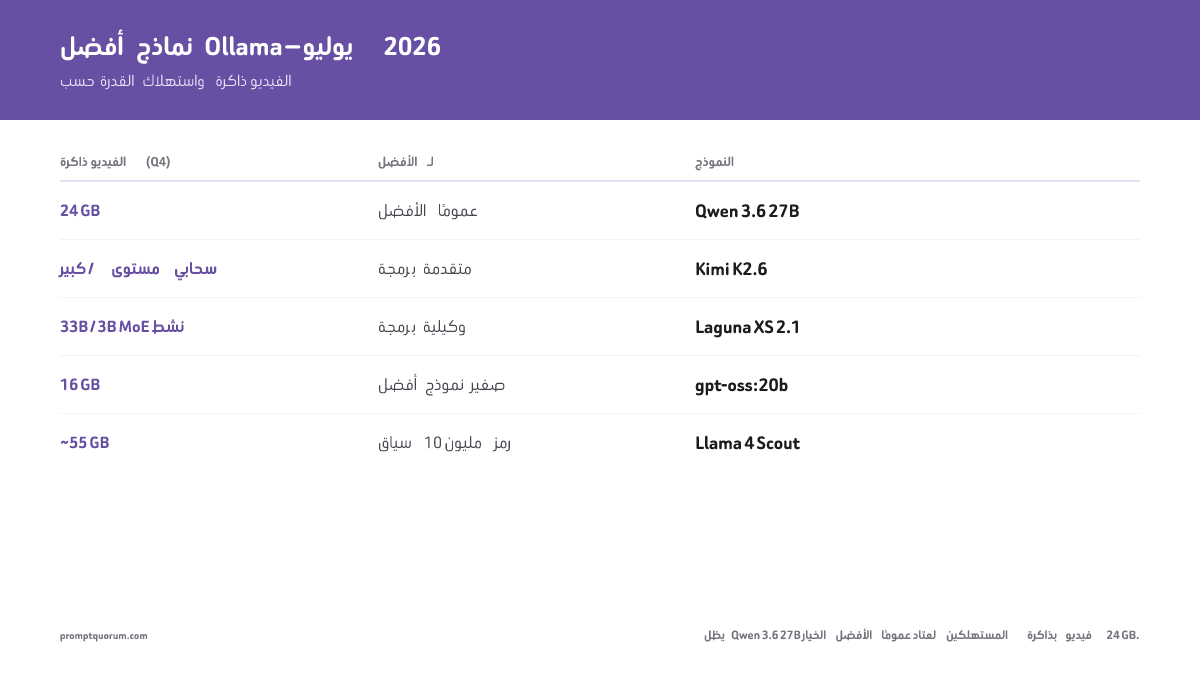
- Laguna XS 2.1 (من Poolside، 2 يوليو 2026) — MoE بحجم 33B إجمالي/3B نشط، مصمّم للبرمجة الوكيلة والعمل المحلي طويل الأفق: التخطيط وكتابة الشيفرة وتشغيل الاختبارات والتكرار. سياق 256K، رخصة OpenMDW-1.1. SWE-bench Verified 70.9%، SWE-bench Multilingual 63.1%. للتنزيل: `ollama pull laguna-xs-2.1`
- Kimi K2.7 Code (Moonshot AI، يونيو 2026) — نموذج وكيلي مخصص للبرمجة مبني على Kimi K2.6، موجّه تحديدًا لجلسات البرمجة طويلة الأفق. للتنزيل: `ollama pull kimi-k2.7-code:cloud`
- DeepSeek V4 Pro (DeepSeek، 23 أبريل 2026) — متخصص في البرمجة الخوارزمية، 93.5% LiveCodeBench، رخصة MIT. النسخة الاقتصادية DeepSeek V4 Flash للعتاد الأخف. للتنزيل: `ollama pull deepseek-v4-pro`
- Kimi K2.6 (Moonshot AI، 20 أبريل 2026) — نموذج برمجة متقدم، SWE-Bench Pro 58.6، SWE-bench Verified 80.2%. بنية MoE (32B نشط / 1T إجمالي). رخصة Modified MIT. للتنزيل: `ollama pull kimi-k2.6:cloud`
- Qwen3.8-27B (Alibaba، 16 أبريل 2026) — أفضل خيار عام على عتاد المستهلك، 61.7 SWE-bench Pro، رخصة Apache 2.0، يلائم 24 GB عند Q4. وكذلك Qwen3.6-35B-A3B (MoE، 73.4 SWE-bench). للتنزيل: `ollama pull qwen3.8:27b`
- GLM-5.3 (Z.ai) — MoE بحجم 744B / 40B نشط، رخصة MIT. رائد في توليد الشيفرة المنظّمة. للتنزيل: `ollama pull glm-5.3`
- gpt-oss (OpenAI، 2026) — MoE مفتوح الأوزان: gpt-oss:20b (21B إجمالي / 3.6B نشط، يعمل في 16 GB، بمستوى ~o3-mini، استدلال قابل للضبط) وgpt-oss:120b (80 GB). للتنزيل: `ollama pull gpt-oss:20b`
- Gemma 4 (Google، 2 أبريل 2026) — أحجام متعددة الوسائط E2B / E4B / E12B (26B MoE) / E27B (31B كثيف)، جميعها تدعم الرؤية واستدعاء الأدوات. أصبح الآن أسرع بنحو 90% على Apple Silicon (تحديث MLX يوليو 2026). يعمل E4B في ~6 GB VRAM. للتنزيل: `ollama pull gemma4:e4b`
# Update Ollama to the latest version (v0.40.5)
curl https://ollama.ai/install.sh | sh

# Or on Mac: brew upgrade ollama

# Check your current version
ollama --version  # outputs: ollama version 0.40.5

# Pull the newest July 2026 models
ollama pull laguna-xs-2.1
ollama pull kimi-k2.7-code:cloud
ollama pull nemotron-3.5-lightning
ollama pull kimi-k2.6:cloud
ما هو سجل إصدارات Ollama والجدول الزمني لها؟
نشرت Ollama أول إصدار لها، v0.0.1، في 8 يوليو 2023، ووصلت إلى v0.40.5 في 14 أكتوبر 2026. يسرد الجدول الإصدارات التي غيّرت ما يمكنك فعله مع Ollama؛ وكل الوسوم مع ملاحظاتها الكاملة على github.com/ollama/ollama/releases. قفز ترقيم الإصدارات من v0.35 إلى v0.40 في أواخر سبتمبر 2026، لذا يظهر v0.40.0 (25 سبتمبر) بجوار إصدارات v0.35 (28-29 سبتمبر) على GitHub.
الإصدار | التاريخ | التغيير الرئيسي |
|---|---|---|
| v0.40.5 | 14 أكتوبر 2026 | Nemotron 3.5 Super؛ نماذج قرار سحابية |
| v0.40.0 | 25 سبتمبر 2026 | MLX افتراضيًا على Apple Silicon |
| v0.35.0 | 28 سبتمبر 2026 | نماذج القرار عبر /v1/systemone |
| v0.34.0 | 5 سبتمبر 2026 | نماذج Ollama في ChatGPT Desktop |
| v0.33.0 | 21 أغسطس 2026 | بوابة Claude Desktop؛ استعادة KV |
| v0.32.0 | 11 يوليو 2026 | وكيل "Chat, Code & Work" |
| v0.0.1 | 8 يوليو 2023 | أول إصدار عام |
ما النماذج الأكثر شيوعًا على Ollama في 2026؟
تُقاس الشعبية على Ollama بعدد التنزيلات الظاهر في صفحة مكتبة كل نموذج. اعتبارًا من يوليو 2026، لا تزال النماذج الأكثر تنزيلاً تهيمن عليها عائلة Llama من Meta -- إذ يُعدّ Llama 3.2 3B الأكثر تنزيلاً عمومًا، ويعود ذلك إلى حدٍّ كبير لاستخدامه كنموذج اختبار أول للتثبيت. غير أن Llama 4 Scout صعد بسرعة منذ إطلاقه في أبريل 2026.
تُعدّ Qwen3 عائلة النماذج الأسرع نموًّا في مكتبة Ollama، حيث يحلّ Qwen3 والمتغيّر الكثيف الجديد Qwen3.8 محل Qwen3 بسرعة. وشهد DeepSeek-R1 قفزات كبيرة بعد إطلاقه، ولا يزال من الأكثر تنزيلاً لمهام الاستدلال.
أطلقت Meta نموذج Llama 4 في أبريل 2026 بمتغيّري Scout (17B نشط، 109B إجمالي، MoE) وMaverick (17B نشط، 400B إجمالي). أصبح Llama 4 Scout الآن مستقرًا في مكتبة Ollama (`ollama pull llama4:scout`). تستخدم عائلة Llama 4 بنية مزيج الخبراء (MoE) — إذ يُفعَّل 17B معامل فقط لكل توكن، لكن مع 109B معامل إجمالي يحتاج Scout إلى ~55 GB VRAM عند Q4 (ويلائم 24 GB فقط عند 1.78 بت، ~20 tok/s). ميزتا Scout البارزتان هما نافذة سياقه البالغة 10M توكن ودخله متعدد الوسائط، وليس ملاءمته لعتاد المستهلك. للإعدادات الخفيفة (8 GB RAM)، يبقى Llama 3.2 3B أسهل نموذج أول. توسّعت منظومة Ollama بشكل ملحوظ في أبريل 2026. حقق Kimi K2.6 (Moonshot AI، رخصة Modified MIT، 32B نشط / 1T إجمالي MoE) نتيجة SWE-Bench Pro 58.6، متعادلاً مع GPT-5.5. وLaguna XS 2.1 (من Poolside) هو أحدث منافس للبرمجة الوكيلة، مصمّم خصيصًا لجلسات البرمجة المحلية طويلة الأفق. وحقق Qwen3.8-27B نتيجة 61.7 SWE-bench Pro كأفضل نموذج عام على عتاد المستهلك (يلائم 24 GB عند Q4). ويعمل gpt-oss:20b مفتوح الأوزان من OpenAI (21B إجمالي / 3.6B نشط MoE) في 16 GB بمستوى ~o3-mini مع استدلال قابل للضبط. تضم مكتبة Ollama الآن مئات النماذج المنسّقة، وتُعدّ Laguna XS 2.1 وKimi K2.7 Code أحدث الإضافات منذ تحديث يونيو.
ملاحظة حول الإصدارات: يُعدّ Qwen3.6 وQwen3.8 جيلين أحدث من Qwen على Ollama (qwen3.6:35b بحجم ~24 GB، وqwen3.8:27b بحجم 18 GB)، أما qwen3:30b وqwen3-coder:30b (19 GB لكل منهما) فخياران من الجيل السابق ما زالا يعملان. نموذج Small الحالي من Mistral هو Mistral Small 4، لكن مكتبة Ollama لم تدرجه وقت الفحص، لذا يبقى mistral-small3.1 وmistral-small:24b (Mistral Small 3) نموذجَي Small القابلين للتنزيل هناك.
أي نماذج Ollama تناسب حالة استخدامك على نحوٍ أفضل؟
تعتمد جودة مخرجات النموذج إلى حدٍّ كبير على طريقة المطالبة. للاطلاع على تقنيات منظّمة تعمل عبر جميع النماذج المحلية — بما في ذلك سلسلة التفكير والأمثلة القليلة وتنسيق المخرجات — راجع دليل هندسة المطالبات. في مهام الاستدلال، تحسّن مطالبة سلسلة التفكير جودة مخرجات DeepSeek-R1 وQwen3 بشكل كبير. لفهم مقايضات التكميم لهذه النماذج، راجع دليل التكميم ←. ولتحديد مقدار VRAM الذي يحتاجه كل نموذج، راجع دليل متطلبات VRAM ←. لتدفقات عمل الوكلاء مع Gemma 4، راجع شجرة التفكير وReAct. ولمتطلبات العتاد اللازمة لتشغيل هذه النماذج، راجع دليل العتاد ←. وبمجرد ربط نموذج يدعم استدعاء الأدوات من هذه القائمة في حلقة متعددة الخطوات مع وصول للملفات وقواعد البيانات، راجع وكلاء الذكاء الاصطناعي المحليون مع MCP لنمط التنسيق مفتوح المصدر.
- الدردشة العامة (مبتدئ): `ollama run llama3.2:3b` -- أكثر النماذج توثيقًا، وأفضل نموذج أول مدعوم.
- الدردشة العامة (أفضل خيار عام): `ollama run qwen3.8:27b` -- 61.7 SWE-bench Pro، أفضل خيار عام على عتاد المستهلك، يلائم 24 GB عند Q4. متوازن لكل الاستخدامات: `ollama run qwen3:30b`. للأجهزة بسعة 8 GB، التزم بـ `ollama run llama3.2:3b`.
- السياق الطويل / متعدد الوسائط: `ollama run llama4:scout` -- سياق 10M توكن + متعدد الوسائط، MoE (17B نشط/109B إجمالي). يحتاج ~55 GB VRAM عند Q4 (يلائم 24 GB فقط عند 1.78 بت، ~20 tok/s).
- أفضل نموذج صغير / 16 GB: `ollama run gpt-oss:20b` -- 21B إجمالي / 3.6B نشط MoE، بمستوى ~o3-mini، استدلال قابل للضبط. أكبر: `ollama run gpt-oss:120b` (80 GB).
- البرمجة على 8 GB: `ollama run qwen3:8b` -- خيار برمجة محلي جيد لأجهزة 8 GB VRAM. يستهلك 5 GB، متعدد اللغات.
- الاستدلال العام على 8 GB (لغير البرمجة): `ollama run mistral:7b` -- نموذج خفيف عام الأغراض لأجهزة 8 GB؛ وتعتمد السرعة على عتادك.
- البرمجة (أفضل وكيل، 24B): `ollama run devstral-small-2` -- أفضل نموذج برمجة وكيل (تعديلات متعددة الملفات، التنقيح). 16 GB RAM. من Mistral AI.
- البرمجة (أفضل كثيف، 27B): `ollama run qwen3.8:27b` -- 61.7 SWE-bench Pro. أفضل نموذج برمجة كثيف. 18 GB VRAM.
- البرمجة (MoE متقدم): `ollama run kimi-k2.6:cloud` -- SWE-Bench Pro 58.6 (يتعادل مع GPT-5.5)، الطبقة العليا. MoE (32B نشط/1T إجمالي). رخصة Modified MIT. يحتاج تكميمًا لعتاد المستهلك.
- البرمجة (وكيلة، طويلة الأفق): `ollama run laguna-xs-2.1` -- من Poolside، MoE بحجم 33B إجمالي/3B نشط، SWE-bench Verified 70.9%، سياق 256K. مصمّم لحلقات تخطيط → برمجة → اختبار → تكرار متعددة الخطوات. رخصة OpenMDW-1.1.
- مهام الوكلاء واستدعاء الأدوات: `ollama run gemma4:e4b` -- صدر في 2 أبريل 2026. استدعاء أدوات مدمج + دعم الرؤية. يُوصى به للوكلاء المحليين واستدعاء الدوال والمخرجات المنظّمة. 6 GB RAM.
- الاستدلال والرياضيات: `ollama run deepseek-r1:7b` -- نموذج سلسلة التفكير، أفضل أداء رياضي محلي عند 7B.
- متعدد اللغات: `ollama run qwen3:8b` -- أكثر من 29 لغة أصلية، خيار متعدد اللغات عام الأغراض.
- غير خاضع للرقابة / عام الأغراض: `ollama run dolphin3` -- Dolphin 3.0 (من Cognitive Computations، مبني على Llama 3.1)، بلا تصفية محتوى مدمجة، للدردشة العامة والبرمجة والمهام الوكيلة.
- فهم الصور: `ollama run gemma4:e4b` -- رؤية + استدعاء أدوات. أو `ollama run llama3.2-vision:11b` للرؤية المخصّصة.
- سريع وخفيف: `ollama run gemma2:2b` -- أسرع استدلال على المعالج، 1.7 GB RAM.
- جودة عالية (16 GB RAM): `ollama run mistral-small3.1` -- جودة جيدة عند 14 GB RAM.
- توليد المتجهات (Embeddings): `ollama run nomic-embed-text` -- نموذج تضمين بـ 137M معامل لخطوط أنابيب RAG.
- أسئلة وأجوبة المستندات (RAG): `ollama run llama3.2` مع ميزة RAG في Open WebUI -- أفضل تركيبة مدعومة.
- أتمتة المنزل / الذكاء بكلمة التنبيه: `ollama run phi4-mini` — يعالج Phi-4 Mini (3.8B، ~3 GB VRAM) استعلامات Home Assistant الصوتية على حاسوب مصغّر دون GPU منفصل؛ وتعتمد السرعة على عتادك. راجع دليل تكامل Home Assistant + Ollama ←.
نماذج Ollama الجديدة — إصدارات يوليو 2026
هذه أحدث النماذج في مكتبة Ollama اعتبارًا من يوليو 2026، الأحدث أولاً. تأكّد من التوفّر عبر `ollama pull <model>` قبل بناء تدفقات العمل — تظهر النماذج الجديدة على ollama.com/library خلال أيام من الإطلاق.
Model | Released | Best For | Ollama Command |
|---|---|---|---|
| nemotron-3.5-super | أكتوبر 2026 | NVIDIA — MoE للرؤية واللغة، 120B/نشاط 12B، سياق 1M، أدوات | ollama run nemotron-3.5-super |
| nemotron-3.5-bolt | أكتوبر 2026 | NVIDIA — MoE بحجم 74B/نشاط 9B لوحدة GPU بسعة 24 جيجابايت | ollama run nemotron-3.5-bolt |
| nemotron-3.5-lightning | 11 أغسطس 2026 | NVIDIA — MoE بحجم 30B/نشاط 3B لوكلاء يعملون دائمًا | ollama run nemotron-3.5-lightning |
| laguna-xs-2.1 | 2 يوليو 2026 | Poolside — برمجة وكيلة، MoE بحجم 33B/3B نشط، SWE-bench Verified 70.9%، سياق 256K | ollama run laguna-xs-2.1 |
| kimi-k2.7-code | يونيو 2026 | Moonshot AI — نموذج وكيلي مخصص للبرمجة مبني على Kimi K2.6 | ollama run kimi-k2.7-code:cloud |
| deepseek-v4-pro | 23 أبريل 2026 | برمجة خوارزمية، 93.5% LiveCodeBench، MIT | ollama run deepseek-v4-pro |
| kimi-k2.6 | 20 أبريل 2026 | برمجة متقدمة (SWE-Bench Pro 58.6)، MoE (32B/1T)، Modified MIT | ollama run kimi-k2.6:cloud |
| qwen3.8:27b | 16 أبريل 2026 | أفضل خيار عام على عتاد المستهلك، 61.7 SWE-bench Pro، يلائم 24 GB Q4 | ollama run qwen3.8:27b |
| qwen3:30b | 2026 | متوازن لكل الاستخدامات؛ qwen3-coder:30b لإكمال الشيفرة | ollama run qwen3:30b |
| gpt-oss:20b | 2026 | أفضل نموذج صغير / 16 GB، ~o3-mini، استدلال قابل للضبط (وأيضًا gpt-oss:120b) | ollama run gpt-oss:20b |
| glm-5.3 | Z.ai | 744B/40B نشط MoE، رخصة MIT | ollama run glm-5.3 |
| gemma4:e4b | 2 أبريل 2026 | رؤية + استدعاء أدوات (E2B/E4B/E12B/E27B) | ollama run gemma4:e4b |
| deepseek-v4-flash | أبريل/مايو 2026 | خيار برمجة اقتصادي | ollama run deepseek-v4-flash |
| qwen3:8b | 2026 | نموذج متعدد اللغات من فئة 7B | ollama run qwen3:8b |
ما هو DeepSeek-R1 ولماذا يختلف؟
DeepSeek-R1 هو نموذج استدلال -- وعلى عكس نماذج الدردشة القياسية التي تولّد الإجابات مباشرة، يولّد DeepSeek-R1 استدلال سلسلة تفكير صريح قبل إجابته النهائية. وهذا يحسّن الأداء بشكل كبير في الرياضيات وألغاز المنطق وحل المشكلات خطوة بخطوة.
DeepSeek-R1 7B هو نموذج استدلال بسلسلة التفكير. وهو أبطأ من النماذج القياسية (توكنات أكثر لكل رد) لكنه أكثر دقة بكثير في المهام التي يهمّ فيها الاستدلال.
ملاحظة حول الإصدارات: DeepSeek-R1 نموذج من الجيل السابق. عائلة الأوزان المفتوحة الحالية من DeepSeek هي DeepSeek-V4، ولم تدرجها مكتبة Ollama وقت الفحص؛ لذا تبقى النسخ المقطّرة deepseek-r1 (من 1.5B إلى 70B) خيار الاستدلال القابل للتنزيل هناك. وقد استبدلت DeepSeek نموذج R1 المستضاف في واجهتها البرمجية بـ DeepSeek-V4.
# Pull and run DeepSeek-R1
ollama run deepseek-r1:7b

# Larger variants for better quality
ollama run deepseek-r1:14b   # 10 GB RAM
ollama run deepseek-r1:32b   # 20 GB RAM
أي نماذج Ollama تدعم إدخال الصور؟
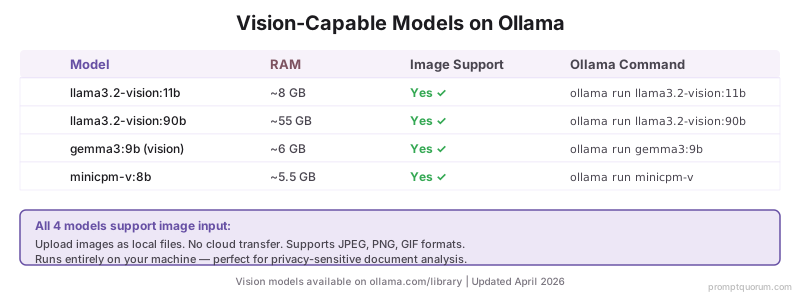
اعتبارًا من يوليو 2026، تدعم النماذج التالية على Ollama إدخال الصور (متعدد الوسائط): يدعم Gemma 4 الرؤية واستدعاء الأدوات معًا — وهو فريد بين نماذج الرؤية على Ollama، وأصبح الآن يعمل أسرع بنحو 90% على Apple Silicon بعد تحديث MLX في يوليو.
Model | RAM | Image Support | Ollama Command |
|---|---|---|---|
| llama3.2-vision:11b | ~8 GB | نعم | ollama run llama3.2-vision:11b |
| llama3.2-vision:90b | ~55 GB | نعم | ollama run llama3.2-vision:90b |
| gemma3:9b (vision) | ~6 GB | نعم | ollama run gemma3:9b |
| minicpm-v:8b | ~5.5 GB | نعم | ollama run minicpm-v |
| gemma4:e4b | ~6 GB | نعم + استدعاء أدوات ✓ | ollama run gemma4:e4b |
ما هي أفضل 10 نماذج مفتوحة المصدر على Ollama؟
لا تزال أعداد التنزيلات تميل لصالح Llama 3.x بسبب شيوع الدروس. للمشاريع الجديدة في يوليو 2026، يُفضَّل Qwen3.8-27B (أفضل خيار عام على عتاد المستهلك) وKimi K2.6 أو Laguna XS 2.1 (البرمجة) وgpt-oss:20b وqwen3:30b.
# | Model | Best For | RAM | HumanEval |
|---|---|---|---|---|
| 1 | Qwen3.8-27B | أفضل خيار عام على عتاد المستهلك | 24 GB (Q4) | 61.7 SWE-bench Pro |
| 2 | Kimi K2.6 | برمجة متقدمة، MoE (32B/1T)، Modified MIT | مكمّم | 58.6 SWE-Bench Pro |
| 3 | gpt-oss:20b | أفضل نموذج صغير / 16 GB، استدلال قابل للضبط | 16 GB | ~o3-mini |
| 4 | qwen3:30b | متوازن لكل الاستخدامات؛ qwen3-coder:30b للبرمجة | ~18 GB | قوي |
| 5 | Laguna XS 2.1 | برمجة وكيلة، طويلة الأفق (تخطيط/برمجة/اختبار/تكرار) | مكمّم | 70.9% SWE-bench Verified |
| 6 | Devstral Small 2 24B | برمجة وكيلة (متعددة الملفات) | 15 GB | 68.0% (SWE-bench Verified) |
| 7 | deepseek-r1:7b | استدلال، رياضيات | 5 GB | — |
| 8 | gemma4:e4b | رؤية + استدعاء أدوات (متعدد الوسائط) | ~6 GB | — |
| 9 | Llama 4 Scout | سياق طويل 10M + متعدد الوسائط، MoE | ~55 GB (Q4) | — |
| 10 | Llama 3.2 3B | النموذج الأول، الدردشة العامة | 2.5 GB | — |
كيف تتصفّح مكتبة نماذج Ollama؟
هناك طريقتان للعمل مع نماذج Ollama. تبديل النماذج المثبّتة: في تطبيق Ollama على Mac، انقر زر القائمة المنسدلة للنماذج أسفل حقل إدخال الدردشة (يعرض اسم النموذج الحالي، مثل "gemma3:1b") للتبديل بين أي نموذج مثبّت محليًا. العثور على نماذج جديدة وتنزيلها: زُر ollama.com/library لتصفح مئات النماذج المنسّقة حسب الفئة، ثم استخدم أوامر CLI أدناه لتنزيل النماذج وإدارتها.
# List all locally downloaded models
ollama list

# Search for a model and pull it
ollama pull qwen2.5-coder:32b

# See all available tags for a model
ollama show qwen2.5

# Remove a model to free disk space
ollama rm llama3.2:3b
نماذج Ollama مفتوحة المصدر: السياق الإقليمي
الاتحاد الأوروبي / GDPR + الامتثال للتراخيص. بالنسبة للمؤسسات الأوروبية التي تنشر نماذج Ollama في الإنتاج، لا يقل اختيار الترخيص أهمية عن الأداء. Apache 2.0 (مفتوح بالكامل، الاستخدام التجاري مسموح): Mistral Small 3 وMistral Small 3.1 وQwen3 8B وQwen3.8-27B وDevstral Small 2 وGranite 4.2. ترخيص Meta Llama المجتمعي (يُقيَّد الاستخدام التجاري فوق 700 مليون مستخدم نشط شهرياً): Llama 3.1 8B وLlama 3.2 3B وLlama 3.2 Vision 11B. يُستثنى Llama 3.2 Vision: فسياسة الاستخدام المقبول الخاصة به لا تمنح حقوق الترخيص للأفراد أو الشركات المقيمة في الاتحاد الأوروبي (ولا يتأثر المستخدمون النهائيون للمنتجات المبنية عليه)، لذا تحقق منها قبل الاستخدام في الاتحاد الأوروبي. MIT (الاستخدام التجاري مسموح): DeepSeek-R1 7B و14B. MIT المعدّل (الاستخدام التجاري مسموح مع بند الإسناد): Kimi K2.6. OpenMDW-1.1 (متساهل، الاستخدام التجاري مسموح): Laguna XS 2.1. تحقق دائماً من شروط الترخيص قبل النشر التجاري. وللشركات الأوروبية في القطاعات المنظَّمة، تُعدّ نماذج Mistral (فرنسا، Apache 2.0) مثل Devstral Small 2 خياراً افتراضياً معقولاً: منشأ أوروبي وترخيص متساهل. وتشغيل النماذج بالكامل داخل المنشأة عبر Ollama يعني ألا تُرسل الأوامر إلى خوادم خارجية؛ وهذا يدعم التزامات GDPR لكنه لا يحققها وحده (فالوسم `:cloud` يرسل البيانات إلى خدمة Ollama المستضافة).
اليابان (METI). لعمليات النشر المؤسسية اليابانية مع Ollama، تُعدّ عائلة Qwen3 / Qwen3.8 خياراً موصى به: فهي تعالج النص الياباني أصلاً، مما يفيد زمن الاستدلال وذاكرة KV المؤقتة. وفي سير عمل البرمجة باليابانية: يتعامل Qwen3.8-27B (61.7 في SWE-bench Pro بحسب Qwen) مع تعليقات الكود اليابانية أصلاً. ويُعدّ تسجيل الإصدار الدقيق للنموذج ممارسة جيدة لوثائق الامتثال. استخدم `ollama show <النموذج>` للحصول على المواصفات الكاملة (عدد المعاملات ومستوى التكميم وطول السياق) لسجلات الامتثال.
الصين. قد تفرض تدابير CAC للذكاء الاصطناعي التوليدي (2023) التزامات تسجيل أو تقييم أمني على مزوّدي خدمات الذكاء الاصطناعي التوليدي المقدَّمة للجمهور في الصين؛ وتحديد انطباقها عليك مسألة تُعرض على مستشارك القانوني. يُعدّ Qwen3 / Qwen3.8 (من Alibaba، Apache 2.0) خياراً طبيعياً لعمليات النشر المؤسسية الصينية مع Ollama: منشأ صيني وترخيص Apache 2.0 وأداء قوي بالصينية. وKimi K2.6 (من Moonshot AI، MIT المعدّل) صيني المنشأ أيضاً، لكن Ollama تدرجه كوسم سحابي فقط ويحتاج التشغيل المحلي إلى عتاد بمستوى الخوادم. الأوامر: `ollama run qwen3.8:27b` لأفضل جودة، و`ollama run qwen3:8b` للسرعة. ويناسب DeepSeek-R1 (ترخيص MIT) مهام الاستدلال. الاستدلال الذي يعمل محليًا عبر Ollama لا يرسل البيانات إلى الخارج بحد ذاته، مما يزيل مسألة النقل عبر الحدود في هذه الخطوة؛ أما انطباق PIPL أو التزامات أخرى على معالجتك للبيانات فمسألة تُحسم مع مستشارك القانوني. هذا القسم معلومات عامة وليس استشارة قانونية.
ما هي الأخطاء الشائعة عند اختيار نماذج Ollama؟
تنزيل وسم النموذج الأكبر افتراضيًا دون التحقق من RAM
تشغيل `ollama pull llama3.3` دون تحديد وسم ينزّل المتغيّر الافتراضي، وهو عادةً أكبر تكميم قياسي. على جهاز بسعة 8 GB RAM، سيؤدي تنزيل llama3.3 (70B بحجم ~40 GB) إلى الفشل أو استخدام مفرط للتبديل (swap). حدّد المتغيّر دائمًا: `ollama pull llama3.2:3b` للأجهزة بسعة 8 GB.
استخدام نموذج عام مع وجود نموذج متخصص للمهمة
لمهام البرمجة، صُمم `qwen2.5-coder:7b` للشيفرة ويتضمن دعم FIM (الإكمال في المنتصف) لإكمال الشيفرة، وهو ما لا يتوفر في النموذج العام `qwen2.5:7b`. للاستدلال/الرياضيات، `deepseek-r1:7b` هو نموذج استدلال مخصص بسلسلة التفكير. توجد النماذج المتخصصة للمهام في مكتبة Ollama لسبب وجيه.
عدم التحقق من توفّر النموذج قبل بناء تدفق العمل
تتغير مكتبة Ollama بمرور الوقت -- تُضاف النماذج وتُزال أحيانًا. قبل بناء خط إنتاج حول نموذج معيّن، تأكّد من وجوده في المكتبة (`ollama list` محليًا، أو راجع ollama.com/library). ثبّت إصدارات نماذج محددة في تدفقات عمل الإنتاج: `ollama pull llama3.1:8b-instruct-q4_K_M`.
عدم تحديد وسم تكميم للنماذج الكبيرة
تشغيل `ollama pull qwen2.5-coder:32b` دون لاحقة تكميم ينزّل المتغيّر الافتراضي -- الذي قد يكون أكبر مما يستوعبه VRAM لديك. لـ 16 GB VRAM، نزّل متغيّر Q4_K_M الصريح: `ollama pull qwen2.5-coder:32b-instruct-q4_K_M`. شغّل `ollama show <model>` بعد التنزيل للتأكد من تطابق متطلبات VRAM مع عتادك.
توقّع أن يكون DeepSeek-R1 بسرعة نماذج الدردشة القياسية
يولّد DeepSeek-R1 توكنات استدلال سلسلة تفكير صريحة قبل إجابته النهائية -- وهذا سبب تفوّقه على النماذج القياسية في الرياضيات والمنطق، لكنه ينتج توكنات أكثر بـ 3-5 أضعاف لكل رد. للدردشة السريعة أو الإجابات بسطر واحد، استخدم `llama3.1:8b`. احتفظ بـ DeepSeek-R1 للمهام التي تهمّ فيها دقة الاستدلال أكثر من السرعة.
الخطوات التالية
- أفضل نماذج LLM المحلية للبرمجة — أفضل نموذج Ollama مخصص للبرمجة →
- أفضل نماذج LLM بالمعالج فقط — ليس لديك GPU؟ ابدأ هنا →
- دليل أجهزة LLM المحلي — هل جهازك يستطيع تشغيل هذه النماذج؟ →
أسئلة شائعة حول النماذج مفتوحة المصدر على Ollama
ما هو أحدث إصدار من Ollama؟
أحدث إصدار مستقر من Ollama هو v0.40.5، وقد صدر في 14 أكتوبر 2026. وتبعه إصدار تجريبي v0.40.6 في 16 أكتوبر لم يُصنَّف مستقرًا بعد. نزّله من ollama.com/download أو حدّث في مكانه باستخدام `curl https://ollama.ai/install.sh | sh` على Linux و`brew upgrade ollama` على macOS.
أين أجد سجل تغييرات Ollama وملاحظات الإصدارات؟
تتوفّر ملاحظات كل إصدار على github.com/ollama/ollama/releases، مع تاريخ كل وسم وسجل تغييراته. أحدث الإدخالات المستقرة هي v0.40.5 (14 أكتوبر 2026 -- دعم NVIDIA Nemotron 3.5 Super والوصول السحابي إلى نماذج القرار)، وv0.40.4 (12 أكتوبر -- نماذج القرار عبر `ollama run --ask` وتحميل أسرع)، وv0.40.0 (25 سبتمبر -- MLX افتراضيًا على Apple Silicon).
كيف أتحقق من إصدار Ollama المثبّت لديّ؟
نفّذ `ollama --version` في الطرفية. سيطبع سطرًا مثل `ollama version 0.40.5`. وإذا كان الرقم أقل من الإصدار الحالي، فحدّث عبر `curl https://ollama.ai/install.sh | sh` على Linux أو `brew upgrade ollama` على macOS، ثم نفّذ `ollama --version` مجددًا للتأكيد.
متى صدر Ollama لأول مرة؟
نُشر أول إصدار من Ollama، وهو v0.0.1، على GitHub في 8 يوليو 2023، بعد إنشاء المستودع في 26 يونيو 2023 بوقت قصير. وبحلول أكتوبر 2026 وصل المشروع إلى v0.40.5. القائمة الكاملة على github.com/ollama/ollama/releases.
كم عدد النماذج في مكتبة Ollama؟
تضم مكتبة Ollama مئات النماذج المنسّقة بدعم رسمي، وينمو العدد أسبوعيًا مع صدور إصدارات جديدة مفتوحة الأوزان. وتستضيف Hugging Face آلاف نماذج GGUF الإضافية التي يمكن تحميلها عبر Ollama باستخدام ملفات Modelfile مخصّصة.
ما هو الاسم الرسمي للشركة التي تقف وراء Ollama؟
الشركة التي تقف وراء Ollama هي Ollama Inc. يشير اسم "Ollama" إلى كل من الشركة وأداة CLI مفتوحة المصدر ومحرك تشغيل النماذج الذي تصدره؛ وقد صدر أول إصدار عام للمشروع، v0.0.1، على GitHub في 8 يوليو 2023.
هل يمكنني استخدام نماذج Hugging Face مباشرةً في Ollama؟
نعم. نزّل ملف GGUF من Hugging Face وأنشئ Modelfile: `FROM ./model.gguf`. ثم شغّل `ollama create mymodel -f Modelfile`. يعمل هذا مع أي ملف GGUF بما في ذلك النماذج المضبوطة والنماذج غير الموجودة في مكتبة Ollama الرسمية.
أي نموذج Ollama أفضل لبناء روبوت دردشة محلي؟
لروبوت دردشة محلي عام الأغراض: `qwen3.8:27b` (أفضل خيار عام على عتاد المستهلك، يلائم 24 GB عند Q4)، أو `llama3.2:3b` على 8 GB RAM (أسهل نقطة بداية). للأجهزة بسعة 16 GB: `gpt-oss:20b` (بمستوى ~o3-mini) أو `mistral-small3.1`. لروبوت دردشة مساعد للبرمجة: `qwen3.8:27b` (61.7 SWE-bench Pro)، `devstral-small-2` (MoE متقدم)، أو `laguna-xs-2.1` (وكيلة، طويلة الأفق). اقرنه بـ Open WebUI للحصول على واجهة قائمة على الويب تتصل بواجهة Ollama البرمجية على localhost:11434.
هل جميع نماذج Ollama مفتوحة المصدر فعليًا؟
ليست جميعها. تتضمن مكتبة Ollama نماذج برخص متنوعة. تستخدم Llama 3.x/4.x رخصة Meta Llama Community (ليست مفتوحة المصدر بموافقة OSI -- تقيّد الاستخدام التجاري فوق 700M مستخدم نشط شهريًا). نماذج Mistral Small 3.1 وQwen3 وQwen3.8 وDevstral Small 2 وGemma 4 هي Apache 2.0 (مفتوحة المصدر بالكامل)، بينما تستخدم Gemma 2 وGemma 3 شروط استخدام Gemma من Google وهي غير معتمدة من OSI. وKimi K2.6 مرخّص بـ Modified MIT (متوافق تجاريًا مع شرط إسناد). ويستخدم Laguna XS 2.1 رخصة OpenMDW-1.1 (متساهلة، الاستخدام التجاري مسموح، لكنها غير معتمدة من OSI). تحقّق دائمًا من الرخصة قبل النشر التجاري.
أي نموذج من عائلة Dolphin ينبغي أن أستخدمه مع Ollama؟
استخدم Dolphin 3.0 (`ollama pull dolphin3`)، وليس `dolphin-mistral` الأقدم (آخر تحديث له كان في 2024، ومبني على Mistral 0.2). Dolphin 3.0، الذي تصونه Cognitive Computations (Eric Hartford)، مبني على Llama 3.1، ولا يتضمن أي تصفية محتوى مدمجة، وهو مصمّم كنموذج محلي عام الأغراض للبرمجة والرياضيات والمهام الوكيلة والدردشة بلا قيود محتوى مدمجة. ولأنه يأتي دون تصفية أمان مدمجة، فأنت المسؤول عن استخدام مخرجاته، وتنطبق شروط ترخيص Llama 3.1.
أي نموذج تضمين ينبغي أن أستخدمه مع Ollama لـ RAG؟
`nomic-embed-text` هو الخيار القياسي -- نموذج بـ 137M معامل يولّد تضمينات بأبعاد 768، ويعمل بمللي ثوانٍ لكل مستند، ومصمّم خصيصًا لمهام الاسترجاع. نزّله عبر `ollama pull nomic-embed-text`. استخدمه مع ميزة RAG المدمجة في Open WebUI أو OllamaEmbeddings في LangChain أو LlamaIndex.
كم مرة تُحدَّث مكتبة Ollama بنماذج جديدة؟
يضيف فريق Ollama نماذج جديدة خلال أيام إلى أسابيع من الإصدارات الكبرى. ظهرت Laguna XS 2.1 (2 يوليو 2026) وKimi K2.7 Code وKimi K2.6 وQwen3.8 جميعها خلال أيام من إطلاقها. الإصدار الحالي من Ollama هو v0.32.0 (11 يوليو 2026). تابع مستودع Ollama على GitHub (github.com/ollama/ollama) أو حساب Ollama على Twitter/X لإعلانات النماذج الجديدة.
ما الفرق بين `ollama pull` و`ollama run`؟
`ollama pull` ينزّل ملف النموذج إلى التخزين المحلي (عملية لمرة واحدة). `ollama run` يبدأ جلسة تفاعلية فور التنزيل، أو يعيد استخدام النموذج المنزّل مسبقًا إن توفّر. يمكنك التنزيل مرة واحدة والتشغيل عدة مرات دون إعادة تنزيل.
هل يمكنني تشغيل عدة نماذج في وقت واحد على الجهاز نفسه؟
نعم، إذا كان عتادك يمتلك VRAM كافيًا. استخدم نوافذ طرفية أو جلسات صدفة منفصلة -- نافذة تشغّل `ollama run llama3.2` بينما تشغّل أخرى `ollama run qwen2.5:7b`. يدير Ollama مشاركة VRAM تلقائيًا. راقب `nvidia-smi` أو نشاط النظام لتجنّب الحِمل الزائد.
كيف أحدّث نموذجًا إلى أحدث إصدار؟
`ollama pull [model-name]` يتحقق من التحديثات وينزّل أحدث إصدار إن توفّر. للعودة أو استخدام إصدارات محددة، استخدم وسوم الإصدار: `ollama pull llama3.1:8b` أو `ollama pull llama3.1:8b-instruct-q4_K_M`. تحقّق من الإصدارات المتاحة عبر `ollama show [model-name]`.
هل النماذج مفتوحة المصدر على Ollama مجانية للاستخدام التجاري فعليًا؟
معظمها كذلك، لكن ليس جميعها. تقيّد Llama 3.x (رخصة Meta Llama Community) الاستخدام التجاري فوق 700M مستخدم نشط شهريًا. تستخدم نماذج Mistral Small 3.1 وQwen3 وGemma 4 رخصة Apache 2.0 (متوافقة تجاريًا بالكامل)، أما Gemma 2 وGemma 3 فتستخدمان شروط استخدام Gemma من Google التي تتيح الاستخدام التجاري بشروط. تحقّق دائمًا من الرخصة قبل النشر المؤسسي -- راجع صفحة النموذج على Hugging Face أو مدخله في مكتبة Ollama.
ما هي أفضل نماذج Ollama لمهام اللغة الروسية؟
يتضمن كل من Qwen3 / Qwen3.8 (`ollama run qwen3:8b` أو `ollama run qwen3.8:27b`) وMistral Small 3.1 (`ollama run mistral-small3.1`) اللغة الروسية ضمن بيانات التدريب متعددة اللغات الأصلية لكل منهما. لا ترتّب هذه الصفحة النموذجين في اللغة الروسية؛ اختبر كليهما بمطالباتك الخاصة. لا ينتمي أي منهما لأصل روسي -- بالنسبة لمتطلبات إقامة البيانات التنظيمية الخاصة بروسيا، تحقّق من رخصة النموذج ومتطلبات الامتثال الخاصة بمؤسستك بشكل منفصل، إذ لا يتناول هذا المقال قانون توطين البيانات الروسي.
المصادر
- Meta. "Llama-4-Scout-17B-16E-Instruct model card." huggingface.co -- المواصفات الرسمية لـ Llama 4 Scout (17B نشط، 109B إجمالي، MoE).
- DeepSeek AI. (2025). "DeepSeek-R1 Technical Report." arxiv.org/abs/2501.12948 -- بنية سلسلة التفكير ومنهجية القياس لـ DeepSeek-R1.
- Ollama. (2026). "qwen3.8." ollama.com/library/qwen3.8 -- 61.7 SWE-bench Pro لأفضل نموذج برمجة كثيف.
- Moonshot AI. Kimi K2.6 (صفحة المنظمة على Hugging Face). huggingface.co/moonshotai -- نموذج برمجة MoE مرخّص بـ Modified MIT (32B نشط/1T إجمالي)، SWE-Bench Pro 58.6.
- Mistral AI. "Introducing: Devstral 2 and Mistral Vibe CLI." mistral.ai -- أفضل نموذج برمجة وكيل للتعديلات متعددة الملفات والتنقيح.
- Ollama. (2026). "Ollama Model Library." ollama.com/library -- مكتبة النماذج الرسمية بمئات النماذج المنسّقة وأعداد التنزيلات والوسوم وخيارات التكميم.
- Google AI for Developers. "Gemma documentation." ai.google.dev -- عائلة Gemma 4؛ قدرات الرؤية + استدعاء الأدوات الصادرة في أبريل 2026.
- Poolside. (2026). "Introducing Laguna XS 2.1." poolside.ai -- نموذج برمجة وكيلة MoE بحجم 33B/3B نشط، SWE-bench Verified 70.9%، رخصة OpenMDW-1.1.
- Ollama. (2026). "Ollama Releases." github.com/ollama/ollama/releases -- ملاحظات الإصدارات الرسمية، v0.40.5 (14 أكتوبر 2026).